




 5887
5887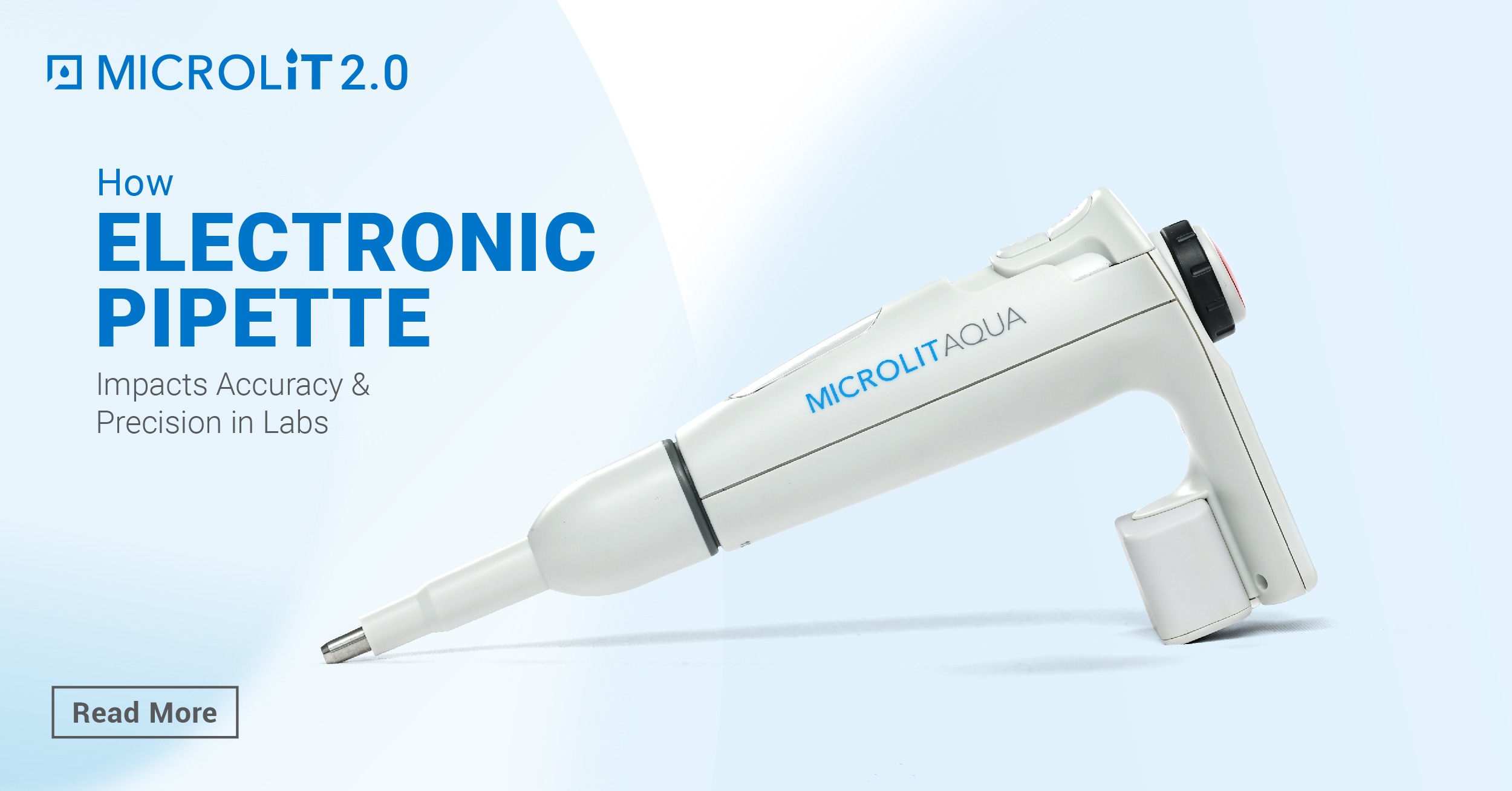
In any laboratory — from clinical diagnostics to molecular biology — the reliability of results depends heavily on how accurately and precisely liquids are handled. Whether it’s setting up PCR reactions, preparing reagents for ELISA or running quantitative assays, even tiny volume discrepancies can compromise results. In this context, electronic pipettes have emerged as vital tools for enhancing both accuracy and precision in liquid handling workflows. This blog explores why these electronic instruments matter, how they outperform traditional approaches, and how solutions like Microlit AQUA electronic micropipettes elevate laboratory performance.
Understanding Accuracy and Precision in Pipetting
Before discussing electronic tools, it’s important to clarify two key concepts: accuracy and precision. Accuracy refers to how close a dispensed volume is to the intended target, while precision relates to the consistency of repeated measurements. Both are critical in lab workflows because inaccurate or imprecise pipetting can lead to skewed data, compromised reproducibility, and failed experiments. For example, slight volume shifts in reagent preparation can alter reaction kinetics in PCR or affect optical density readings in ELISA setups, ultimately leading to erroneous conclusions.
Manual pipetting — using traditional air-displacement pipettes — relies on human technique, which introduces variability. Parallax errors, inconsistent immersion depths, differences in speed and even technician fatigue contribute to variance between replicates. This explains why many labs are increasingly turning to automated or electronic solutions to strengthen performance.
The Shortcomings of Manual Pipetting
Human-dependent liquid handling can be error-prone for several reasons:
- Technique Variability: Even a well-trained technician will display slight changes in aspiration or dispensing technique from one trial to the next.
- Environmental Factors: Temperature, humidity, and tip-to-pipette fit can influence results.
- Fatigue and Strain: Repetitive pipetting leads to fatigue, which manifests as inconsistent wrist pressure and slower movements — both of which degrade precision.
Although calibration and regular training help, they cannot eliminate human variability entirely. This is where electronic pipettes make a significant difference.
What Makes Electronic Pipettes Different?
Unlike manual pipettes that depend on constant human force on the plunger, electronic pipettes use motorized mechanisms and digital controls to manage liquid movement. Users set the desired volume digitally, and the motor precisely controls piston motion, eliminating many sources of manual error. The result? More consistent delivery of target volumes and reduced variability between replicates.
Key Benefits of Electronic Pipettes:
- Superior Accuracy: By controlling piston movement electronically, these pipettes minimize systematic errors that arise from human hand variability. Volume settings are precise to programmed figures, ensuring that each aspiration and dispense matches the intended value.
- Enhanced Precision: Reproducibility is a hallmark of quality data. Electronic pipettes deliver consistent results across multiple cycles, strengthening confidence in replicates and reducing experiment noise.
- Programmable Workflows: Advanced instruments allow users to set multiple modes — including mix, reverse pipetting and multi-dispense operations — which ensures consistency in complex protocols.
- Reduced Operator Fatigue: Motor-driven plunger action significantly lowers the physical effort required, making them ideal for high-throughput workflows or prolonged experiments.
- Data Management and Traceability: Many electronic pipettes support memory and data logging, enabling users to store programs and track usage, which is valuable in regulated labs.
In sensitive tests such as PCR and ELISA, even the slightest variation in liquid volumes can lead to unreliable amplification curves or inconsistent optical readings. By eliminating manual variability, electronic pipettes directly improve experimental fidelity.
Microlit AQUA: Electronic Pipetting Excellence
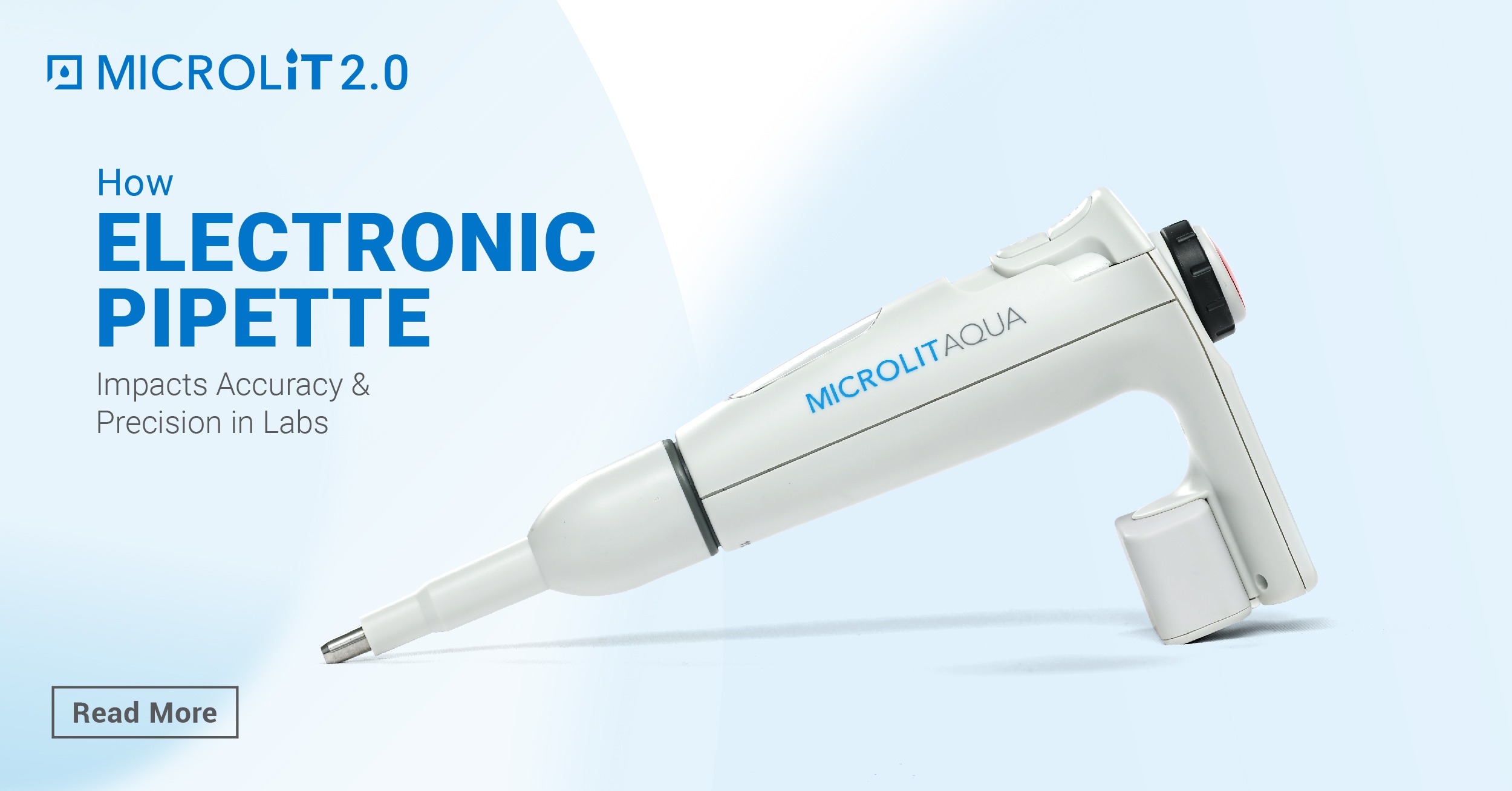
Among the various electronic pipettes available, the Microlit AQUA series stands out as a robust choice for labs seeking precision and performance in liquid handling. Available in both single channel and multichannel configurations, Microlit AQUA pipettes are designed to elevate accuracy, reduce variability, and enhance user experience across diverse applications.
AQUA Multi-Functional Electronic Single Channel Micropipette
The single channel variant covers a wide range of volumes — often from as small as 0.2 µL up to several milliliters — making it versatile for various lab tasks, from precise small-volume transfers to larger reagent preparations. Its motorized piston control eradicates chance errors that hover around manual hand movements, enabling accurate dispenses every time. The detachable rechargeable battery and intuitive controls also enable continuous usage with minimal downtime.
Key features include:
- Linear Stepping Motor System: Ensures precise volume delivery by controlling piston movement digitally.
- Large Display Interface: Provides real-time updates on volume settings, battery life, and calibration status.
- Multiple Pipetting Modes: Offers tailored approaches for different workflows, eliminating manual guesswork.
- Ergonomic Handling: Reduces strain during prolonged use while maintaining consistent pipetting performance.
AQUA Multi-Channel and Variable Spacing Pipettes
For tasks requiring simultaneous handling of multiple samples — such as setting up 96-well plates for ELISA or high-throughput assays — Microlit’s multichannel variants are invaluable. These models include 8-channel and 12-channel formats with adjustable or fixed spacing, allowing efficient and accurate replication of volumes across wells.
Standout attributes of these multichannel electronic pipettes include:
- Adjustable Tip Spacing: Moves effortlessly between different plate formats, enhancing workflow flexibility.
- Custom Programs & Memory Storage: Users can store pipetting sequences and recall them instantly, reducing setup time.
- Speed Selection Modes: Fine-tune aspiration and dispensing speeds to match the viscosity of liquids and specific protocol needs.
- Ergonomic and Lightweight Design: Minimizes repetitive strain injuries while improving user comfort during repetitive tasks.
These features make AQUA series micropipettes well-suited for clinical diagnostics, molecular screening, DNA/RNA amplification, and other precision-sensitive applications where reliability and repeatability are critical.
Real-World Impact on Lab Performance
Integrating electronic pipettes into laboratory workflows yields measurable improvements in both data quality and operational efficiency:
- Improved Reproducibility: By standardizing volume delivery across users and sessions, electronic pipettes reduce variability in experimental data.
- Lower Error Rates: Digital volume setting and motorized control drastically cut errors associated with manual judgment and fatigue.
- Higher Throughput: Programmable modes and multichannel options accelerate workflows, enabling busy labs to handle larger sample volumes with confidence.
- Enhanced Ergonomics: Reduced strain and intuitive interfaces support better overall user health and productivity over long hours of pipetting.
In high-stakes lab work — including drug discovery, genetic analysis, and diagnostic testing — these improvements contribute significantly to reliability, credibility, and reproducibility of results. Electronic pipettes empower scientists to focus more on analytical decisions rather than repetitive manual tasks, thereby driving more meaningful outcomes.
Conclusion
Accurate and precise liquid handling is the cornerstone of dependable laboratory science. While manual pipettes have traditionally served well, the demands of modern research and diagnostics have outpaced their capabilities. Electronic pipettes — with digital controls, motorized volume delivery, and programmable workflows — offer clear advantages that directly enhance accuracy and precision.
Solutions like Microlit AQUA electronic micropipettes bring these benefits to life, combining ergonomic design, advanced control modes, and consistent performance across single and multichannel formats. For laboratories committed to quality data, reproducibility, and efficiency, electronic pipettes aren’t just an upgrade — they’re a necessity.