




 1457
1457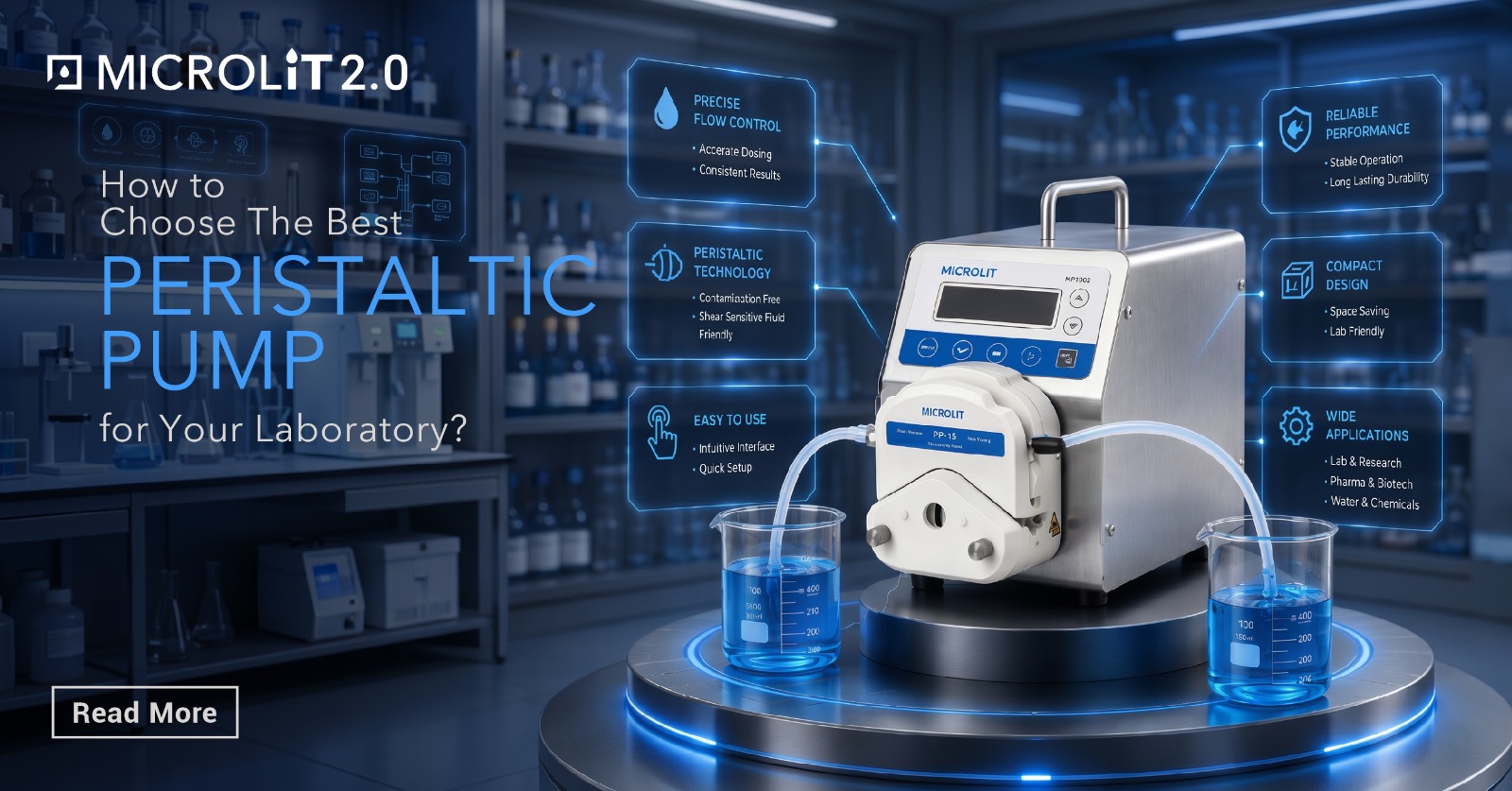
Selecting the right peristaltic pump is more than a simple equipment purchase it is a decision that directly impacts fluid handling accuracy, contamination control, workflow efficiency, system integration, and long-term operational reliability.
Modern laboratories operate with increasingly complex fluid transfer requirements, ranging from ultra-low microfluidic dosing to high-volume chemical transfer. With multiple pump configurations, control systems, flow ranges, and housing materials available, choosing the right system requires a structured evaluation approach rather than a basic feature comparison.
This guide provides a practical framework for selecting the most suitable peristaltic pump for your laboratory while highlighting the capabilities of the Microlit Peristaltic Pump range.
Why Peristaltic Pumps Are Preferred in Laboratories
Before evaluating specifications and control architectures, it is important to understand why peristaltic pumps are widely preferred for laboratory fluid handling applications.
The operating principle of a peristaltic pump is fundamentally different from conventional pumping technologies. Fluid movement occurs through the controlled compression and release of flexible tubing by rotating rollers. As a result, the fluid only comes into contact with the inner wall of the tubing and never with mechanical pump components.
This design offers several major advantages:
- No valves or seals exposed to the fluid
- Minimal contamination risk
- Excellent chemical compatibility
- Reduced maintenance requirements
- Gentle handling of shear-sensitive samples
- Easy sterilization and tubing replacement
- Dry-run capability without damage
Because only the tubing contacts the media, peristaltic pumps can safely transfer:
- Corrosive chemicals
- Sterile fluids
- Viscous media
- High-purity reagents
- Cell cultures
- Abrasive suspensions
- Sensitive biological samples
This makes them ideal for pharmaceutical, biotechnology, chemical, food & beverage, environmental, and research laboratories where fluid integrity and process reliability are critical.
Key Factors to Consider When Choosing a Peristaltic Pump
Step 1: Define Your Flow Rate Requirements
Flow rate is the primary parameter that determines which pump series is appropriate for your application.
An incorrectly specified flow range can lead to:
- Insufficient throughput
- Reduced dispensing accuracy
- Excessive tubing wear
- Higher operating costs
- Over-engineered systems with unnecessary complexity
Microlit’s peristaltic pump portfolio is structured across three major drive categories designed for different laboratory requirements.
Microlit 100-Series Pumps
The 100-series is optimized for ultra-low flow precision applications.
Key Specifications:
- Speed Range: 0.1–150 RPM
- Flow Range: 0.00011 ml/min to 750 ml/min
- Ideal for:
- Microfluidics
- Analytical dosing
- Cell culture feeding
- Precision reagent addition
- Laboratory-scale dispensing
The low-speed control enables exceptional flow resolution and repeatability for applications requiring highly controlled fluid delivery.
Microlit 300-Series Pumps
The 300-series bridges precision and throughput.
Key Specifications:
- Speed Range: 0.1–350 RPM
- Flow Range: Up to 1750 ml/min
- Ideal for:
- Medium-volume transfer
- Pilot-scale workflows
- Continuous circulation systems
- General laboratory transfer applications
This series offers excellent versatility for laboratories operating across multiple workflow scales.
Microlit 600-Series Pumps
The 600-series is designed for high-flow and industrial laboratory environments.
Key Specifications:
- Speed Range: Up to 600 RPM
- Flow Range: Up to 3000 ml/min
- Ideal for:
- Large-volume transfer
- Industrial process support
- High-throughput fluid movement
- Chemical transfer systems
The higher RPM capability enables rapid transfer without compromising operational stability.
Step 2: Evaluate Your Operating Environment
A laboratory pump must perform reliably within its actual operating conditions.
Microlit offers each pump series in two housing configurations:
304 Stainless Steel Housing
The stainless steel variants are designed for demanding environments requiring:
- Chemical resistance
- Frequent cleaning
- Washdown compatibility
- Corrosion protection
- GMP-friendly surfaces
- Long-term durability
Recommended Applications:
- Pharmaceutical production support
- Chemical laboratories
- Cleanroom operations
- Industrial laboratories
- Solvent-heavy environments
The stainless steel construction also supports environments where hygiene validation and surface traceability are important.
ABS Engineering Plastic Housing
ABS housing variants provide a lighter and more economical alternative without compromising flow performance.
Advantages:
- Reduced weight
- Easier portability
- Lower acquisition cost
- Compact benchtop suitability
Recommended Applications:
- Academic laboratories
- Research institutes
- Routine analytical labs
- General-purpose fluid handling
ABS variants are especially suitable where portability and cost efficiency are prioritized over industrial-grade surface durability.
Step 3: Match the Control System to Workflow Complexity
One of the most important differentiators in the Microlit range is the control architecture.
Microlit offers three primary control platforms:
- Speed Variable Series
The Speed Variable Series is designed for straightforward and reliable fluid transfer operations.
Features Include:
- Start/stop control
- Forward/reverse rotation
- Speed adjustment
- Time dispensing
- Multi-segment dispensing
- Anti-drip functionality
- Delay start and stop
- RS485 MODBUS communication
This series is ideal for laboratories seeking dependable performance with simple operation and strong cost efficiency.
Best For:
- Routine fluid transfer
- Basic dispensing
- General laboratory applications
- Entry-level automation
- Clever Flow Series
The Clever Flow Series introduces advanced usability, remote monitoring, and intelligent operational management.
Key Features:
- 4.3-inch true-colour touchscreen
- Keypad redundancy
- Wizard-guided calibration
- WiFi connectivity
- Remote monitoring via app
- Tube replacement reminders
- Shutdown alarms
- Intelligent thermal management
- Enhanced workflow programming
The intelligent temperature control system dynamically adjusts heat dissipation to improve motor longevity and operational stability.
Best For:
- Multi-step experimental workflows
- Automated laboratory systems
- Remote operation environments
- Labs requiring advanced user interfaces
- Intelligent Dispensing Series
The Intelligent Dispensing Series represents Microlit’s highest precision dispensing platform.
Advanced Working Modes:
- Flow mode
- Volume dispensing mode
- Time dispensing mode
- Program transfer mode
Key Technical Advantages:
- Motor rotation angle control technology
- Improved volumetric accuracy
- Reduced cumulative dispensing error
- Advanced calibration algorithms
- LF-Touch-OS software platform
- Upgradeable operating system
Unlike conventional time-based dispensing systems, the Intelligent Dispensing Series calculates delivery based on precise motor rotation angles, significantly improving repeatability and dispensing consistency.
Best For:
- Pharmaceutical dosing
- Precision dispensing
- High-accuracy laboratory workflows
- Regulated laboratory environments
- Automated filling systems
Step 4: Select the Right Pump Head
The pump head determines:
- Flow stability
- Pressure capability
- Pulsation behavior
- Channel count
- Tubing compatibility
Microlit offers multiple pump head configurations for specialized applications.
PH Series
Designed for small to medium flow multi-channel applications.
Specifications:
- Compatible Tubing: 13# and 14#
- Flow Range: 0.00023–64 ml/min
- Applications:
- Precision transfer
- Multi-channel dosing
- Analytical instrumentation
PH 6-4
Optimized for high-channel-count applications.
Key Advantages:
- Supports 1–48 channels
- Compact structure
- Very low pulsation
- Improved flow consistency
Ideal for applications requiring simultaneous multi-sample transfer.
PH 15T
Features adjustable pressure tube gaps for broader tubing compatibility.
Benefits:
- Improved tubing life
- Better pressure uniformity
- Flexible tubing compatibility
- Easier maintenance
PH-25
Designed for larger flow rates and demanding fluid transfer conditions.
Specifications:
- Flow Range: 0.024–3000 ml/min
- Suitable for:
- Viscous fluids
- High-pressure transfer
- High suction applications
Compatible with multiple tubing sizes including 114#, 116#, 15#, 24#, 35#, and 36#.
Step 5: Consider Automation and Integration Requirements
Modern laboratories increasingly require pumps to integrate with automation systems, PLCs, and digital process controls.
Microlit peristaltic pumps support:
- RS485 communication
- MODBUS protocol
- External analog speed control
- Isolated control signals
- Automation platform integration
The Clever Flow and Intelligent Dispensing Series offer expanded programming capabilities for more advanced automation environments.
Accessory Compatibility
Microlit also offers accessories to enhance workflow flexibility.
MP-HD Hand Dispenser
Enables convenient semi-automatic manual dispensing for filling and dosing applications.
MP-FS Footswitch
Provides hands-free operation, especially useful during sterile workflows or vessel handling procedures.
Additional Advantages of Microlit Peristaltic Pumps
Beyond standard fluid transfer performance, Microlit pumps are engineered with laboratory usability and long-term reliability in mind.
Additional Benefits Include:
- Low-noise operation
- Compact footprint
- Easy tubing replacement
- High repeatability
- Stable continuous operation
- Long motor service life
- Chemical-resistant designs
- User-friendly interfaces
- Wide tubing compatibility
- Flexible customization options
Microlit also offers specialized variants including:
- Explosion-proof peristaltic pumps
- Filling systems
- Industrial transfer systems
- Intelligent dispensing platforms
- Multi-channel laboratory pumps
A Practical Selection Framework
To simplify the decision-making process:
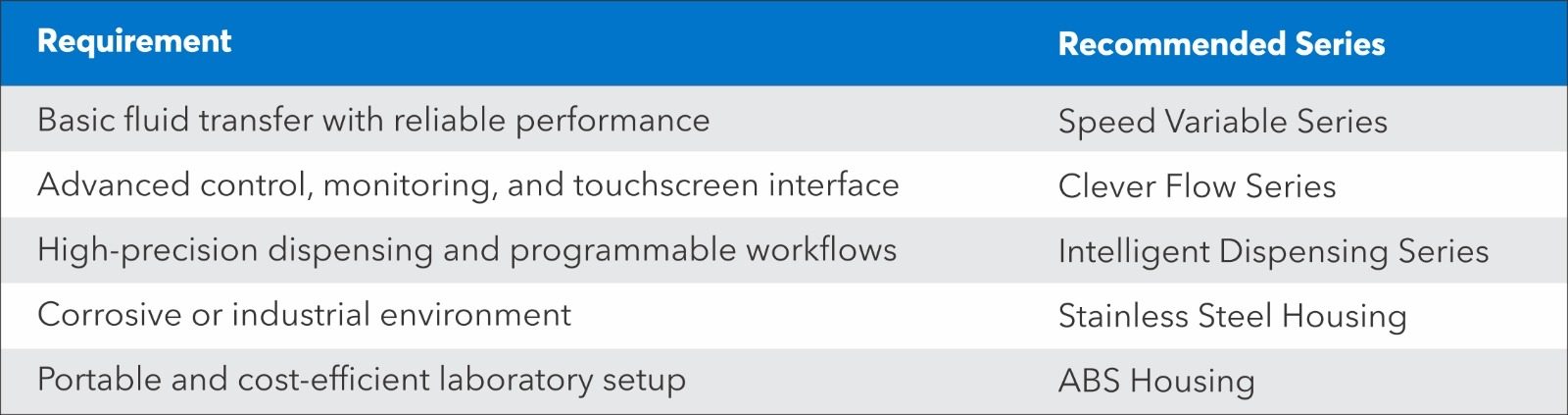
Choosing the right peristaltic pump is ultimately about aligning technical capability with application requirements, environmental conditions, and workflow complexity.
Microlit’s comprehensive peristaltic pump portfolio allows laboratories to scale from basic fluid transfer applications to fully automated, high-precision dispensing systems — all within a unified ecosystem.
Whether your focus is:
- Precision dosing
- Continuous fluid transfer
- Sterile processing
- High-volume handling
- Multi-channel dispensing
- Automated integration
Microlit offers a solution tailored to laboratory and industrial fluid handling demands. Explore the complete Microlit Peristaltic Pump range here: https://www.microlit.com/product-category/peristaltic-pump/