




 490
490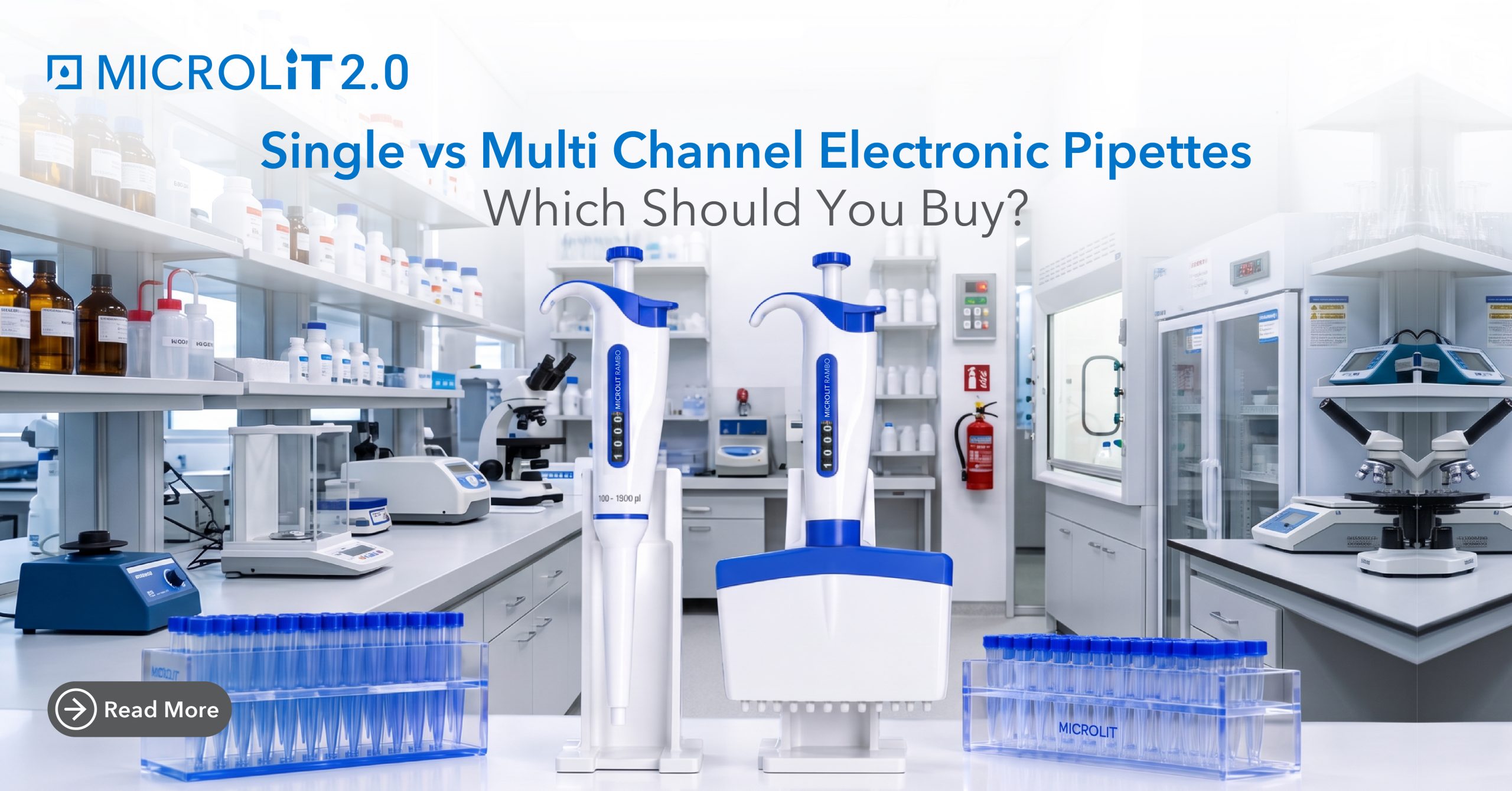
Electronic pipettes are transforming modern laboratory workflows by improving consistency, repeatability, ergonomics and efficiency. Compared with conventional manual pipettes, electronic models can simplify repetitive liquid handling while offering programmable functions and controlled aspiration and dispensing.
But when choosing an electronic pipette, one important question remains: Should you buy a single-channel or multi-channel model?
The answer depends on your laboratory workflow, sample volume, throughput, vessel format and application. A single-channel pipette provides flexibility for individual samples, while a multi-channel pipette can significantly improve productivity when multiple samples need to be processed simultaneously.
This guide explores the difference between single channel and multichannel pipette configurations, their applications, and how to choose between 8-channel and 12-channel options.
What Is a Single-Channel Electronic Pipette?
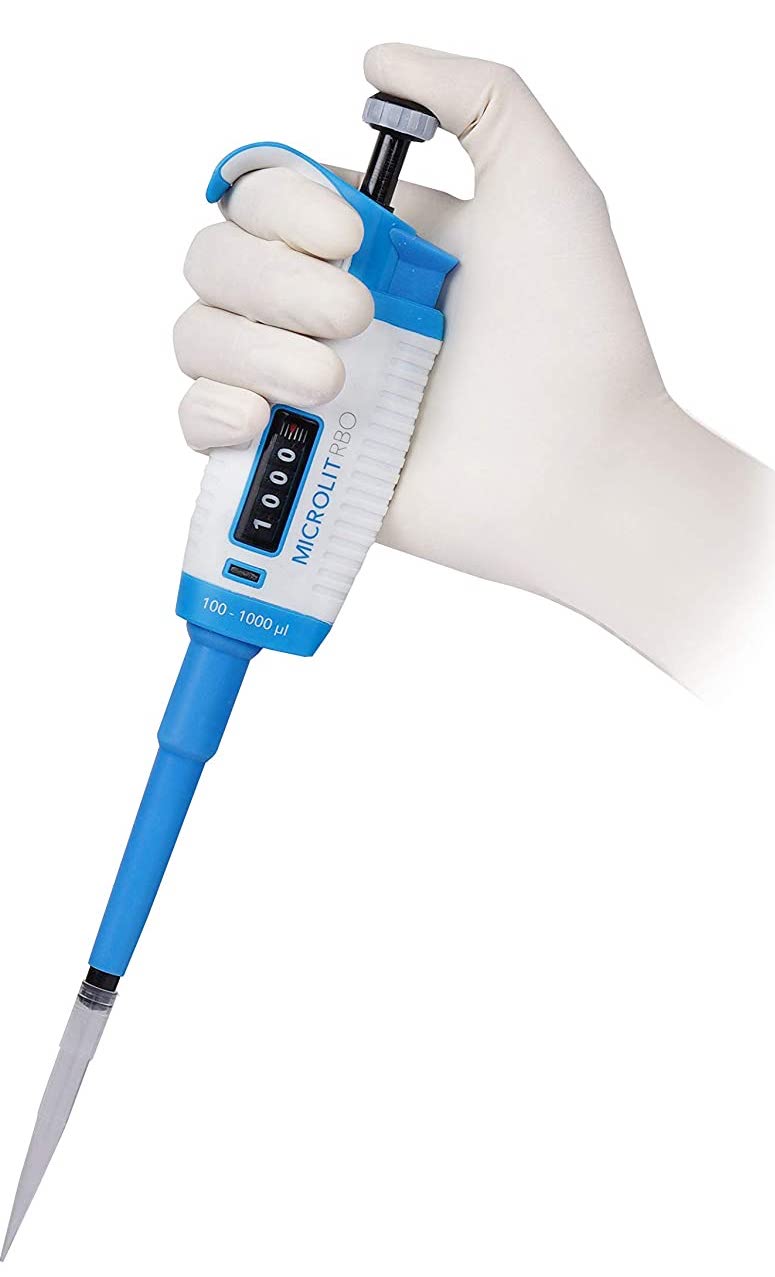
A single-channel electronic pipette transfers liquid through one tip at a time. It is designed for workflows where samples are handled individually or where laboratories frequently work with different tube sizes, volumes and experimental formats.
Single-channel electronic pipettes are useful in molecular biology, microbiology, immunology, biochemistry, analytical chemistry, genetics and general laboratory research.
The MICROLIT AQUA Electronic Single-Channel Pipette offers electronically controlled liquid handling with multiple operating modes, speed settings and programmable functions. Depending on the model, the AQUA range covers a broad volume range, making it suitable for different laboratory applications.
Single-channel electronic pipettes are particularly useful when flexibility is more important than throughput.
What Is a Multi-Channel Electronic Pipette?
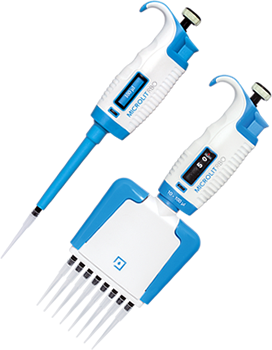
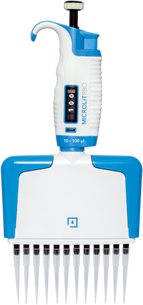
A multi-channel electronic pipette transfers liquid through several channels simultaneously. Common configurations include 8-channel and 12-channel models, which are particularly useful for standard microplate workflows.
Instead of repeating the same pipetting operation one sample at a time, users can aspirate or dispense liquid across several wells simultaneously. This makes multi-channel pipettes valuable for high-throughput applications such as ELISA, molecular biology, clinical diagnostics, screening and other microplate-based workflows.
MICROLIT offers AQUA 8-channel and 12-channel electronic pipettes, as well as variable-spacing configurations in 4-, 6-, 8- and 12-channel formats.
What Is the Difference Between a Single-Channel and Multichannel Pipette?
The primary difference between single channel and multichannel pipette configurations is the number of samples that can be handled simultaneously.
A single-channel pipette uses one tip to aspirate and dispense liquid, making it ideal for individual samples and flexible workflows.
A multi-channel pipette uses multiple tips simultaneously. For example, an 8-channel pipette can handle eight samples in one operation, while a 12-channel pipette can handle twelve.
| Feature | Single-Channel | Multi-Channel |
|---|---|---|
| Samples handled simultaneously | One | Multiple |
| Flexibility | Very high | High for standardized workflows |
| Throughput | Low to medium | Medium to high |
| Ideal for | Individual samples | Microplates and batch processing |
| Common configurations | Single tip | 8- and 12-channel |
| Best advantage | Versatility | Speed and productivity |
When Should You Use a Multichannel Pipette?
Knowing when to use a multichannel pipette can help laboratories improve productivity and reduce repetitive pipetting operations.
A multi-channel pipette is particularly useful when you:
- Work regularly with 96-well microplates
- Process multiple samples simultaneously
- Perform repetitive dispensing operations
- Conduct ELISA and immunoassays
- Prepare PCR and molecular biology reactions
- Process DNA and RNA samples
- Perform clinical or diagnostic testing
- Conduct screening applications
- Dispense reagents across multiple wells
If the same liquid-handling operation needs to be repeated across multiple wells, a multi-channel pipette can significantly reduce the number of individual pipetting actions.
Common Multi-Channel Pipette Uses
The most important multichannel pipette uses involve repetitive liquid handling across multiple samples or wells.
ELISA and Immunoassays
Multi-channel pipettes are widely suited to workflows where samples, standards, buffers or reagents need to be transferred across multiple wells.
PCR and Molecular Biology
PCR preparation often involves distributing reagents and samples across multiple wells. Multi-channel pipettes can simplify this repetitive process and help improve workflow consistency.
Clinical Diagnostics
Laboratories processing multiple patient samples can benefit from simultaneous liquid handling, particularly when working with standardized microplate workflows.
Cell Biology
Multi-channel pipettes can support reagent and media transfer across multiple wells during cell-based experiments.
Drug Discovery and Screening
High-throughput screening involves processing large numbers of samples or compounds. Multi-channel pipettes can reduce manual pipetting steps and improve workflow efficiency.
High-Throughput Research
Whenever laboratories repeatedly perform the same liquid-handling operation across a plate, multi-channel pipetting can provide a significant productivity advantage.
8-Channel vs 12-Channel Pipette: Which Should You Choose?
When comparing an 8 channel vs 12 channel pipette, the right choice depends primarily on your application, plate format and workflow.
An 8-channel pipette handles eight wells simultaneously and is commonly suited to workflows involving the columns of a standard 96-well plate.
A 12-channel pipette handles twelve wells simultaneously and can be advantageous for workflows involving rows of a standard 96-well plate.
| Feature | 8-Channel Pipette | 12-Channel Pipette |
|---|---|---|
| Tips used simultaneously | 8 | 12 |
| Typical 96-well application | Column-based | Row-based |
| Throughput | High | Higher |
| Best suited for | ELISA, PCR, diagnostics | High-throughput dispensing |
| Main advantage | Efficient multi-well handling | Maximum simultaneous handling |
Neither configuration is universally better. Your choice should depend on how samples and reagents are arranged in your laboratory workflow.
MICROLIT AQUA Electronic Pipette Range
The MICROLIT AQUA range provides electronic pipetting solutions for laboratories requiring improved control, consistency and productivity.
The variable-spacing models provide additional flexibility when transferring liquids between vessels with different spacing requirements.
Depending on the model, AQUA electronic pipettes offer multiple operating modes, speed selection and programmable functions to support diverse liquid-handling workflows.
What About Other MICROLIT Pipettes?
Electronic pipetting is only one part of the MICROLIT pipette portfolio.
MICROLIT NERO includes single-channel fixed-volume, single-channel variable-volume and multi-channel configurations. The range incorporates UniCal Technology for simplified in-lab calibration and μAir Technology designed to minimize dead air space between the tip cone and piston.
MICROLIT also offers SLP and RAMBO pipette ranges, giving laboratories additional options based on their application, volume requirements and preferred operating format.
This broader portfolio allows laboratories to select the right pipette according to application rather than relying on a single configuration for every task.
Single-Channel or Multi-Channel: Which Should You Buy?
The decision can be simplified based on your laboratory requirements.
Choose a Single-Channel Electronic Pipette If You:
- Handle individual samples regularly
- Work with different tube and vessel formats
- Perform low-to-medium throughput experiments
- Need maximum flexibility
- Frequently change volumes and protocols
The MICROLIT AQUA Single-Channel Electronic Pipette is suitable for laboratories looking for electronically controlled and flexible liquid handling.
Choose an 8- or 12-Channel Electronic Pipette If You:
- Regularly work with microplates
- Perform ELISA or diagnostic testing
- Conduct PCR and molecular biology workflows
- Process large sample batches
- Perform repetitive liquid transfers
- Want to reduce manual pipetting steps
The MICROLIT AQUA 8- and 12-Channel Electronic Pipettes are designed for laboratories requiring efficient multi-sample liquid handling.
Choose a Variable-Spacing Multi-Channel Pipette If You:
- Transfer samples between different vessel formats
- Work with varied well spacing
- Need greater flexibility than fixed-spacing pipettes
- Process multiple samples simultaneously
The MICROLIT AQUA Variable-Spacing Electronic Pipettes offer 4-, 6-, 8- and 12-channel configurations with adjustable tip spacing.
There is no universal winner when comparing single-channel and multi-channel electronic pipettes. The right choice depends on your sample volume, throughput, vessel format, application and workflow.
For individual sample handling and maximum flexibility, a single-channel electronic pipette can be the ideal choice. For repetitive, plate-based and high-throughput applications, a multi-channel electronic pipette can improve efficiency and reduce repetitive pipetting steps.
When choosing between an 8-channel vs 12-channel pipette, consider how your samples are arranged and whether your workflow is better suited to column- or row-based processing.
Whether you are researching the difference between single channel and multichannel pipette, exploring multichannel pipette uses or deciding when to use a multichannel pipette, the best pipette is ultimately the one that matches your laboratory workflow.
With AQUA, NERO, SLP and RAMBO, MICROLIT offers a comprehensive pipette portfolio designed to address diverse liquid-handling requirements—from individual sample preparation to high-throughput laboratory workflows.