




 16
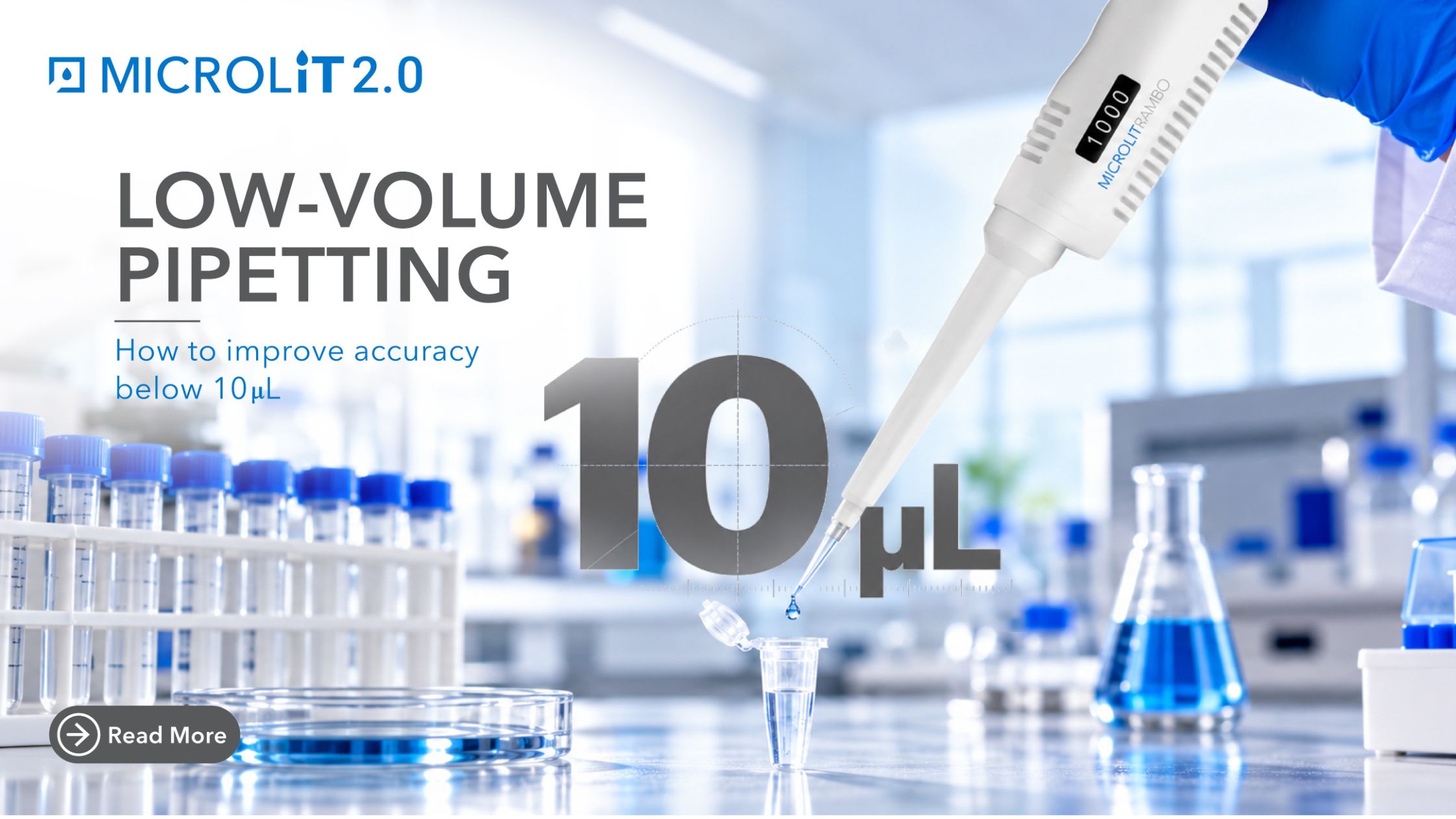
Low-volume pipetting is essential in modern laboratories where even a fraction of a microlitre can influence experimental outcomes. Applications such as PCR, qPCR, DNA/RNA analysis, genomics, proteomics, pharmaceutical research, clinical diagnostics, and molecular biology routinely require accurate liquid transfer below 10 µL.
However, as the target volume decreases, achieving consistent results becomes increasingly challenging. A small deviation that may be insignificant at higher volumes can represent a considerable percentage error when transferring only a few microlitres.
For example, a 0.5 µL difference represents just 0.5% of a 100 µL transfer but 10% of a 5 µL transfer.
Therefore, improving pipetting accuracy below 10 µL requires more than simply selecting a small-volume micropipette. The pipette, tip, liquid, environment, operator technique, and calibration practices all work together as a complete liquid-handling system.
Here are some important ways laboratories can improve accuracy and precision during low-volume pipetting.
Why Is Pipetting Below 10 µL Challenging?
Air-displacement micropipettes operate using an air cushion between the piston and liquid inside the tip. Movement of the piston changes the pressure within this air space, allowing liquid to be aspirated and dispensed.
At low volumes, factors affecting this small air cushion can have a proportionally greater influence on pipetting performance.
Common sources of low-volume pipetting error include:
- Incorrect pipette selection
- Poorly fitting pipette tips
- Excessive tip immersion
- Inconsistent pipette angles
- Rapid aspiration
- Evaporation
- Temperature differences
- Incorrect pipetting technique
- Pipette calibration or maintenance issues
Controlling these variables can significantly improve repeatability.
-
Choose the Right Micropipette Volume Range
One of the most important ways to improve pipetting accuracy is to select a micropipette appropriate for the required volume.
If your application requires transferring 2 µL or 5 µL, use a pipette specifically designed to operate reliably within that low-volume range rather than using a much larger-capacity pipette near its minimum setting.
Always check the manufacturer’s stated volume range and performance specifications.
As a general principle, select the smallest suitable pipette that comfortably covers your required transfer volume.
This is particularly important for PCR preparation, DNA/RNA workflows, enzyme addition, and other applications involving very small reagent quantities.
-
Use High-Quality, Compatible Pipette Tips
A micropipette and tip function together as a liquid-handling system.
Even a highly accurate micropipette can produce inconsistent results if the tip does not form an appropriate seal with the tip cone.
At volumes below 10 µL, even a small air leak can become significant.
Choose high-quality tips that:
- Fit securely onto the tip cone
- Match the required volume range
- Provide consistent geometry
- Do not require excessive attachment force
- Are appropriate for the application
Microlit micropipettes offer universal tip compatibility, providing laboratories with greater flexibility to use a broad range of suitable standard pipette tips.
For critical quantitative applications, laboratories should still verify the performance of their selected pipette-tip combination.
-
Pre-Wet the Pipette Tip
Pre-wetting can improve consistency when repeatedly transferring small volumes.
Before aspirating the actual sample, aspirate and dispense the liquid a few times using the same tip, where appropriate for the application.
This helps condition the internal surface of the tip and establish a more stable vapour environment.
Pre-wetting can be especially useful for repetitive low-volume transfers where consistency between pipetting cycles is important.
-
Maintain the Correct Pipette Angle
During aspiration, hold an air-displacement pipette as close to vertical as practical.
Tilting the pipette changes the hydrostatic conditions around the tip and can influence the amount of liquid aspirated.
At larger volumes, small differences may have less relative impact. Below 10 µL, however, seemingly minor variations can become significant.
Develop a consistent aspiration technique and use approximately the same angle for every transfer.
-
Control Tip Immersion Depth
Avoid immersing the pipette tip too deeply into the sample.
Excessive immersion can cause additional liquid to adhere to the outside of the tip and may influence aspiration conditions.
Too little immersion can be equally problematic because the tip may draw air instead of liquid.
For low-volume pipetting, use the appropriate immersion depth recommended for your pipette, tip, and volume range.
Most importantly, maintain a consistent immersion depth across repeated transfers.
-
Aspirate Slowly and Consistently
Speed is another important factor affecting low-volume pipetting accuracy.
Rapidly releasing the plunger during aspiration can cause turbulence, bubbles, splashing, or inconsistent liquid uptake.
With a manual micropipette, operate the plunger using a smooth and controlled movement.
After aspiration, allowing a brief stabilization period before withdrawing the tip may also be appropriate depending on the liquid and procedure.
For repetitive workflows, an electronic micropipette can help standardize piston movement and aspiration/dispensing speeds.
-
Minimize Evaporation
Evaporation becomes increasingly important as liquid volumes decrease.
A tiny droplet has a high surface-area-to-volume ratio and can lose a meaningful proportion of its volume relatively quickly, particularly when working with volatile liquids.
To minimize evaporation:
- Keep sample containers closed when possible.
- Avoid unnecessary delays between aspiration and dispensing.
- Maintain appropriate laboratory conditions.
- Do not leave small droplets exposed for extended periods.
- Consider liquid volatility when selecting a pipetting technique.
For extremely volatile liquids, specialised liquid-handling approaches may be required.
-
Reduce Temperature-Related Errors
Temperature can influence the air cushion inside an air-displacement micropipette.
Differences between the temperatures of the pipette, tips, sample, and laboratory environment can therefore affect performance.
For critical measurements, allow equipment and liquids to reach suitable working conditions according to your laboratory procedure.
Operators should also avoid holding the pipette unnecessarily for extended periods before critical low-volume transfers, as hand warmth can gradually affect the instrument.
-
Select the Correct Technique for the Liquid
Not all laboratory liquids behave like water.
Viscous, volatile, foaming, dense, or low-surface-tension liquids may require modified pipetting techniques.
Forward pipetting is widely used for routine aqueous solutions.
For certain challenging liquids, reverse pipetting may help improve consistency by reducing problems associated with incomplete dispensing or liquid retention.
Always select the technique based on the properties of the liquid and your validated laboratory procedure.
-
Consider Electronic Pipetting for Repetitive Workflows
Manual micropipettes can provide excellent accuracy and precision when used correctly.
However, repetitive low-volume workflows introduce another variable: operator consistency.
Electronic pipettes use electronically controlled piston movement, which can help standardize aspiration and dispensing operations across repeated transfers.
This can be particularly useful for high-throughput PCR preparation, microplate workflows, repetitive dispensing, and other applications involving numerous low-volume transfers.
Electronic pipetting may also reduce repetitive thumb movement during extended laboratory sessions.
-
Maintain and Calibrate Your Micropipettes
Correct technique cannot compensate for a micropipette that is damaged, poorly maintained, or outside its performance specifications.
Pipettes should undergo regular:
Cleaning → Inspection → Maintenance → Performance Verification → Calibration
Calibration frequency should be established according to factors such as usage frequency, application criticality, laboratory quality requirements, manufacturer recommendations, and historical pipette performance.
Laboratories should also consider applicable requirements of ISO 8655 when establishing pipette calibration and performance procedures.
Microlit Micropipettes for Low-Volume Pipetting
Selecting an appropriate micropipette is particularly important when handling volumes below 10 µL.
Microlit offers a comprehensive range of manual and electronic micropipettes for different laboratory liquid-handling requirements.
The Microlit NERO® micropipette range incorporates μAir® technology, designed around a reduced air-cushion concept. NERO® also features UniCal® technology, Microlit’s single-point calibration mechanism, helping simplify calibration adjustments.
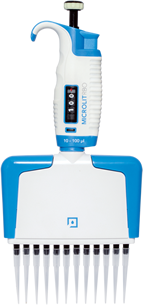
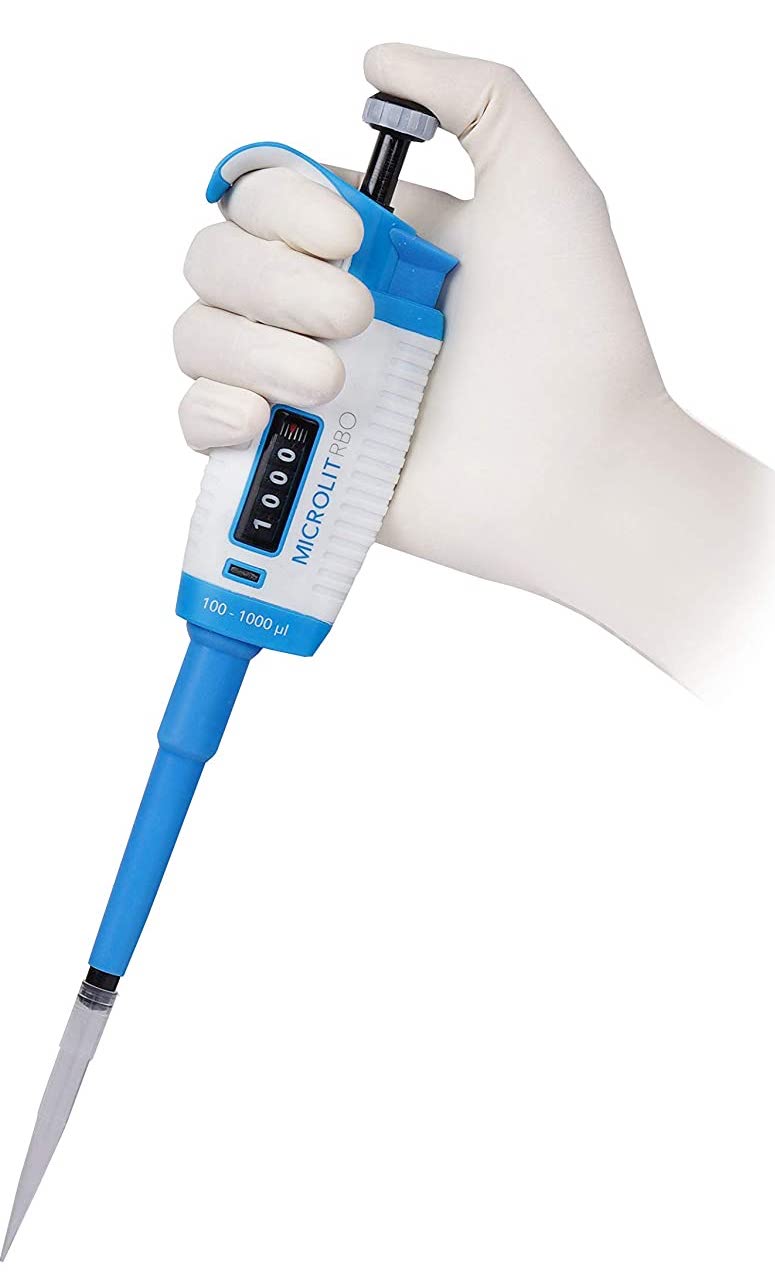
For laboratories seeking ergonomic mechanical liquid handling, the Microlit RAMBO range provides manual micropipetting solutions across different volume ranges and configurations.
For electronic liquid handling, the Microlit AQUA Multifunctional Electronic Pipette provides multiple operating modes and electronically controlled piston movement. It can be particularly useful for repetitive laboratory workflows where standardized aspiration and dispensing are desirable.
Across its micropipette portfolio, Microlit’s universal tip compatibility provides laboratories with greater flexibility when selecting suitable pipette tips.
Explore the complete range of Microlit micropipettes for manual, electronic, single-channel and multichannel liquid-handling applications.
What we learn?
Accurate pipetting below 10 µL depends on controlling several small variables that can have a large impact at microlitre volumes.
Start by selecting the correct micropipette volume range and a high-quality compatible tip. Maintain consistent aspiration speed, pipette angle, and immersion depth. Pre-wet tips when appropriate, minimize evaporation, control temperature-related factors, and adapt the pipetting technique to the physical properties of the liquid.
Regular calibration, preventive maintenance, and operator training further support reliable performance.
For laboratories performing demanding low-volume applications, Microlit’s NERO®, RAMBO and AQUA micropipettes provide multiple manual and electronic options for different workflow requirements.
When working below 10 µL, every microlitre matters. Combining the right micropipette, right tip, right technique and disciplined laboratory practices can help improve accuracy, precision, and reproducibility where they matter most.