




 13014
13014
In chemistry laboratories, titration is one of the most widely used quantitative techniques for determining the concentration of an unknown solution. A key piece of equipment in titration experiments is the burette, a long, graduated glass tube with a stopcock at the bottom that allows precise measurement and delivery of liquids. Accurate results in titration heavily depend on proper burette handling techniques and knowing how to read a burette correctly. In this blog, we will explore common burette errors in titration, discuss correct use of burette and provide practical tips to avoid mistakes, including a look at modern innovations like Microlit’s E-Burette.
Understanding the Burette
A burette is designed to deliver liquid volumes with high precision, typically measured to ±0.05 mL. Its graduations usually start at zero at the top and increase toward the bottom, allowing easy measurement of the volume of liquid dispensed. Proper burette handling techniques are essential to maintain accuracy and ensure safety in the lab.
Before using a burette, it must be rinsed with the solution it will contain. This prevents dilution or contamination, which could lead to systematic errors. After filling the burette, always remove air bubbles from the tip to avoid discrepancies in volume measurement.
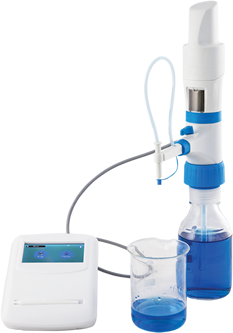
Modern laboratories sometimes use digital/electronic burettes, such as Microlit’s E-Burette, which provide electronic readings of the dispensed volume, improving accuracy and reducing human errors. The E-Burette combines precise delivery with an easy-to-read digital display, which is especially helpful for students or researchers aiming to minimize burette errors in titration.
Common Burette Errors in Titration
Even experienced chemists can make mistakes while using a burette. Here are some of the most frequent burette errors in titration and how to avoid them:
-
Parallax Error
One of the most common errors in titration is a parallax error, which occurs when the meniscus is read from an angle rather than at eye level. The meniscus is the curved surface of the liquid, and in most cases, the bottom of the meniscus is used for readings. Failing to read it correctly can lead to systematic errors in the volume measurement.
Tip: Always bring your eyes to the level of the meniscus and read the bottom for accurate measurement. Digital burettes like Microlit’s E-Burette help reduce parallax errors entirely, as the volume is displayed digitally.
-
Air Bubbles in the Burette Tip
Air bubbles trapped in the burette tip can cause the volume delivered to be less than indicated, leading to burette errors in titration. This is especially problematic when performing precise titrations, as even a small air bubble can affect results significantly.
Tip: Before starting the titration, run a small amount of the solution through the burette tip to expel air bubbles. Check the tip periodically during the experiment to ensure no bubbles form.
-
Improper Burette Filling
Overfilling or underfilling the burette can cause measurement errors. Filling above the zero mark can lead to spillage, while underfilling might require multiple refills, increasing the chance of error.
Tip: Fill the burette slightly above the zero mark, then drain a small amount to reach exactly zero. This ensures consistent volume readings from the start.
-
Inconsistent Flow Rate
The speed at which the liquid is released can also affect accuracy. Releasing the liquid too quickly may cause splashing or incomplete delivery, whereas releasing it too slowly may lead to evaporation or time inefficiency.
Tip: Open the stopcock smoothly and maintain a controlled flow rate, especially as you approach the endpoint of the titration. Some digital burettes, like Microlit’s E-Burette, have precise dispensing controls to maintain a consistent flow rate, reducing this type of error.
-
Residual Liquid on the Burette Walls
If the inner walls of the burette are wet with the titrant before reading, the remaining liquid may cling to the glass unevenly, leading to inaccurate readings. This is another frequent burette error in titration.
Tip: Rinse the burette with the titrant solution before use and ensure that any remaining drops are consistent along the walls.
Correct Use of Burette
To minimize errors and ensure reliable results, follow these burette handling techniques:
- Rinse Before Use: Always rinse the burette with the solution it will hold. This prevents dilution errors and ensures uniform concentration.
- Check for Leaks: Inspect the stopcock and tip for leaks before starting the titration. Even small leaks can drastically affect results.
- Zeroing the Burette: Fill the burette slightly above the zero mark, then carefully adjust to exactly zero. Ensure no air bubbles remain in the tip.
- Controlled Delivery: Open the stopcock slowly and maintain a smooth flow. Avoid sudden spurts that may cause splashing or loss of solution.
- Consistent Reading Technique: Always read the meniscus at eye level and note the volume accurately. Record readings consistently at the bottom of the meniscus.
Following these steps ensures the correct use of burette and helps reduce errors in titration experiments. For digital options like Microlit’s E-Burette, steps like reading the meniscus are simplified, as the electronic display provides precise volume readings, reducing human error.
How to Read a Burette Correctly
Proper reading of a burette is crucial for accurate titration results. Here’s a step-by-step guide on how to read a burette correctly:
- Position Your Eyes at Meniscus Level: Place your eyes at the same level as the liquid surface to avoid parallax error.
- Identify the Meniscus: Look for the curved surface of the liquid. For most aqueous solutions, read the bottom of the meniscus. For solutions that form convex menisci (like mercury), read the top.
- Estimate Between Graduations: If the meniscus lies between two graduations, estimate the volume to the nearest 0.01 mL if possible.
- Record Immediately: Write down the reading as soon as it is taken to avoid mistakes.
Digital burettes like Microlit’s E-Burette eliminate the need for manual meniscus reading entirely, providing a digital display with highly accurate measurements. This is especially helpful for students and professionals seeking to reduce burette errors in titration.
Avoiding Burette Errors in Titration
Here’s a quick summary of practical tips to avoid burette errors in titration:
- Rinse the burette with the titrant before use.
- Remove air bubbles from the tip.
- Fill the burette slightly above zero and then adjust carefully.
- Maintain controlled flow and avoid splashing.
- Always read the meniscus at eye level (or use a digital burette).
- Ensure the burette is clean and free from residual liquid.
- Avoid distractions and record readings immediately.
By following these steps, you can minimize errors and achieve consistent, accurate results in titration experiments. Using a digital burette like Microlit’s E-Burette can make this process even more reliable by reducing human error and improving reproducibility.
Conclusion
The burette is an indispensable tool in chemistry labs, enabling precise measurement of liquids during titration. However, errors in burette handling techniques or reading can significantly affect results. By understanding common burette errors in titration, mastering how to read a burette correctly and practicing the correct use of burette, students and chemists can improve their experimental accuracy and reliability.
Modern innovations like Microlit’s E-Burette take this a step further by combining electronic precision with user-friendly operation, helping both beginners and experts minimize mistakes and focus on accurate results. Whether using a traditional glass burette or a digital one, attention to detail and proper technique remain key to successful titration.