• Multiple Offers
    Multiple Offers
  • Support
    Real-Time Support
  • Free Replacement
    1-Year Free Replacement Warranty
  • (732) 321-0852

HPLC Vs. CPC for Cannabis Testing

Among the 113 active cannabinoids present in the cannabis (Cannabis sativa L.) plant, cannabidiol (CBD) and Tetrahydro Cannabinol (THC) are being discussed and researched extensively in the scientific community.

While both the Cannabinoids have medicinal benefits, THC causes euphoria or intoxication in most people, which has limited its use in therapeutic treatments. On the other hand, CBD does not induce any intoxicating effects and is known to have various medicinal benefits. Due to this, CBD has emerged as a promising candidate for the treatment of several CNS conditions, such as neuropathic pain, chronic inflammation, and epilepsy. In addition, CBD has been found to be useful in the treatment of cancer-induced pain and childhood seizures. In fact, a drug called Sativex developed by GW Pharmaceuticals – containing CBD and THC has gained approval across Asia and Europe for treating spasticity and cancer pain. Beyond this, CBD has shown potential in the treatment of substance abuse.

The increasing research on the usage of cannabis in medical interventions demands for enhanced purification and detection assays for cannabinoids. Further, as the FDA is not currently regulating Cannabis production and there is no external quality control over the cannabis producing farms, researchers need to have access to highly pure, research-grade THC-free CBD to carry out their research safely and reliably. This has made it essential to design an optimal extraction process for CBD for maximum recovery of the pure cannabinoid.

Two methods- namely High-performance Liquid Chromatography (HPLC) and Centrifugal Partition Chromatography (CPC) are the most commonly used techniques for cannabis purification. Although HPLC is used industry-wide, Centrifugal Partition Chromatography (CPC) is emerging as a relatively cost-effective alternative. Research has shown that CPC has a similar yield to HPLC, and it also helps in generating a highly pure product. If you are considering cannabis testing, you need to be aware of the working principle of both of these techniques in order to select the right method for your specific needs.

High Performance Liquid Chromatography (HPLC)

HPLC can be used for compound identification (analytical HPLC), as well as sample extraction (preparative HPLC) from crude mixtures. In an HPLC process, a mobile phase is used to carry the sample through a stationary phase. This results in the separation of individual components on the basis of particle size or any other physical characteristic. After leaving the column, the samples produce a signal (peak), and can be collected as fractions.
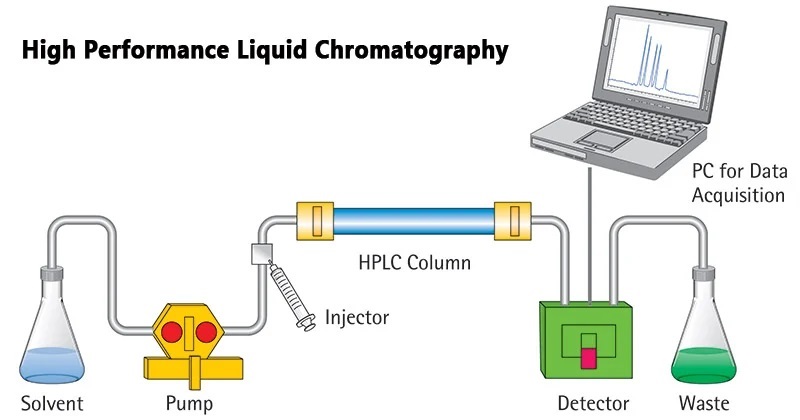
High Performance Liquid Chromatography HPLC

Advantages of using HPLC:

  • Silica-resin packed HPLC columns are highly suitable for extracting cannabinoids from a crude cannabis mixture, and are known to exhibit excellent purity and yield.
  • Moreover, in an HPLC process, the purification controls are highly optimized, eliminating the need for any troubleshooting protocols.

Disadvantages of using HPLC:

Although HPLC is an industry-wide accepted technique for cannabis testing, there are many disadvantages associated with it, including:

  • The cost of stationary columns used in the assay is very high.
  • HPLC setup needs large reagent volumes for mobilization of pure fractions, leading to high costs and complexities in large scale studies.
  • HPLC requires greater run times, further adding to the cost.
  • HPLC columns need to be tailored according to the size of the compound to be extracted.
  •  HPLC columns often need to be replaced repeatedly, especially for cannabinoid extraction which is generally sticky in nature.

Centrifugal Partition Chromatography (CPC)

As mentioned earlier, CPC is relatively a cost-effective alternative to HPLC. It is a silica-free liquid chromatography technique, in which the stationary liquid phase and the immiscible mobile phase are merged to create a two phase system. The stationary phase is held together by the centrifugal force inside the column. In order to extract cannabinoids, the crude mixture and mobile phase are injected and pumped through the column, which are then separated on the basis of their partition coefficient. Further, the composition of mobile and stationary phases is varied in order to selectively extract the cannabinoids and obtain an ideal partition coefficient.
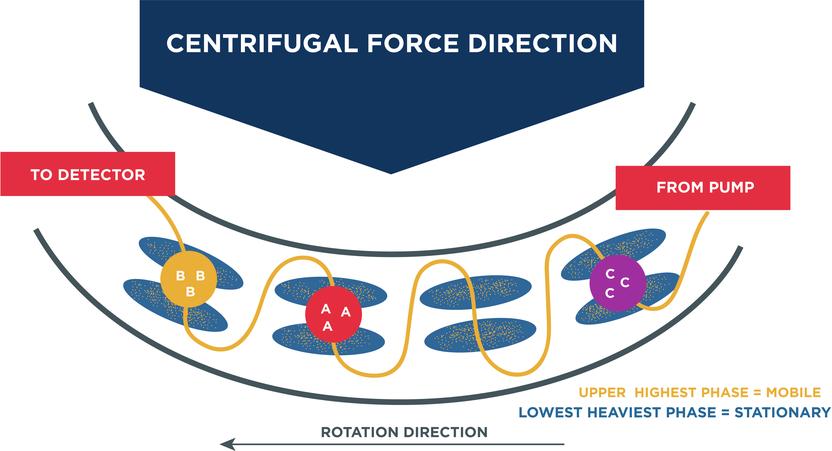
Centrifugal Partition Chromatography

Advantages of using CPC:

  • The run times of CPC are relatively less than HPLC
  • The assay requires lesser amount of solvent, accompanied by a high recovery percentage.
  • Although CPC columns can be costly, they can be used and re-used for several types of samples, such as complex synthetic and natural mixtures.

Disadvantages of using CPC:

CPC is relatively a new technique, therefore, it needs to be optimized carefully before it can be used in large-scale and high priced projects.

Summing Up

Cannabis testing and purification has gained substantial importance in recent times, given its increasing application in the medical field. This has increased the demand for a cost-effective purification method, which can produce high yield of purified cannabinoids. While HPLC is a commonly used extraction method,  the efficiency, cost-effectiveness, scalability and yield makes CPC a more suitable choice for cannabinoid researchers. It is crucial to be aware of the pros and cons related to both the techniques, in order to make an informed choice for their cannabis purification needs.
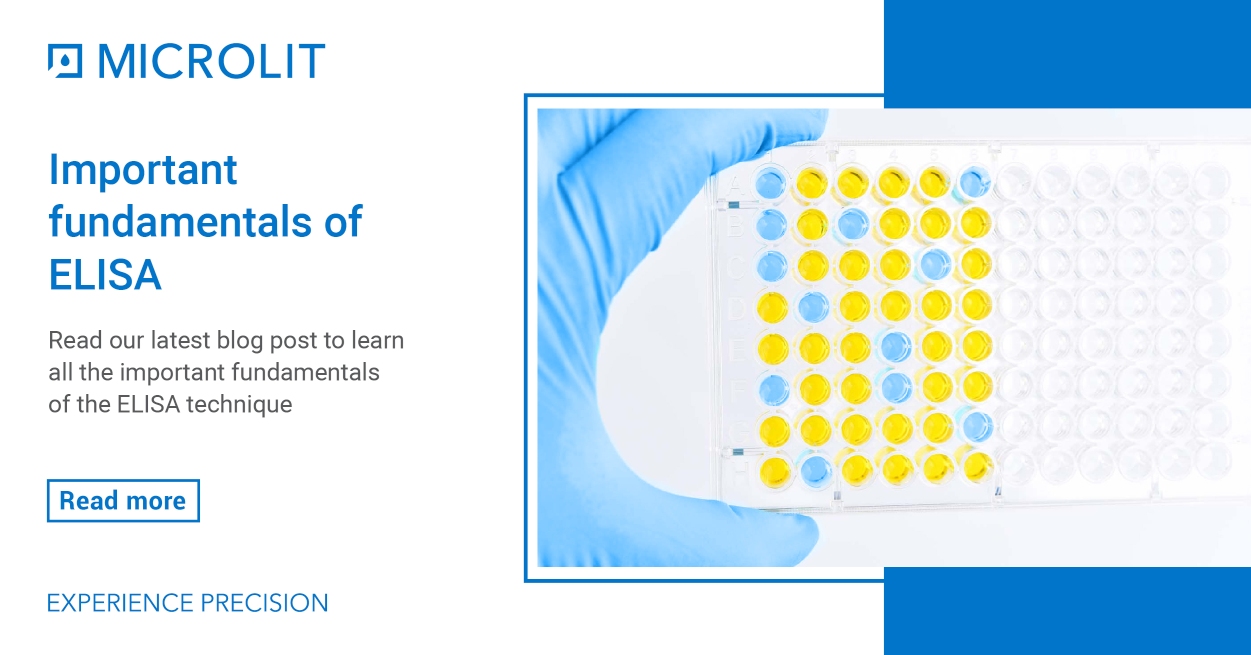
Fundamentals of ELISA

ELISA (enzyme-linked immunosorbent assay) is a plate-based assay used to detect and quantify molecular entities, such as antibodies, proteins, peptides and hormones. ELISA is typically performed in 96-well (or 384-well) polystyrene plates, which are able to passively bind antibodies and proteins. Till date, researchers have developed many variants of ELISA for their specific needs, however, all ELISA techniques consist of some basic elements:

  • Coating / Capture: This includes direct or indirect immobilization of antigens on the surface of microplate wells.
  • Plate Blocking: This step involves the addition of a dissimilar protein onto the microplate well’s surface to cover all unsaturated surface-binding sites. This process happens via hydrophobic interactions between the plastic and non-polar protein residues.  Different proteins usually require very specific conditions or pre-treatment for optimal binding. The most popular coating technique involves the addition of a 2-10 μg / ml protein solution dissolved in an alkaline buffer to the microwell plate.
  • Probing / Detection: The microplate is incubated with antigen-specific antibodies that bind specifically to the antigens of interest. The plate is generally left to incubate for several hours overnight at 4-37°C.
  • Signal Measurement: The signal generated through the direct/indirect tag on the specific antibody is detected and measured. A highly specific antibody-antigen interaction is crucial for an appropriate signal generation.

The ability to wash away non-specific materials makes ELISA a very powerful tool for measuring specific analytes. There are primarily four types of ELISA techniques, namely direct ELISA, indirect ELISA, sandwich ELISA and competitive ELISA, which are discussed in detail below.

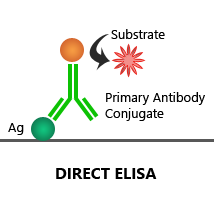
  1. Direct ELISA:

    In this assay, the target antigen is coated onto the plate, which is then detected by an enzyme-linked 1′ antibody.

    direct elisa

Advantages:

  •   Easy and quick to perform as no complex steps are involved.

Disadvantages:

  • Specificity of the primary antibody may get impacted by the enzyme-linking process
  • Scope of signal amplification is limited
  • Linking 1′ antibody for every ELISA experiment can be expensive and time-consuming.
  1. Indirect ELISA:

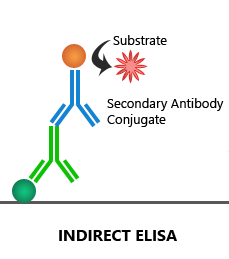
    The target antigen coated on the microplate is first bound by an unconjugated 1′ antibody, which is then detected by an enzyme-linked 2′ antibody.

    direct elisa

Advantages:

  •   Specificity of the 1′ antibody is retained
  •   Enzyme-linked 2′ antibodies are readily available in the market
  •  As multiple polyclonal 2′ antibodies can bind to 1′ antibody individually, signal amplification is enhanced.

Disadvantages:

  •  Risk of cross-reactivity with 2′ antibodies that may result in a non-specific signal.
  1. Sandwich ELISA:

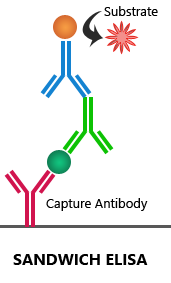
    Sandwich ELISA requires an antibody pair that targets two distinct epitopes on the target antigen. The first antibody, also called the capture antibody, is coated to the multi-well plate. Then, the target antigen is added, which is detected by the enzyme-linked detection antibody. The target antigen is ‘sandwiched’ between the capture and detection antibodies. Both direct and indirect detection techniques can be used in the sandwich ELISA assay.

    direct elisa

Advantages:

  •  As the signal detection requires the binding of two 1′ antibodies, the assay has higher specificity.

Disadvantages:

  •   Commercial pre-prepared kits may not be available readily.
  1. Competitive ELISA:

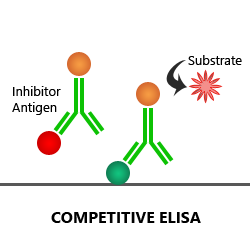
    In a competitive ELISA assay, the 1′ antibody is first added to the sample to form antigen-antibody complexes. Then, a sample is added to the microplate well, which is coated with the target antigen. Only the unbound 1′ antibody present in the sample can bind to antigen-coated onto the plate. Based on the amount of antigen present in the sample, more or less free antibodies will be available to bind to the reference antigen, which will, in turn, impact the intensity of the signal. Both direct and indirect detection methods are used in the competitive ELISA technique.

    direct elisa

Advantages:

  •   Higher sensitivity
  •  Crude sample can be used

Disadvantages:

  •   Requires 1′ antibodies having high specificity to the sample antigen

Although the overall process of ELISA is quite straightforward, you should take control of certain crucial variables while performing it. For instance, it is important to optimize the plate-coating conditions for the antigen or capture antibody. You should choose an assay microplate, (and not a tissue culture treated plate), which has a minimum protein-binding capacity of 400 ng/cm2. Further, make sure that the coefficient of variation (CV) value of the protein binding is low (<5% is generally preferred). This ensures that the deviation in study results is low.

In addition, it is crucial to remember that you should choose the plate color depending upon the signal being detected. For example, clear polystyrene flat bottom plates are mostly suitable for colorimetric signals, and black or white opaque plates are apt for fluorescent and chemiluminescent signals. In addition, you should also visually inspect plates before you use them, as any scratches or imperfections on the plastic surface are likely to cause aberrations during the detection of the signal. Always make sure that you use high-quality and reliable microwell plates that can generate reproducible results.

To read more informative blogs and articles, visit the page Microlit Blogs.

Top 10 Biotechnology Companies in the USA

With the outbreak of the COVID-19 pandemic, biotechnology companies in the United States have taken the center stage in the pharmaceutical space. The biotech companies in America have helped the world face the COVID-19 head-on by developing diagnostic tests and vaccines in record time.

Lately, various novel advances have been witnessed in the domain, including the use of AI platforms in drug development, emergence of RNA-based therapies and single-cell genomics, as well as bio-based manufacturing. These developments have made it possible for the biotechnology firms in USA to advance their drug development and commercialization efforts, specifically in the disease areas with high unmet need. In this blog, we have looked at the top biotech companies in USA as measured by 12-month trailing (TTM) (as of March 25, 2020). We also look at the key products in their product portfolio and therapy areas of focus.

1)    Novo Nordisk

Revenue (TTM): USD 18.3 billion

Net Income (TTM): USD 5.8 billion

Novo Nordisk is a multinational biotech company, headquartered in Denmark, which markets its products in over 160 countries. The company’s primary focus area is diabetes. It has established a total of 16 production facilities based across nine countries. In addition, the firm has 10 R&D centers spread across five countries. The company is also involved in the development and commercialization of products for hemophilia and rare bleeding disorders, growth hormone deficiency, and obesity. It has several commercialized products in biotechnology and its portfolio, including Levemir, Novolin R, NovoLog, NovoSeven, NovoEight, and Victoza.

2)    Regeneron Pharmaceuticals

Revenue (TTM): USD 7.9 billion

Net Income (TTM): USD 2.1 billion

Regeneron Pharmaceuticals is involved in the discovery, development, manufacture and commercialization of biopharmaceutical products. Regeneron’s therapeutic focus includes eye disorders, cardiovascular diseases, allergic and inflammatory issues, cancer and infectious disorders. It has partnered with various pharmaceutical giants, including Sanofi, Bayer, Roche and Teva Pharmaceuticals to develop and market groundbreaking products. The company has also established a Regeneron Genetics Center, which aims to conduct one of the largest gene sequencing experiments.

3)    Alexion Pharmaceuticals

Revenue (TTM): USD 5.0 billion

Net Income (TTM): USD 2.4 billion

Alexion is a subsidiary of pharmaceutical giant, AstraZeneca, which is specifically focused on development of therapies for rare disorders. The company has 5 marketed products for patients suffering from paroxysmal nocturnal hemoglobinuria (PNH), atypical hemolytic uremic syndrome (aHUS), anti-aquaporin-4 (AQP4) antibody-positive neuromyelitis optica spectrum disorder (NMOSD), generalized Myasthenia Gravis (gMG), hypophosphatasia (HPP), and lysosomal acid lipase deficiency (LAL-D). Through its drug candidates, Alexion aims to develop drug compounds that selectively target certain areas of the immune system responsible for proliferation of the disease.

4)    Vertex Pharmaceuticals

Revenue (TTM): USD 4.2 billion

Net Income (TTM): USD 1.2 billion

Vertex is a global biotechnology company in America, focused on development of transformative therapies for people with serious diseases. The firm has several approved products for the treatment of cystic fibrosis -a rare, life-threatening genetic disease. The company was founded in 1989 and its international headquarters are located in London. Further, the company has R&D sites and commercial offices based across North America, Europe, Australia and Latin America. In addition to cystic fibrosis, the company focuses on developing drugs for other cancerous indications, autoimmune diseases and neurological disorders.

5)    Jazz Pharmaceuticals

Revenue (TTM): USD 2.2 billion

Net Income (TTM): USD 0.5 billion

Jazz Pharmaceuticals is one of the best american biotech companies, with a focus on development of novel product candidates in two key therapeutic areas- neuroscience and oncology. It has various commercialized products in its portfolio for the treatment of narcolepsy, psychiatry, pain management and oncology. In addition, the company claims to be an industry leader in the field of biotechnology, sleep disorders, epilepsy, hematologic malignancies and solid tumors. The company aims to leverage cannabinoid science and innovative delivery technologies to develop novel compounds.

6)    Incyte Corporation

Revenue (TTM): USD 2.2 billion

Net Income (TTM): USD 0.5 billion

Incyte is a biopharmaceutical firm responsible for discovering, developing, and commercializing biological therapies. The company has an approved drug candidate, Jakafi, indicated for the treatment of myelofibrosis. The company has a growing pipeline across two therapy areas- Oncology and Inflammation & Autoimmunity.

7)    Biomarin Pharmaceutical

Revenue (TTM): USD 1.7 billion

Founded in 1997, BioMarin is a leader in development and commercialization of best-in-class therapies for rare genetic diseases. Biomarin Pharmaceutical has developed various therapeutic enzyme products for lysosomal storage diseases and serious burn injuries. The company’s approved products include PALYNZIQ, Brineura, Vimizim, Kuvan, Naglazyme and Aldurazyme.

8)    United Therapeutics

Revenue (TTM): USD 1.4 billion

United Therapeutics is engaged in the development of therapies for pulmonary hypertension, peripheral vascular disease and other vascular conditions. The company’s main focus is the development of novel pharmaceutical therapies and building technologies for easier availability of transplantable organs. The firm’s most popular drugs include Remodulin, Orenitram, Unituxin, and Tyvaso.

9)    Alkermes

Revenue (TTM): USD 1.2 billion

Alkermes, an Irish biopharmaceutical company is focused on the development of drug treatments for central nervous system disorders, such as depression, schizophrenia and addiction. In addition, the company is engaged in the development of therapies for diabetes treatment.

10)  Ionis Pharmaceuticals

Revenue (TTM): USD 1.1 billion

Net Income (TTM): USD 0.3 billion

Ionis Pharmaceuticals is involved in the discovery and development of RNA-based therapeutic products. It has three major commercially-available drugs, including WAYLIVRA, Spinraza and Tegsedi. Further, the company is engaged in the development of drug treatments for Huntington’s disease, Amyotrophic lateral sclerosis (ALS) and cardiovascular disease.

Tips and Techniques for Pipetting Small Volumes

As modern researchers increasingly work with high-value small volume samples, the need for advanced pipetting techniques/protocols is evident. In order to detect microscopic changes accurately in small sample volumes, test tubes and vials are being gradually replaced by microplates, which require reagents in the microliter/nanoliter range.

While working with small volumes, factors such as temperature and dispensing accuracy are critical to control and manipulate. If you want consistent results while working with small liquid volumes, you need to identify and eliminate all potential sources of error and review your lab workflow on a regular basis. This holds true for errors stemming from using wrong pipetting instruments and inaccurate pipetting techniques. Here are some tips for pipetting small volumes accurately.

Use Right Pipettes and Pipette Tips

As volumetric errors are more prominent at low sample volumes, it is important to select a pipette that delivers sample quantities that align with the study protocol. Be sure to choose the smallest possible pipette for handling the sample volume. For instance, if you are pipetting 1µL of the sample, use a 2-5 µL pipette rather than a 20µL one.

In addition, you need to know whether you are using the right kind of pipette for your workflow. For instance, positive displacement pipettes are ideal for handling volatile, viscous, and other kinds of difficult samples. It is advised to go through the manufacturer’s instructional manual while selecting the type of pipette for your experimental needs. Most errors reported in the lab are caused due to liquid volatility or viscosity, and unexpected environmental changes. You must make sure that your pipetting technique aligns with surrounding conditions, sample type, and sample volumes.

Use the Correct Pipetting Technique

There are various do’s and don’ts when it comes to using a particular pipetting technique for smaller liquid volumes. For instance, you need to ensure that you hold the pipette at an appropriate vertical position and pull the pipette straight out from the sample container while avoiding touching the vessel’s side surface.

For sample volume less than 50 μL, you should avoid holding the pipette at an angle, as it will alter the aspirated volume of the liquid. Further, if you let the pipette tip touch the side of the vessel, it creates a wicking process that lowers the volume of liquid dispensed.

Additionally, it is important that you pause consistently after aspirating and before removing the tip from the liquid. Also, try to use consistent plunger pressure and speed. Depress the plunger smoothly until it comes to rest, immerse the pipette tip, and then release it at a constant rate. This is recommended as such repeated actions are likely to produce reproducible results.

Consider Various Environmental Temperatures

You need to ensure that you take into account various environmental factors, including temperature, pressure, and humidity levels of your laboratory while designing your pipetting workflow. Experts recommend that you should not pipette small volumes at lower temperatures than the ambient temperature in your lab. The ambient temperature of your lab will directly impact the precise volume of the sample pipetted by your instrument, as thermal expansion caused by higher temperatures is likely to increase the air space between the sample and the pipette tip, and significantly decrease the volume dispensed.

Equilibrating small volume samples with the lab environment helps to drastically reduce volumetric errors, as well as prevent over-dispensing of cold liquids. In addition, you can use a positive-displacement pipette while working with extremely cold or hot liquids to maintain greater levels of precision and accuracy.

Pre-Wet the Pipette Tips

In order to aspirate and dispense small volume samples correctly, you must pre-wet the pipette tips before you begin the pipetting workflow. Pre-wetting essentially involves immersing the pipette tip in the liquid before performing the consequent pipetting steps.

Despite using a validated pipetting technique, failure to pre-wet the pipette tips can lead to increased evaporation and reduced delivery volumes. Pre-wetting the pipette tips enables you to dispense accurate and precise liquid volumes by increasing the humidity levels inside the chamber, thereby limiting liquid evaporation while the pipetting procedure is carried out.

Use the Correct Immersion Depth

Before aspirating, it is important that you immerse the tip properly below the meniscus. For large volume pipettes (1-5 mL), the immersion depth should be at least 5-6 mm, while for smaller volume pipettes, the depth should be around 2-3 mm.

If you immerse it too little, specifically the large volume pipettes, it can result in the aspiration of air. On the other hand, if you immerse it more than necessary, it can make the liquid stick to the pipette tip surface, leading to volumetric errors.

Concluding Remarks

If you ignore any of the above-mentioned variables, the chances of errors creeping into your workflow can increase dramatically, leading to unreliable results. As the sample volume gets smaller, the impact of its physical properties, surrounding temperatures, and pipetting techniques become increasingly prominent, making the pipetting workflow quite daunting. Following the best practices and taking care of a few key aspects is likely to improve your pipetting technique and help you obtain the highly accurate results you are looking for!

If you would like to know more about our pipettes and pipette tips, please contact us at info-usa@microlit.com

How To Prevent Cell Culture Contamination

You might have taken control of all the possible variables involved in your cell culture experiment, and feel assured that your study is free of any type of contamination causing agent. However, contamination caused by a pipette and its tips lurk discreetly in the corner, and are likely to be overlooked by many researchers. When scientists design various aspects of a research study, the type of pipettes, pipette tips, and pipetting techniques to be followed are seldom given any importance. However, if these variables are not given the requisite attention, they have the potential to adversely impact the outcome of your experiment.

There are basically three sources of contamination caused by pipetting applications:

  1. Pipette-to-sample Contamination:  Sample is contaminated by the pipette or its tip.
  2. Sample-to-pipette Contamination: Samples enter the pipette body, thereby, contaminating the pipette.
  3. Sample-to-sample Contamination: Residual sample in the pipette is transferred to the next sample batch. This usually happens when tips are not replaced regularly.

In order to ensure that workflows are completely aseptic in nature, it is imperative to choose the right kinds of pipette / pipette tips, as well as follow a robust pipetting protocol.

Listed below are some pipetting guidelines that will help you to effectively mitigate the contamination risk.

  1. Keep your Pipettes Clean: Make sure you clean your pipettes and its tips each time before use, with 70% ethanol. If you are using any other decontamination agents, you must clean the residues with distilled water. However, you need to ensure that the pipette is resistant to any damage caused by cleaning agents. In addition, it’s important to select the pipettes having an easy-to-clean design, which can be easily disassembled by anyone. Further, using autoclavable pipettes and tips can prove to be useful in establishing contamination-free workflows.
  2. Maintain Tip Sterility: While autoclaving pipette tips, ensure that the autoclave is working properly, and you are following the process prudently. If you are using pre-sterilized pipette tips, you need to make sure that the manufacturer has followed a certified and validated tip sterilization process. Moreover, when using filter tips, remember not to autoclave the tips as polyethylene filters are not able to withstand the high temperatures of an autoclave. Further, pipette tips can act as a potential source of leachables (trace amounts of chemicals originating from raw materials or manufacturing equipment). To avoid sample contamination by leachables, it is recommended that you purchase high quality virgin polypropylene tips manufactured in a certified facility.
  3. Be Cautious while Dispensing Multiple Samples: When you are multi-dispensing, there is a high chance that the tips are carrying over contamination from the previous sample if not replaced. Make sure that you change the tip when dispensing every new sample.
  4. Use Safe-cone Filters or Filter Tips: In addition to minimizing the risk of contamination, safe-cone filters play a crucial role in protecting the pipette’s surface from volatile liquids. However, it is essential that you replace the filters after 50 or more pipetting applications. Select the filter tips that allow for adequate space between sample and the filter.
  5. Use Long Tips Wherever Possible: If you choose long pipette tips that are able to touch the bottom of the sample vessel, the pipette would not come in contact with it, thereby, significantly minimizing the risk of contamination. Long pipette tips cannot be used in all experiments, however, should be used wherever appropriate.
  6. Choose Air-tight Tip Wrapping: While storing pipette tips, make sure you use the air and watertight tip rack wrapping. This helps to keep the contaminants out during storage. In addition, take off the wrapping just before you have to place the tip rack inside the laminar air flow chamber.
  7. Assess Pipette Tip Sterility Standards: Pipette tips should always adhere to certain regulatory standards which you can evaluate through quality assurance certification. You must ensure that the standards are suitable for your experimental needs.
  8. Prevent Splashing: Contamination can also occur as a result of splashing of liquid samples while pipetting. You can avoid this by pipetting slowly or with a constant pace, especially in case of viscous liquids. When using an electronic pipette, make sure you are operating it in a slow speed setting.
  9. Restrict Movement of Pipettes: Moving pipettes from one lab to another is also a common source of contamination and should be avoided at all costs. In addition, make sure to mark your pipettes, especially in areas / workflows prone to high contamination risks.  
  10. Use Stands for Storage: Always use stands to store your pipettes in order to prevent any unwanted spillage and protect them from contaminants present on the working surface. Stands also keep your pipettes from dropping and breaking, thus keeping them intact, and in the right working condition.

Concluding Remarks

In order to achieve reliable lab results, it is paramount that you get rid of all potential contamination sources, including pipetting based hazards. First step is to identify such contamination mechanisms, and then evaluate how to eradicate them effectively. Many contamination agents can be eliminated by wiping with ethanol or rinsing with distilled water. In other scenarios, autoclaving of pipettes / tips should be performed to establish higher sterility standards.

If you seek assistance in choosing the perfect pipette for your lab, get in touch with us at info-usa@microlit.com.