




 23
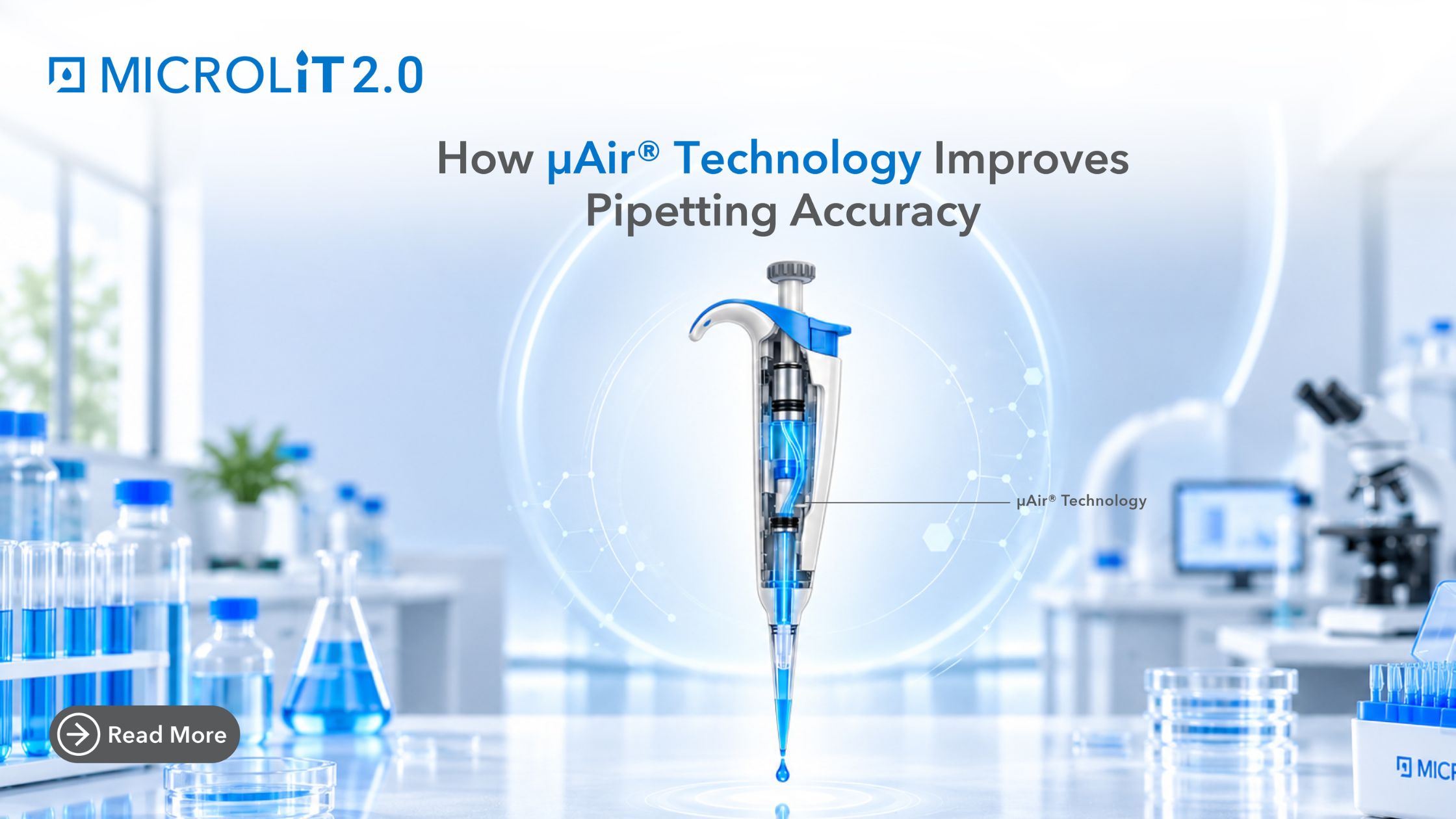
Precision is fundamental to reliable laboratory results. Whether you are conducting pharmaceutical research, performing diagnostic tests, preparing samples, or working in life sciences, even small errors in liquid handling can affect experimental outcomes. Choosing the right micropipette is therefore essential for achieving consistent, accurate, and reproducible results.
However, pipetting accuracy depends on more than the instrument’s volume range. Internal design, air displacement, calibration, ergonomics, tip compatibility, and operating technique all contribute to performance.
One technology designed to address an important factor in air-displacement pipetting is μAir® Technology, featured in the MICROLIT NERO® micropipette range. Understanding how this technology works can help laboratories select the right micropipette for their specific applications.
-
Understanding the Science Behind Pipetting Accuracy
Air-displacement micropipettes operate by moving a piston that displaces air inside the instrument. This air movement draws liquid into the disposable tip and subsequently dispenses it.
Because air is compressible, changes in air pressure and volume can influence the amount of liquid aspirated or dispensed. Factors such as temperature, liquid viscosity, dispensing technique, and the space between the piston and liquid can affect the final result.
This is particularly important when working with small volumes, where even minor variations can have a proportionally greater impact.
Two performance characteristics are especially important:
- Accuracy: How closely the dispensed volume matches the intended volume.
- Precision: How consistently the micropipette delivers the same volume across repeated operations.
A reliable micropipette should provide both, supported by appropriate calibration, compatible tips, and correct handling.
-
What Is μAir® Technology?
μAir® Technology is a design feature incorporated into MICROLIT NERO® micropipettes to minimize dead air space between the piston and the liquid in the tip. By reducing this space, the technology aims to reduce air compression and support precise liquid handling under practical laboratory conditions. Source: MICROLIT NERO product information.
In conventional air-displacement pipetting, the air cushion acts as an intermediary between the piston and the liquid. If the air space is larger, its compressibility can influence how the instrument responds to pressure changes during aspiration and dispensing.
The μAir® design addresses this factor by minimizing the dead air space within the pipetting system.
How can this improve pipetting performance?
Reduced air compression: Minimizing dead air space helps reduce the effect of air compression on liquid movement.
More controlled liquid handling: The design supports consistent aspiration and dispensing when used with an appropriate technique.
Reliable performance in practical conditions: The technology is intended to help users achieve precision during routine laboratory work.
It is important to remember that μAir® Technology is one part of the overall pipetting system. Correct technique, suitable tips, calibration, and environmental conditions remain essential for achieving the specified performance.
-
How to Choose the Right Micropipette for Your Application
The best micropipette is not necessarily the one with the highest capacity or the most features. It is the one that matches your routine working volume, experimental requirements, and laboratory workflow.
- Single-Channel Fixed-Volume Micropipettes
Fixed-volume micropipettes are designed to dispense one predetermined volume. They are particularly useful when the same volume is repeatedly transferred across samples.
Typical applications include routine reagent preparation, repetitive analytical procedures, and standardized laboratory protocols.
Why choose this variant?
- Consistent delivery of a predefined volume.
- Straightforward operation for repetitive tasks.
- Useful when the experimental protocol does not require frequent volume changes.
MICROLIT NERO® single-channel fixed-volume micropipettes combine μAir® Technology with features designed for convenient routine operation. Their suitability should be assessed against the required volume and published performance specifications.
- Single-Channel Variable-Volume Micropipettes
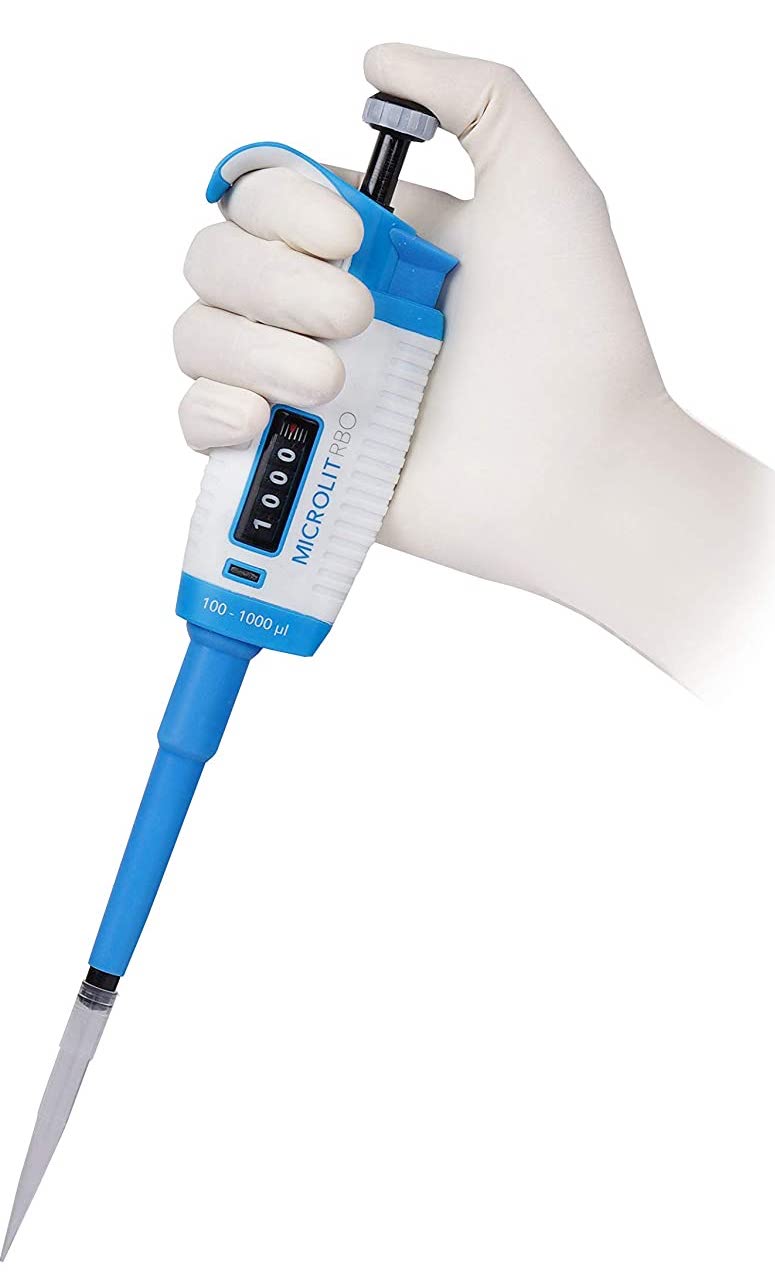
Variable-volume micropipettes allow users to adjust the delivery volume within a specified range. They are suitable for laboratories that perform different procedures or work with samples requiring different quantities of liquid.
Applications include molecular biology, analytical chemistry, research, sample preparation, and general laboratory testing.
Why choose this variant?
- Flexibility to work with different volumes.
- Reduced need to switch instruments between procedures.
- Convenient volume adjustment for changing experimental requirements.
The MICROLIT NERO® single-channel variable-volume range includes models covering volumes from 0.2 μL to 10,000 μL, depending on the selected model. Always check the individual model’s operating range and accuracy specifications before selection.
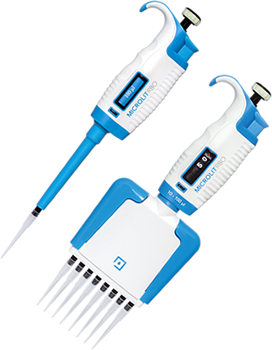
- Multichannel Micropipettes: 8-Channel and 12-Channel
When laboratories need to transfer liquid across multiple wells, multichannel micropipettes can significantly improve workflow efficiency.
An 8-channel micropipette can transfer liquid into eight wells simultaneously, while a 12-channel model can serve twelve wells in one operation. These instruments are particularly useful for microplate-based workflows.
Common applications include:
- ELISA and microplate assays.
- Molecular biology and sample preparation.
- Serial dilution and reagent dispensing.
- Cell-based assays and high-throughput screening.
MICROLIT NERO® multichannel micropipettes are available in 8-channel and 12-channel configurations, with variable-volume models designed to support different laboratory requirements.
Why consider μAir® Technology in multichannel pipetting?
When transferring liquid across several wells simultaneously, consistent dispensing across channels is important. μAir® Technology is designed to minimize dead air space and reduce air compression, supporting precision in liquid handling.
However, multichannel performance also depends on tip fit, uniform tip seating, correct immersion depth, and consistent dispensing technique. Laboratories should evaluate the accuracy and precision specifications for the selected model rather than assuming that the technology alone guarantees identical delivery across all channels.
- Which NERO Micropipette Variant Is Right for You? – will share chart
|
Laboratory requirement |
Recommended variant |
| Repeated transfers of one fixed volume |
Single-channel fixed-volume |
|
Different liquid volumes across experiments |
Single-channel variable-volume |
|
Simultaneous transfers across eight wells |
8-channel multichannel |
| Simultaneous transfers across twelve wells |
12-channel multichannel |
|
Microplate-based workflows |
Multichannel, selected according to plate format and volume |
The final choice should also account for the required volume range, accuracy, precision, ergonomics, and compatibility with your experimental procedure.
- Beyond μAir® Technology: Features That Matter
When choosing a micropipette, it is worth evaluating additional design features that support performance and ease of use.
UniCal® Technology: MICROLIT NERO® incorporates a calibration mechanism designed to facilitate in-laboratory recalibration without disengaging the digits from the plunger mechanism. This can simplify routine calibration procedures.
Ergonomic construction: Lightweight construction, comfortable handling, and smooth plunger movement can help reduce operator fatigue during repetitive pipetting.
Volume-setting mechanism: Clear volume indication and secure adjustment help users select the intended volume and avoid accidental changes.
Tip compatibility: A suitable tip fit is essential for reliable aspiration and dispensing. Always use compatible tips and ensure they are securely attached.
Autoclavability: The NERO range is designed to support autoclaving under specified conditions. Follow the manufacturer’s instructions for the applicable model and components.
Together, these features complement μAir® Technology by addressing calibration, handling, and routine laboratory usability.
-
Best Practices for Maximizing Pipetting Accuracy
Even a well-designed micropipette requires correct operation. Follow these practices to help achieve reliable results:
- Select a micropipette whose working range matches the required volume.
- Use compatible tips and ensure they are fitted securely.
- Pre-wet the tip when appropriate for the liquid and procedure.
- Maintain consistent immersion depth and aspiration speed.
- Keep the pipette vertical during aspiration and follow the manufacturer’s dispensing instructions.
- Avoid bubbles and allow sufficient time for aspiration and dispensing.
- Calibrate and maintain the instrument according to laboratory procedures and manufacturer recommendations.
These practices are particularly important when handling small volumes or working with viscous, volatile, or temperature-sensitive liquids.
Conclusion: Choose Precision That Matches Your Workflow
Choosing the right micropipette requires balancing volume requirements, accuracy, precision, ergonomics, and application needs. Fixed-volume models are useful for repetitive transfers, variable-volume models offer flexibility, and multichannel variants improve efficiency in microplate-based workflows.
μAir® Technology in MICROLIT NERO® micropipettes is designed to minimize dead air space between the piston and the liquid in the tip, helping reduce air compression and support precision in practical laboratory conditions.
By combining an appropriate micropipette variant with correct technique, suitable tips, and regular calibration, laboratories can improve the reliability and consistency of everyday liquid handling.
Explore the MICROLIT NERO® micropipette range to identify the configuration that best suits your laboratory’s requirements:
https://www.microlit.com/product-category/nero-micropipette/