




 23
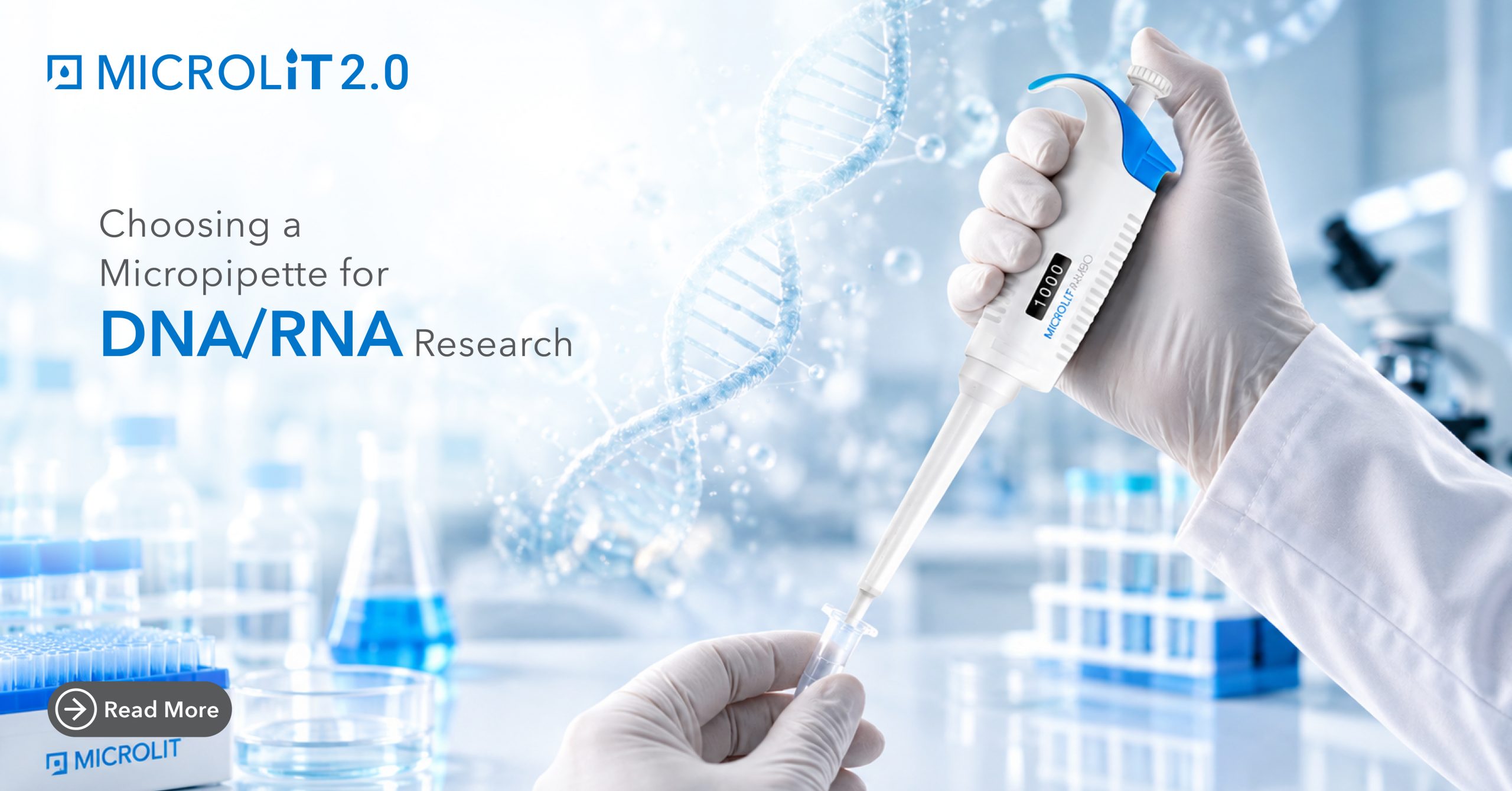
DNA and RNA research demands precision at every stage, from nucleic acid extraction and purification to PCR preparation, sequencing and gene expression analysis. Even small liquid-handling errors can affect reagent concentrations, sample consistency, amplification efficiency and the reproducibility of experimental results.
Choosing the right micropipette is therefore an important decision for molecular biology laboratories. The ideal instrument should match the working volume, experimental workflow, required precision and frequency of use.
MICROLIT offers three micropipette families suited to different laboratory needs: NERO, RAMBO, and AQUA. These include manual single-channel and multichannel models, as well as electronic micropipettes with programmable operating modes.
-
What Should You Consider When Choosing a Micropipette?
Before selecting a model, evaluate these five factors.
- Working volume: Choose a pipette whose volume range matches the volumes you regularly transfer. Low-volume applications require particular attention to the instrument’s accuracy and precision specifications.
- Accuracy and precision: Reliable pipetting helps maintain consistent reagent concentrations and sample preparation.
- Channel configuration: Single-channel models suit individual samples, while multichannel models help process microplates efficiently.
- Manual or electronic operation: Manual pipettes offer straightforward volume control, while electronic pipettes can automate dispensing and support repetitive workflows.
- Contamination control: Use appropriate sterile, preferably filter-equipped tips where required, and follow established procedures for preventing DNA, RNA and PCR contamination.
-
MICROLIT NERO: For Precision in Routine Molecular Biology
NERO manual micropipettes combine μAir® and UniCal® technologies with an ergonomic design. μAir® is designed to minimize dead air space between the piston and the liquid in the tip, while UniCal® supports convenient in-laboratory recalibration.
NERO is worth considering for laboratories performing routine nucleic acid extraction, reagent preparation, DNA/RNA quantification workflows and PCR setup.
Its variants include:
- Single-channel fixed-volume: For repetitive transfers at a predetermined volume.
- Single-channel variable-volume: For protocols requiring different volumes.
- Multichannel fixed-volume: For repetitive transfers across multiple wells at a fixed volume.
- Multichannel variable-volume: For adjustable liquid delivery across microplates.
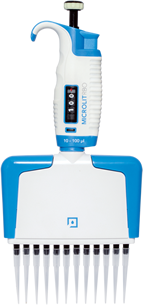
The multichannel range includes 8-channel and 12-channel configurations. Variable-volume models cover several ranges, from low-microlitre dispensing to larger volumes, depending on the model.
For DNA/RNA research, select the specific volume range according to your protocol. For example, low-volume models may be useful for PCR master mix preparation, while larger-volume models may be appropriate for buffer preparation and sample transfers.
-
MICROLIT RAMBO: For Everyday Pipetting and Repetitive Transfers
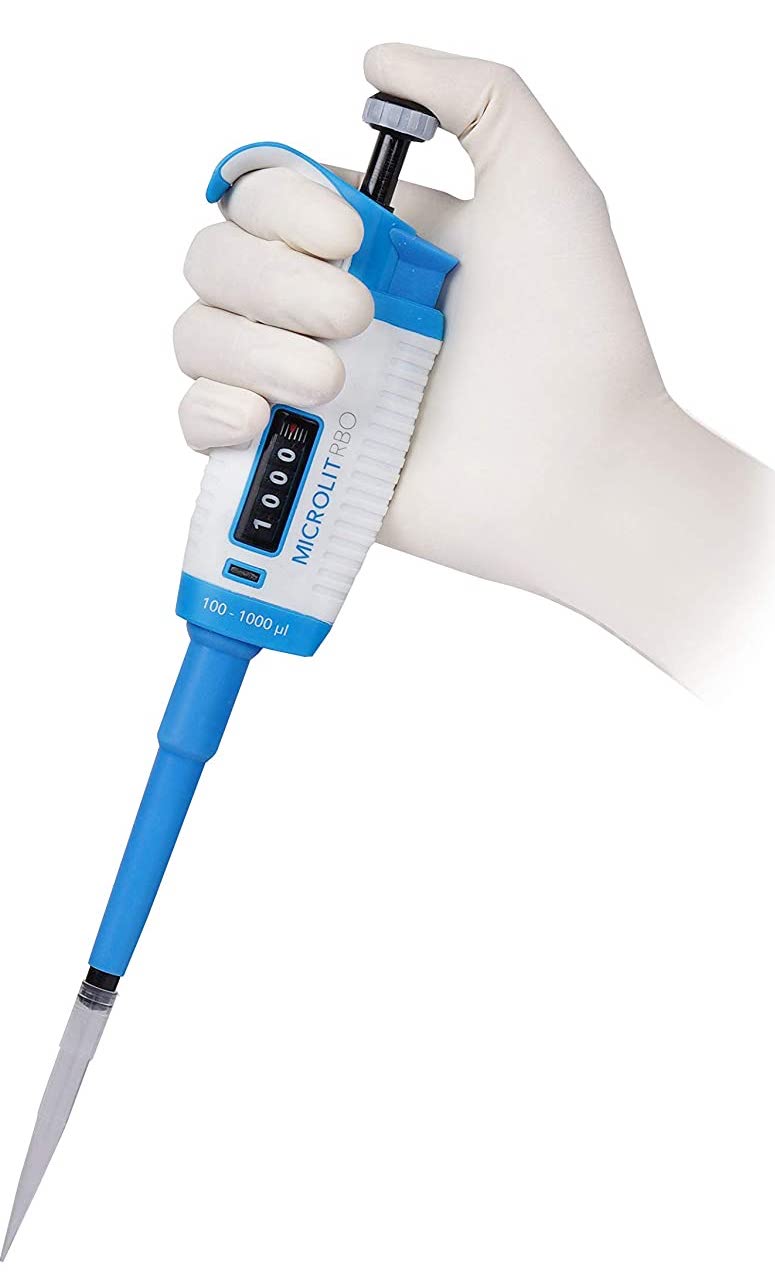
RAMBO features μAir® Technology, an ergonomic design, a volume adjustment knob, and a universal tip cone compatible with many standard pipette tips. These features support convenient handling during routine laboratory operations.
RAMBO can be considered for laboratories conducting routine sample preparation, reagent dispensing, and repeated liquid transfers in molecular biology workflows.
Its variants include:
- Single-channel fixed-volume models: Suitable for repetitive transfers at one volume.
- Single-channel variable-volume models: Useful for protocols requiring volume adjustments.
- Multichannel fixed-volume models: Designed for repetitive dispensing across multiple wells.
- Multichannel variable-volume models: Offer flexibility for microplate preparation.
The multichannel family includes 8-channel and 12-channel models, with several volume ranges available. The published model tables include low-volume configurations and options extending to 300 μL for the listed multichannel models.
For laboratories setting up PCR reactions or preparing several samples simultaneously, multichannel RAMBO models may help reduce repetitive manual operations. Choose the channel count and volume range according to your plate format and protocol.
-
MICROLIT AQUA: For Programmable Electronic Pipetting
AQUA offers motor-controlled piston movement, a rechargeable detachable battery, three selectable speed settings, and 12 pipetting modes. It can store up to six programs for repeated use.
Electronic pipetting can be particularly useful when researchers repeatedly perform the same liquid-handling steps. Programmed operation can reduce the number of manual actions required, while selectable speeds help users adapt dispensing to the application.
AQUA includes three important configurations.
- Single-Channel Electronic Micropipette
The single-channel AQUA range includes models from 0.2–10 μL through 1–10 mL, depending on the selected model. This makes it suitable for evaluating applications ranging from low-volume reagent transfers to larger sample and buffer handling.
Typical uses include:
- PCR and qPCR preparation.
- DNA/RNA extraction workflows.
- Reagent preparation and dilution.
- Repeated dispensing of defined volumes.
2. 8-Channel and 12-Channel Electronic Micropipettes
These models are designed for simultaneous dispensing into multiple wells. The listed capacities include 0.2–10 μL, 5–100 μL, and 10–300 μL configurations, depending on channel count and model.
They can be particularly useful for PCR plates, ELISA-related workflows, molecular screening, and repetitive sample preparation.
3. Adjustable-Spacing Electronic Micropipettes
AQUA also offers adjustable-spacing configurations in 4, 6, 8 and 12-channel variants. Motorized spacing adjustment helps transfer liquids between vessels with different well spacing, making these models useful when workflows involve different plate or tube formats.
For research laboratories that regularly transfer samples between tubes and microplates, this flexibility may help reduce manual handling and simplify the workflow.
-
Which MICROLIT Micropipette Is Best for Your DNA/RNA Workflow?
|
Research requirement |
MICROLIT option to consider |
| Routine manual liquid handling |
NERO or RAMBO single-channel |
|
Repeated transfer of a fixed volume |
NERO or RAMBO fixed-volume |
| Flexible manual volume adjustment |
NERO or RAMBO variable-volume |
|
PCR plate preparation |
NERO, RAMBO, or AQUA multichannel |
| Repetitive programmed dispensing |
AQUA electronic single-channel |
|
Repetitive multiwell dispensing |
AQUA 8-channel or 12-channel |
| Transfer between formats with different well spacing |
AQUA adjustable-spacing |
|
Larger-volume buffer handling |
Select a suitable higher-volume single-channel model |
The best choice depends on the exact working volume, number of samples, required precision, and level of automation needed.
-
Best Practices for Accurate DNA/RNA Pipetting
Even a high-quality micropipette requires correct technique to deliver reliable results.
- Use sterile tips and filter tips when appropriate for contamination-sensitive work.
- Change tips between samples and reagents to prevent cross-contamination.
- Keep pre- and post-amplification work appropriately separated.
- Use consistent aspiration and dispensing techniques.
- Avoid introducing bubbles into samples and reagents.
- Verify calibration and maintain the pipette according to manufacturer recommendations.
- Select a volume range that suits the actual transfer rather than routinely operating at the extremes of a model’s range.
For RNA workflows, RNase contamination control is especially important. Use RNase-free consumables and follow validated handling and cleaning procedures.
Conclusion: Choose the Right Micropipette for Reliable Research
Selecting a micropipette for DNA/RNA research involves more than choosing a volume range. Laboratories should consider accuracy, precision, channel configuration, contamination control, ergonomics, and the frequency of repetitive operations.
MICROLIT NERO is an option for precision-focused routine manual pipetting, RAMBO offers ergonomic manual pipetting for everyday laboratory tasks, and AQUA provides electronic operation for programmable and repetitive workflows, including multichannel and adjustable-spacing applications.
By matching the instrument to the experimental protocol and following good pipetting practices, researchers can support more consistent sample preparation and reproducible molecular biology workflows.
Explore the full MICROLIT micropipette portfolio: https://www.microlit.com/product-category/micropipettes/