




 337
337
In pharma and biotech laboratories, pipetting is rarely a one-time task. Researchers may perform hundreds of liquid transfers during a single workflow—preparing PCR plates, dispensing assay reagents, handling cell culture media, diluting samples or setting up high-throughput experiments.
That is where the choice between an electronic and manual pipette becomes important.
An electronic pipette can bring greater control, repeatability and convenience to repetitive workflows. But that does not mean every laboratory should replace its manual pipettes.
The smarter approach is to understand where electronic pipettes create value and select them for the workflows where they deliver the greatest benefit.
This electronic pipette buying guide focuses on what US pharma and biotech laboratories should evaluate before making a purchase—from workflow requirements and ergonomics to functionality, calibration, service and total cost of ownership.
Electronic vs Manual Pipette: What Is the Difference?
The basic purpose is the same: aspirate and dispense a defined volume of liquid.
The difference is how the action is controlled.
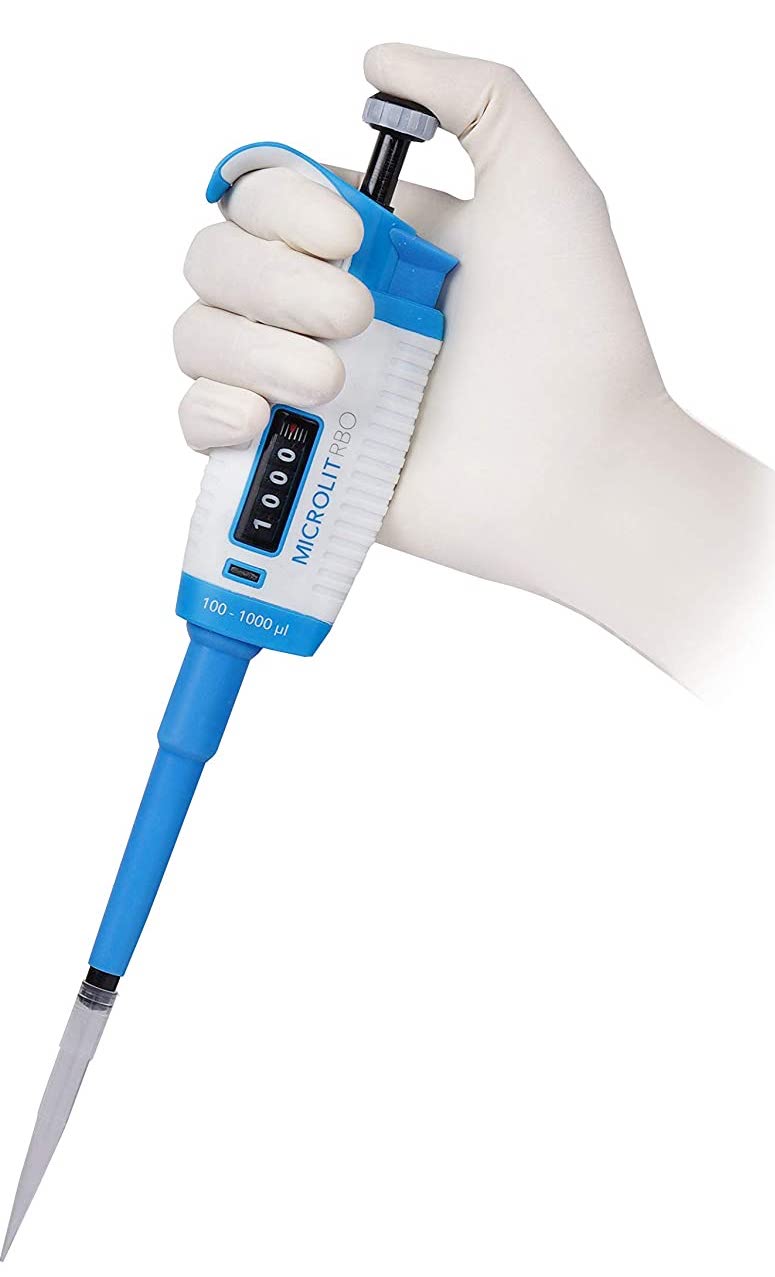
A manual pipette relies on the user’s thumb and hand to operate the piston. It is simple, flexible and well suited to routine laboratory work.
An electronic pipette uses a motor-driven mechanism to control aspiration and dispensing. Depending on the model, users can select different speeds, volumes and operating modes.
Manual Pipette
Best suited for:
- Occasional pipetting
- Routine sample transfers
- Flexible, low-throughput work
- Laboratories requiring simple operation
Electronic Pipette
Best suited for:
- Repetitive pipetting
- High-throughput workflows
- Microplate preparation
- Serial dispensing
- Standardised protocols
- Applications involving prolonged pipetting
The question isn’t whether electronic pipettes are “better” than manual pipettes.
It is:
Which workflows benefit most from electronic control?
-
Start With the Workflow, Not the Brand
A common mistake when selecting laboratory equipment is starting with a brand or product catalogue.
Start with your workflow instead.
Map out:
What liquids are being transferred?
What volumes are used?
How many samples are processed per run?
How repetitive are the transfers?
Are microplates involved?
How many hours per day is pipetting performed?
This immediately tells you where electronic pipetting can make the biggest difference.
For example, a scientist transferring a few samples manually each day may not need an electronic pipette.
A technician preparing several 96-well plates every day is a different case.
-
The Biggest Benefits of Electronic Pipettes
The benefits of electronic pipettes are most apparent when pipetting becomes repetitive.
Consistent Operation
Motor-driven aspiration and dispensing can help standardise pipetting actions between cycles.
Reduced Manual Effort
Electronic operation can reduce repetitive thumb movement compared with conventional mechanical pipetting.
Programmable Functions
Depending on the model, users may be able to select predefined volumes, speeds and dispensing modes.
Faster Repetitive Workflows
Functions such as repetitive dispensing can reduce the number of manual steps required.
Multichannel Productivity
Electronic multichannel models can support faster microplate workflows.
These advantages can be particularly relevant in pharma and biotech environments where consistency and throughput matter.
-
Don’t Buy More Functionality Than You Need
More features do not automatically mean better value.
An electronic pipette may offer multiple modes, programmable settings, adjustable speeds and advanced controls. But if your laboratory only performs basic aspiration and dispensing, many of those functions may remain unused.
Before paying for advanced functionality, identify your actual requirements.
For example:
Routine sample transfer → Basic electronic pipetting may be sufficient.
Repeated reagent dispensing → A dispensing mode becomes valuable.
96-well workflows → Consider a multichannel configuration.
Different plate formats → Adjustable/variable-spacing functionality may be useful.
This is one of the most important principles in any pipette selection guide:
Buy for the workflow you have—not the feature list you admire.
-
Choose the Right Volume Range
Volume selection is fundamental.
Electronic pipettes are available across different volume ranges, and the ideal model is one that closely matches the volumes used in your laboratory.
If most of your work involves small-volume transfers, a low-volume model may be more appropriate than selecting a large-capacity pipette simply because it offers a wider range.
For pharma and biotech laboratories, different workflows may require different pipettes for:
- Reagent preparation
- DNA/RNA workflows
- PCR and qPCR
- Cell culture
- Assay development
- Sample dilution
- Microplate preparation
A combination of appropriately selected pipettes is often more practical than expecting one pipette to handle everything.
-
Single-Channel or Multichannel?
This decision should be driven by throughput.
Single-Channel
Choose single-channel electronic pipettes when flexibility and individual sample handling are priorities.
They are useful for:
- Tube-based workflows
- Sample preparation
- Individual reagent transfers
- General laboratory work
Multichannel
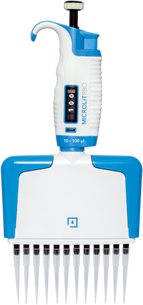
Multichannel electronic pipettes are particularly valuable when working with microplates.
They can help streamline:
- PCR setup
- qPCR
- ELISA
- Serial dilutions
- Cell-based assays
- High-throughput screening
If your team regularly works with 96- or 384-well formats, multichannel capability can be a significant productivity advantage.
-
Ergonomics Is a Performance Factor
In a pharma or biotech laboratory, pipetting may be repeated for hours.
That makes ergonomics more than a comfort feature.
Look at:
- Grip design
- Weight and balance
- Button placement
- Tip-ejection force
- Display readability
- Ease of volume adjustment
- Charging requirements
An electronic pipette should feel natural during repeated use.
The goal is not simply to reduce effort per pipetting cycle. It is to make the entire workflow easier to perform consistently over time.
-
Battery Life and Charging
An electronic pipette is only useful when it is ready to work.
Battery performance should therefore be part of your purchasing checklist.
Ask:
- How long does a charge typically last?
- How long does charging take?
- Can the pipette be used while charging?
- Is a charging stand available?
- Can multiple pipettes be charged together?
- How easily can batteries be serviced or replaced?
For laboratories operating multiple shifts, charging logistics can be surprisingly important.
-
Calibration and Performance Verification
Electronic operation does not eliminate the need for calibration.
Like any precision liquid-handling instrument, an electronic pipette should be maintained and performance-verified according to appropriate laboratory procedures and manufacturer recommendations.
When comparing products, investigate:
- Calibration procedure
- Adjustment mechanism
- Calibration intervals
- Service availability
- Documentation
- Spare parts
For regulated pharma environments, documentation and traceability can be particularly important.
A good pipette selection decision therefore includes the entire lifecycle—not just the day of purchase.
-
Tip Compatibility Matters
The pipette and tip function as one liquid-handling system.
Before purchasing, check:
- Recommended tips
- Tip fit
- Tip availability
- Filter-tip options
- Sterile options
- Low-retention options
- Ongoing consumable cost
For US laboratories, consistent access to compatible tips is particularly important when a pipette becomes part of a validated or standardised workflow.
-
Consider the Total Cost of Ownership
The purchase price is only the beginning.
Your real cost may include:
Pipette + tips + calibration + maintenance + batteries + service + downtime
A lower-priced pipette may not necessarily be the more economical option if it requires frequent maintenance or has limited service support.
Conversely, an expensive electronic pipette may not provide sufficient value if its advanced features are irrelevant to your workflow.
The right question is:
What value will this pipette create over its useful life?
-
Evaluate Service and Support in the US
For pharma and biotech laboratories, service support should be evaluated before purchasing—not after something goes wrong.
Check whether the manufacturer or authorised distributor can provide:
- Technical support
- Calibration services
- Repairs
- Spare parts
- Warranty support
- Replacement accessories
- Product documentation
US laboratories should also consider shipping times and availability of local support.
A pipette that is unavailable for several weeks can create more cost through downtime than its initial purchase price suggests.
MICROLIT AQUA: An Electronic Option for US Laboratories
For US pharma and biotech laboratories evaluating electronic pipettes, MICROLIT AQUA is a multifunctional electronic micropipette platform designed for modern laboratory workflows.
AQUA is available in single-channel and multichannel configurations, including 8-channel and 12-channel options. Selected configurations also offer adjustable/variable-spacing functionality.
This makes AQUA suitable for workflows involving:
- Molecular biology
- Biotechnology
- Microbiology
- Immunology
- Cell culture
- Biochemistry
- Genetics
- Microplate-based applications
For laboratories comparing electronic pipettes, AQUA can be evaluated based on the same criteria applied to any laboratory instrument: application fit, functionality, ergonomics, performance, consumables, service and total cost of ownership.
A Practical Pipette Selection Guide
Before placing a purchase order, use this quick decision framework:
Step 1 — Identify the workflow.
What task will the pipette perform most frequently?
Step 2 — Define the volume.
Which volume range covers your routine applications?
Step 3 — Determine throughput.
Are you handling individual tubes or multi-well plates?
Step 4 — Decide on functionality.
Do you need basic pipetting, repetitive dispensing, mixing or programmable modes?
Step 5 — Compare ergonomics.
Will users operate the pipette for extended periods?
Step 6 — Check consumables.
Are compatible tips readily available?
Step 7 — Evaluate lifecycle support.
How will calibration, maintenance and repairs be handled?
Step 8 — Calculate total cost.
Look beyond the purchase price.
The electronic vs manual pipette decision should be based on workflow—not hype.
Manual pipettes remain valuable for flexible, routine laboratory work. Electronic pipettes become particularly attractive when laboratories face repetitive transfers, high sample volumes, microplate workflows or prolonged pipetting.
The key benefits of electronic pipettes include controlled operation, reduced repetitive effort, programmable functionality and improved workflow efficiency.
For US pharma and biotech laboratories, the ideal purchase should combine the right volume range, channel configuration, functionality, ergonomics, consumables, calibration support and service infrastructure.
Whether you are evaluating MICROLIT AQUA or another electronic pipette, use this pipette selection guide to compare products against your actual laboratory requirements.
The best electronic pipette isn’t the one with the longest feature list.
It’s the one that makes your laboratory workflow more consistent, efficient and practical.
MICROLIT AQUA — Electronic Pipetting for Smarter Laboratory Workflows.