




 16
Accurate pipetting depends on much more than selecting the correct volume on a micropipette. Pipette condition, operator technique, tip compatibility, liquid properties and environmental conditions can all influence the amount of liquid actually transferred. Among these factors, temperature is particularly important because it can affect both routine pipetting accuracy and the results obtained during pipette calibration.
Temperature differences between the pipette, liquid, pipette tips, balance and surrounding environment can influence liquid density, evaporation, and the air cushion inside an air-displacement pipette. These effects become especially important when working with small volumes.
Understanding how temperature affects pipetting can help laboratories improve reproducibility, perform more reliable calibration and reduce avoidable liquid-handling errors.
Why Does Temperature Matter in Pipetting?
Most laboratory micropipettes are air-displacement pipettes. In these instruments, the piston does not directly contact the liquid. Instead, an air cushion exists between the piston and the liquid inside the pipette tip.
When the piston moves upward, pressure changes cause liquid to enter the tip. When the piston moves downward, the liquid is dispensed.
Because air changes in response to temperature, the behaviour of this air cushion can be influenced by thermal conditions.
The liquid itself is also temperature-sensitive. Its density, viscosity, vapour pressure and evaporation rate can change as temperature changes.
Therefore, accurate pipetting depends on the interaction of three major elements:
Pipette + Liquid + Environment
If these are at significantly different temperatures, measurement variability may increase.
-
Temperature Affects the Air Cushion
The air cushion inside an air-displacement pipette is central to its operation.
When the temperature of the pipette or surrounding environment changes, the air trapped between the piston and liquid can expand or contract. This can influence the amount of liquid aspirated into the tip.
For example, continuously holding a pipette can gradually warm parts of the instrument through heat transferred from the user’s hand. During sensitive low-volume work, changes in the internal thermal conditions can contribute to measurement variation.
This is one reason why laboratories should avoid unnecessarily holding a pipette for long periods before critical measurements.
Consistent handling is particularly important during calibration because the objective is to evaluate the instrument under controlled and repeatable conditions.
-
Liquid Temperature Influences Density
Temperature also affects the density of liquids.
This is particularly important during gravimetric pipette calibration.
In gravimetric testing, a pipette dispenses a defined quantity of water into a weighing vessel. A calibrated balance measures the mass of the dispensed water, and this mass is converted to volume using an appropriate conversion factor.
Because the density of water varies with temperature, the water temperature must be considered when converting measured mass into volume.
Ignoring temperature-related factors can introduce error into the calculated volume and therefore affect the calibration result.
This is why controlled environmental conditions and appropriate calculations are essential during high-quality pipette calibration.
-
Temperature Can Increase Evaporation
Evaporation is another important factor, particularly when handling small volumes.
As temperature increases, evaporation generally becomes more significant. At microlitre volumes, even a very small amount of evaporated liquid can represent a meaningful proportion of the total sample.
For example, losing a fraction of a microlitre has relatively little impact on a large-volume transfer but can become important when pipetting only a few microlitres.
Evaporation can occur:
- Inside the pipette tip
- During transfer between vessels
- From the weighing vessel during calibration
- From an open sample container
Calibration procedures therefore need to account for evaporation where it may materially affect results, particularly at low volumes.
-
Temperature Differences Can Affect Pipetting Accuracy
Problems can arise when the pipette, tips, liquid, and room environment are at different temperatures.
Imagine that a cold reagent is removed from a refrigerator and immediately pipetted using a pipette and tips that have been stored at room temperature.
The temperature difference can influence the air cushion as well as the physical properties of the liquid. This can contribute to differences between the intended and actual transferred volume.
Similarly, transferring a warm liquid with equipment at a substantially different temperature may affect performance.
Where permitted by the application, allowing the pipette, tips, test liquid, and relevant equipment to equilibrate under appropriate working conditions can improve consistency.
However, biological samples or temperature-sensitive reagents may need to remain cold. In such cases, laboratories should use a validated pipetting procedure appropriate for the sample rather than warming it simply to match room temperature.
-
Why Temperature Is Critical During Pipette Calibration
Pipette calibration is intended to determine how closely the instrument’s delivered volume corresponds to its selected volume under specified conditions.
If environmental conditions fluctuate significantly during testing, it becomes more difficult to distinguish actual pipette performance from environmental influences.
During gravimetric calibration, laboratories should appropriately monitor relevant factors such as:
Water temperature → Ambient conditions → Balance performance → Evaporation → Measurement stability
Applicable procedures and relevant requirements of the ISO 8655 series should be followed when evaluating piston-operated volumetric apparatus.
For laboratories requiring accredited calibration, services operating within an appropriate ISO/IEC 17025 scope may provide additional assurance of measurement competence and traceability.
-
Temperature and Low-Volume Pipetting
Temperature becomes increasingly important as the pipetted volume decreases.
When transferring 500 or 1,000 µL, a tiny temperature-related volume difference may represent a relatively small percentage of the total transfer.
At 1, 2, 5, or 10 µL, the same absolute difference can become proportionally much more significant.
Low-volume pipetting is also more susceptible to evaporation.
For this reason, laboratories performing applications such as PCR, qPCR, DNA/RNA analysis, sequencing, proteomics, and assay development should pay particular attention to environmental consistency and operator technique.
-
Temperature Can Change Liquid Behaviour
Water is not the only liquid used in laboratories.
Temperature can affect viscosity, density, surface tension, and vapour pressure, changing how different liquids behave during aspiration and dispensing.
A colder viscous liquid may flow more slowly and require additional time during aspiration and dispensing.
A warm or volatile liquid may produce more vapour, potentially affecting the air cushion in an air-displacement pipette.
Therefore, laboratories should adapt their pipetting technique according to both temperature and liquid properties.
Depending on the application, this may involve slower aspiration, a pause after aspiration, pre-wetting the tip, reverse pipetting, or using another suitable liquid-handling technique.
-
How to Reduce Temperature-Related Pipetting Errors
Good laboratory practices can minimise the influence of temperature on pipetting.
Where appropriate for the application, allow the pipette, tips, test liquid, and other equipment to reach stable working conditions before critical measurements.
Avoid holding the pipette continuously when it is not necessary. Heat from the hand can gradually warm the instrument.
For low-volume work, minimise delays between aspiration and dispensing to reduce evaporation.
Pre-wetting the pipette tip may also improve consistency for some applications by helping establish more stable conditions inside the tip.
During calibration, record and control environmental conditions according to the applicable procedure.
Most importantly, maintain consistency. A stable technique and environment can significantly improve repeatability.
-
Calibration Cannot Compensate for Poor Environmental Control
A correctly calibrated micropipette can still produce inconsistent results if it is used under significantly different conditions or with poor technique.
Laboratories should therefore think beyond calibration certificates.
Reliable pipetting depends on a combination of:
Correct pipette + Compatible tip + Proper calibration + Stable conditions + Appropriate technique + Trained operator
Periodic verification can also help laboratories monitor pipette performance between scheduled calibrations.
If unexpected measurement changes occur, environmental conditions—including temperature—should be considered during troubleshooting.
Microlit Micropipettes for Reliable Liquid Handling
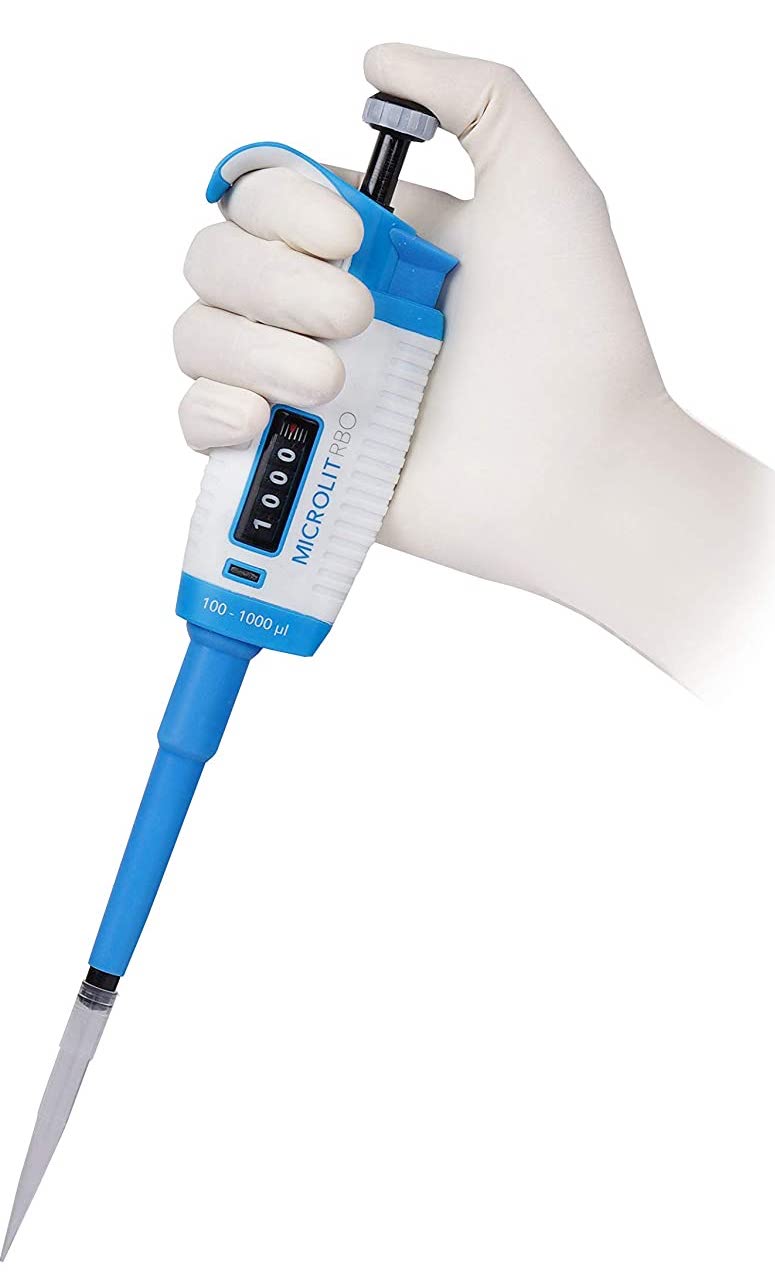
Microlit offers a comprehensive range of manual and electronic micropipettes designed for diverse laboratory liquid-handling applications.
The Microlit NERO® range incorporates μAir® technology, based on a reduced air-cushion concept, along with UniCal® technology, Microlit’s single-point calibration mechanism.
The Microlit RAMBO range provides ergonomic mechanical pipetting options for routine laboratory applications, while the Microlit AQUA Multifunctional Electronic Pipette offers electronically controlled liquid handling across multiple operating modes and configurations.
Microlit micropipettes also provide universal tip compatibility, giving laboratories flexibility when selecting suitable tips for their workflows.
Regardless of the micropipette selected, controlling environmental factors and following appropriate calibration and pipetting procedures remain essential for dependable results.
Explore the complete range of Microlit micropipettes
Temperature is an often-overlooked variable in accurate liquid handling.
It can influence the air cushion inside a micropipette, liquid density, viscosity, evaporation, and gravimetric calibration calculations. These effects become particularly important when working at low volumes or performing high-accuracy calibration.
Laboratories can reduce temperature-related errors by maintaining stable working conditions, allowing appropriate thermal equilibration where the application permits, minimising evaporation, using consistent pipetting techniques, and following applicable calibration procedures.
Ultimately, reliable pipetting is not determined by the micropipette alone. The instrument, tip, liquid, operator, and environment work together as one measurement system.
Control the temperature, control the technique, and you take an important step toward more accurate, precise, and reproducible pipetting results.