




 394
394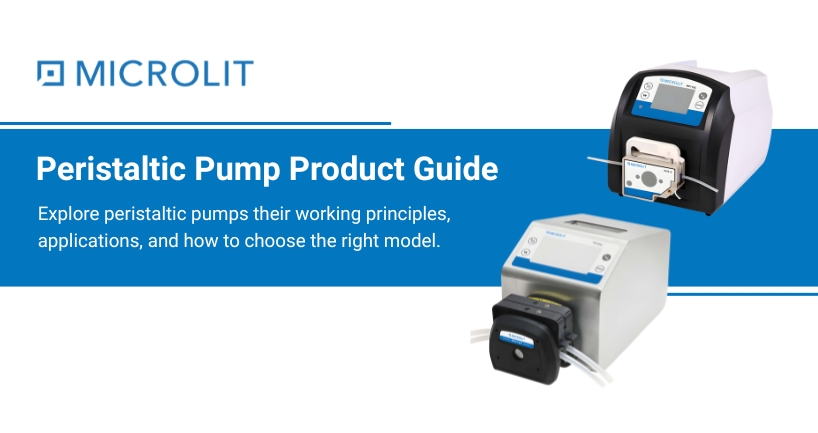
Modern laboratories require fluid handling systems that can consistently deliver high accuracy, sterility, repeatability, and operational reliability. In research, pharmaceutical production, biotechnology, and industrial applications, even small variations in fluid transfer can impact experimental outcomes, product quality, and process efficiency. A Peristaltic pump is therefore an ideal solution for applications that demand precise dosing, gentle fluid transfer, and contamination-free operation.
At Microlit, we offer advanced laboratory peristaltic pumps engineered to meet the evolving needs of pharmaceutical, biotechnology, research, environmental, and industrial laboratories. Whether you require ultra-low flow rates for analytical applications or high-volume transfer for pilot-scale processes, our peristaltic pumps deliver dependable performance across a wide range of workflows.
What Is a Peristaltic Pump?
A peristaltic pump is a positive displacement pump that moves fluids through a flexible tube using rotating rollers or shoes. As the rollers compress and release the tubing, fluid is transported in a controlled, pulsation-free manner. Since the fluid only comes into contact with the tubing, the risk of cross-contamination is significantly reduced.
This unique operating principle makes peristaltic pumps particularly suitable for handling sensitive, sterile, corrosive, or high-purity liquids.
How Does a Peristaltic Pump Work?
The working principle of a peristaltic pump is inspired by the natural process of peristalsis found in biological systems.
- Flexible tubing is positioned inside the pump head.
- Rollers rotate and compress the tubing.
- The compression pushes fluid forward through the tube.
- As the tubing returns to its original shape, it creates a vacuum that draws more fluid into the system.
- Continuous roller movement ensures smooth and accurate fluid transfer.
Because the tubing acts as the only wetted component, maintenance is simplified and cleaning requirements are minimized.
Key Features of Microlit Peristaltic Pumps
- Precise and repeatable flow control
- Wide flow rate options for diverse applications
- Contamination-free fluid transfer
- Intuitive LCD interface with speed control
- Forward and reverse operation modes
- Anti-drip functionality for accurate dispensing
- Multi-segment dispensing capability
- MODBUS RS485 communication for seamless integration
- Choice of durable ABS or stainless-steel housing options
- Easy tubing replacement and low maintenance requirements
Applications of Peristaltic Pumps
Peristaltic pumps are widely used across various laboratory and industrial environments.
Pharmaceutical Laboratories
- Reagent dosing
- Buffer preparation
- Process development
- Quality control testing
Biotechnology and Life Sciences
- Cell culture feeding
- Media transfer
- Bioprocessing applications
Analytical Laboratories
- Sample preparation
- Chromatography support
- Microfluidic applications
Environmental Testing
- Water sampling
- Chemical dosing
- Wastewater analysis
Industrial and Chemical Processing
- Corrosive chemical transfer
- Additive dosing
- Pilot-scale production processes
Benefits of Using a Peristaltic Pump
Reduced Risk of Contamination
Since fluids only contact the tubing, there is minimal risk of product contamination or carryover between samples. This is especially critical in pharmaceutical and life science applications.
Excellent Chemical Compatibility
The ability to select tubing materials based on chemical compatibility allows peristaltic pumps to handle a broad range of aggressive chemicals and sensitive samples.
High Precision and Repeatability
Flow rates can be precisely controlled through adjustable motor speeds and calibrated tubing configurations, enabling consistent dosing performance.
Easy Maintenance
Routine maintenance typically involves replacing the tubing rather than servicing complex internal components, resulting in reduced downtime and lower operating costs.
How to Choose the Right Peristaltic Pump
Selecting the right peristaltic pump depends on several factors:
- Required flow rate range
- Fluid viscosity
- Chemical compatibility
- Tubing material requirements
- Accuracy requirements
- Integration and automation needs
- Operating environment
- Continuous or intermittent operation requirements
Microlit offers multiple peristaltic pump configurations to support low-, medium-, and high-flow applications, helping laboratories optimize performance without compromising accuracy.
Why Choose Microlit Peristaltic Pumps?
With decades of expertise in precision liquid handling, Microlit delivers innovative solutions trusted by laboratories worldwide. Our peristaltic pumps are designed to meet global quality standards while providing user-friendly operation, reliable performance, and advanced connectivity features.
Whether you need precision dosing for research applications or robust fluid transfer for industrial processes, Microlit peristaltic pumps provide the accuracy, flexibility, and reliability your laboratory demands.
Maintenance and Care Tips
Proper maintenance helps ensure consistent performance, longer tubing life, and reliable fluid transfer.
- Inspect tubing regularly for signs of wear, cracking, or deformation.
- Replace tubing at recommended intervals based on operating hours and fluid compatibility.
- Verify calibration periodically to maintain accurate flow rates and dosing performance.
- Clean external components according to laboratory hygiene and safety protocols.
- Store spare tubing properly to prevent degradation caused by heat, light, or chemical exposure.
- Monitor pump performance for unusual noise, pulsation, or flow inconsistencies.
Why Peristaltic Pumps Are Preferred for Sterile Applications
Peristaltic pumps are widely preferred in sterile and contamination-sensitive applications because the fluid path is completely isolated within the tubing. This design offers several important advantages:
- Reduced risk of cross-contamination between different samples or batches.
- Easy tubing replacement allows rapid changeover between processes.
- Minimal cleaning requirements compared with pumps that have multiple wetted components.
- Compatibility with sterilizable tubing materials supports use in pharmaceutical and biotechnology environments.
- Protection of sensitive fluids from contact with pump mechanisms.
Frequently Asked Questions
-
What liquids can be transferred using a peristaltic pump?
Peristaltic pumps can handle a wide variety of fluids, including reagents, acids, buffers, biological samples, cell culture media, and viscous liquids.
-
Are peristaltic pumps suitable for sterile applications?
Yes. Since the fluid only contacts the tubing, peristaltic pumps are ideal for sterile and contamination-sensitive applications.
-
How accurate are peristaltic pumps?
Accuracy depends on factors such as tubing selection, calibration, flow rate, and operating conditions. Modern laboratory peristaltic pumps offer highly repeatable dosing performance when properly configured.
-
What maintenance does a peristaltic pump require?
Routine maintenance generally includes inspecting and replacing worn tubing, verifying calibration, and cleaning external components as needed.
-
Can peristaltic pumps transfer viscous liquids?
Yes. Peristaltic pumps can handle fluids with varying viscosities, including thick or shear-sensitive liquids. The appropriate tubing size and pump configuration should be selected based on the application’s viscosity and required flow rate.
-
Which industries commonly use peristaltic pumps?
Peristaltic pumps are widely used in pharmaceutical manufacturing, biotechnology, life sciences, chemical processing, environmental testing, food and beverage, water treatment, and academic research laboratories.
-
How long does peristaltic pump tubing last?
Tubing life depends on operating speed, pressure, fluid compatibility, and usage frequency. Regular inspection and timely replacement help maintain consistent flow accuracy and extend pump performance.
-
What factors affect the accuracy of a peristaltic pump?
Flow accuracy is influenced by tubing size, tubing condition, fluid viscosity, motor speed, calibration, back pressure, and operating temperature. Proper setup and regular maintenance help ensure consistent performance.
-
Can a peristaltic pump be used for dosing applications?
Yes. Peristaltic pumps are widely used for accurate dosing and metering of chemicals, reagents, additives, and other laboratory fluids. Their precise flow control makes them suitable for applications requiring consistent and repeatable dispensing.
-
What is the maximum pressure a peristaltic pump can generate?
The maximum pressure depends on the pump model, tubing material, and pump head design. Laboratory peristaltic pumps are typically designed for low- to medium-pressure fluid transfer applications.
-
Is flow direction reversible in a peristaltic pump?
Yes. Many laboratory peristaltic pumps support both forward and reverse operation, allowing flexible fluid transfer, emptying, and cleaning processes.
-
How noisy are laboratory peristaltic pumps?
Most modern laboratory peristaltic pumps are designed to operate quietly, making them suitable for research laboratories, analytical facilities, and cleanroom environments.