




 19
Micropipettes are essential precision instruments in laboratories, where even small variations in liquid volume can influence experimental results. From pharmaceutical and biotechnology laboratories to molecular biology, clinical diagnostics, food testing, and academic research, reliable pipetting depends not only on good technique but also on ensuring that pipettes continue to perform within defined requirements.
Two terms frequently encountered in pipette quality management are calibration and verification.
Although these terms are sometimes used interchangeably, they do not mean exactly the same thing. Understanding the difference between pipette calibration and verification can help laboratories establish appropriate quality-control procedures, maintain confidence in their instruments, and support reliable experimental results.
So, what exactly is the difference?
What Is Pipette Calibration?
Pipette calibration is the process of determining the relationship between the volume selected or indicated on a pipette and the volume actually delivered under specified conditions.
In other words, calibration evaluates how the pipette is performing compared with a reference measurement.
One commonly used approach for piston-operated volumetric apparatus is the gravimetric method. During gravimetric testing, water is dispensed from the pipette into a weighing vessel and measured using a suitable calibrated balance.
The measured mass is then converted to volume using the appropriate calculation and correction factors according to the applicable procedure.
Repeated measurements allow the performance of the pipette to be evaluated, including its systematic and random errors.
Calibration therefore provides objective measurement data that can be used to determine how the pipette is performing.
Does Calibration Always Mean Adjustment?
This is an important distinction.
Calibration and adjustment are not the same thing.
Calibration determines the pipette’s performance. Adjustment involves changing the instrument so that its delivered volume more closely corresponds to the desired value.
A pipette may therefore be calibrated and found to perform outside specified limits. It may then be adjusted, serviced, or repaired as required and subsequently recalibrated to evaluate its performance again.
This distinction is important because simply adjusting a pipette without measuring its performance does not constitute a complete calibration process.
A typical sequence might be:
Calibration → Evaluation → Adjustment, if required → Recalibration
Maintaining clear records of these steps helps laboratories understand the actual condition and performance history of the instrument.
What Is Pipette Verification?
Verification is the process of confirming that a pipette meets specified requirements or predefined acceptance criteria.
Rather than establishing or documenting the complete calibration relationship, verification answers a practical question:
“Is this pipette performing acceptably for its intended use?”
A laboratory may perform periodic verification between scheduled calibrations to monitor pipette performance.
For example, a pipette that has recently undergone formal calibration may later be checked internally using an appropriate procedure. If the measured performance remains within the laboratory’s defined acceptance criteria, the pipette can continue to be used.
If the verification results fall outside those limits, further investigation, maintenance, adjustment, or calibration may be required.
Calibration vs Verification: The Key Difference
The simplest way to understand the difference is:
Calibration determines and documents measurement performance.
Verification confirms whether the pipette meets specified requirements.
Both activities are important, but they serve different purposes.
Calibration provides detailed measurement information under defined conditions, while verification provides confidence that the pipette remains suitable for its intended application.
A useful way to remember the distinction is:
Calibration asks: “What is the pipette actually delivering?”
Verification asks: “Is that performance acceptable?”
Why Do Laboratories Need Both?
A pipette can change over time.
Routine use, accidental drops, contamination, seal deterioration, piston wear, improper storage, aggressive cleaning, or mechanical damage can affect its performance.
If laboratories rely exclusively on calibration performed at long intervals, a performance problem that develops between calibrations may remain undetected.
Periodic verification can help identify potential issues earlier.
For this reason, a robust pipette quality-management program may include both scheduled calibration and intermediate performance checks or verification.
The exact approach should depend on factors such as:
- Frequency of pipette use
- Importance of the measurements
- Required accuracy and precision
- Laboratory quality procedures
- Historical instrument performance
- Manufacturer recommendations
- Applicable regulatory or accreditation requirements
Higher-risk applications may justify more frequent checks than routine, non-critical liquid transfers.
What Role Does ISO 8655 Play?
ISO 8655 is an important international standards series covering piston-operated volumetric apparatus, including pipettes.
It addresses requirements and test methods relevant to the performance of this equipment.
For laboratories working with micropipettes, following applicable ISO 8655 requirements can help create a standardized approach to evaluating pipette performance.
However, laboratories should use the applicable current edition and relevant part of the standard rather than treating “ISO 8655” as a single generic procedure for every instrument and situation.
The laboratory’s own quality system, manufacturer recommendations, and any applicable accreditation or regulatory requirements should also be considered.
How Is Pipette Performance Commonly Checked?
Gravimetric measurement is widely used to evaluate pipette performance.
In a controlled procedure, the pipette dispenses test liquid—typically water—into a suitable vessel placed on a calibrated balance.
Multiple measurements are taken.
The measured mass values are converted into corresponding volumes using appropriate factors. The resulting data can then be analysed to evaluate pipette performance.
Two important concepts are assessed:
Systematic error relates to the difference between the mean delivered volume and the selected target volume and is associated with accuracy.
Random error describes the variation among repeated measurements and is associated with precision or repeatability.
Both need to be considered because a pipette can deliver highly repeatable measurements that are consistently away from the target value.
When Should a Pipette Be Calibrated?
There is no universal calibration interval suitable for every laboratory.
Calibration frequency should be determined through a risk-based approach considering how frequently the pipette is used, the importance of its applications, the manufacturer’s recommendations, previous calibration history, and applicable quality requirements.
Calibration may also be appropriate after:
- Repair or servicing
- Adjustment
- Replacement of critical internal components
- Suspected performance problems
- Significant accidental impact or damage
- Results indicating unacceptable performance
Laboratories should document their calibration schedules rather than relying on informal checks.
When Should Verification Be Performed?
Verification can be useful between scheduled calibrations.
For example, a laboratory may perform an intermediate check when a pipette is used heavily, before an especially critical experiment, after a suspected incident, or when results unexpectedly change.
Verification frequency should again be based on risk.
A heavily used pipette involved in critical quantitative work may need more frequent monitoring than an instrument used occasionally for non-critical liquid transfers.
If verification indicates that the pipette does not meet defined acceptance criteria, the laboratory should investigate before continuing critical work with the instrument.
Calibration Does Not Replace Good Pipetting Technique
A freshly calibrated pipette can still produce poor results if it is used incorrectly.
Factors such as:
Tip compatibility → Pipette angle → Immersion depth → Aspiration speed → Dispensing technique → Temperature → Liquid properties
can all influence liquid-transfer performance.
This is why pipette quality management should combine instrument calibration, periodic verification, preventive maintenance, appropriate tips, and operator training.
The pipette is only one component of the complete liquid-handling process.
Calibration Certificates and Traceability
Documentation is especially important in regulated or quality-controlled laboratories.
A calibration certificate should provide sufficient information to understand what was tested, how it was tested, and what results were obtained, according to the applicable calibration procedure and quality requirements.
Where required, laboratories may use calibration services operating under ISO/IEC 17025 accreditation for the relevant calibration scope.
Traceability, measurement uncertainty, equipment identification, environmental conditions, and test results may all form important parts of a laboratory’s calibration documentation, depending on the applicable requirements.
Microlit Micropipettes and Calibration
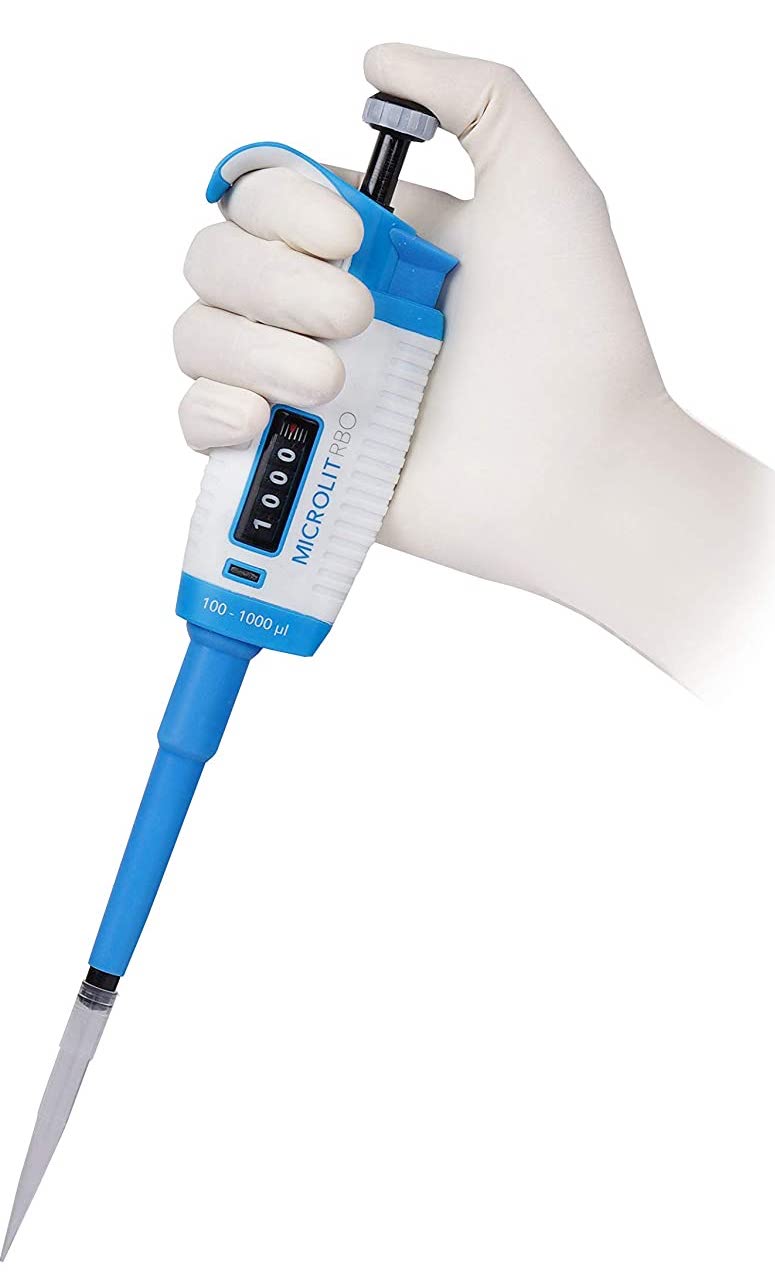
Microlit offers a comprehensive range of manual and electronic micropipettes, including NERO®, RAMBO, and AQUA, for different laboratory liquid-handling requirements.
Microlit’s NERO® micropipettes feature UniCal® technology, designed to enable convenient single-point calibration adjustment. The NERO® range also incorporates μAir® technology, based on a reduced air-cushion concept for liquid handling.
Along with selecting an appropriate micropipette, laboratories should establish suitable calibration and verification procedures to ensure that pipette performance remains appropriate for its intended use.
Explore the complete range of Microlit micropipettes.
Conclusion
Pipette calibration and verification are closely related, but they serve different purposes.
Calibration determines and documents how a pipette is actually performing under specified conditions. Verification confirms whether that performance meets predefined requirements for its intended use.
Calibration provides measurement data. Verification provides confirmation against acceptance criteria. Adjustment, meanwhile, is a separate activity used to modify the instrument when necessary.
For reliable laboratory liquid handling, these activities should work together as part of a broader pipette quality-management program that includes maintenance, appropriate tip selection, operator training, and good pipetting technique.
Ultimately, reliable pipetting is not achieved simply by setting the correct volume. It comes from knowing—and regularly confirming—that the volume being delivered is accurate, precise, and suitable for the work being performed.