




 17

A micropipette may be engineered for accuracy and precision, but its performance depends on more than the pipette itself. The pipette tip is a critical part of the liquid-handling system. An incorrectly fitted or unsuitable tip can affect sealing, aspiration, dispensing, sample recovery, and ultimately the reliability of laboratory results.
This makes pipette tip compatibility an important consideration when selecting consumables for everyday laboratory work.
With numerous micropipette brands, volume ranges, tip designs, and application-specific options available, how do you know which tip is right for your pipette?
Understanding tip compatibility, volume selection, tip materials, fit, and application requirements can help laboratories achieve more consistent liquid handling while reducing leakage, contamination, and unnecessary tip wastage.
What Is Pipette Tip Compatibility?
Pipette tip compatibility refers to whether a particular tip can fit correctly onto a micropipette and perform as intended.
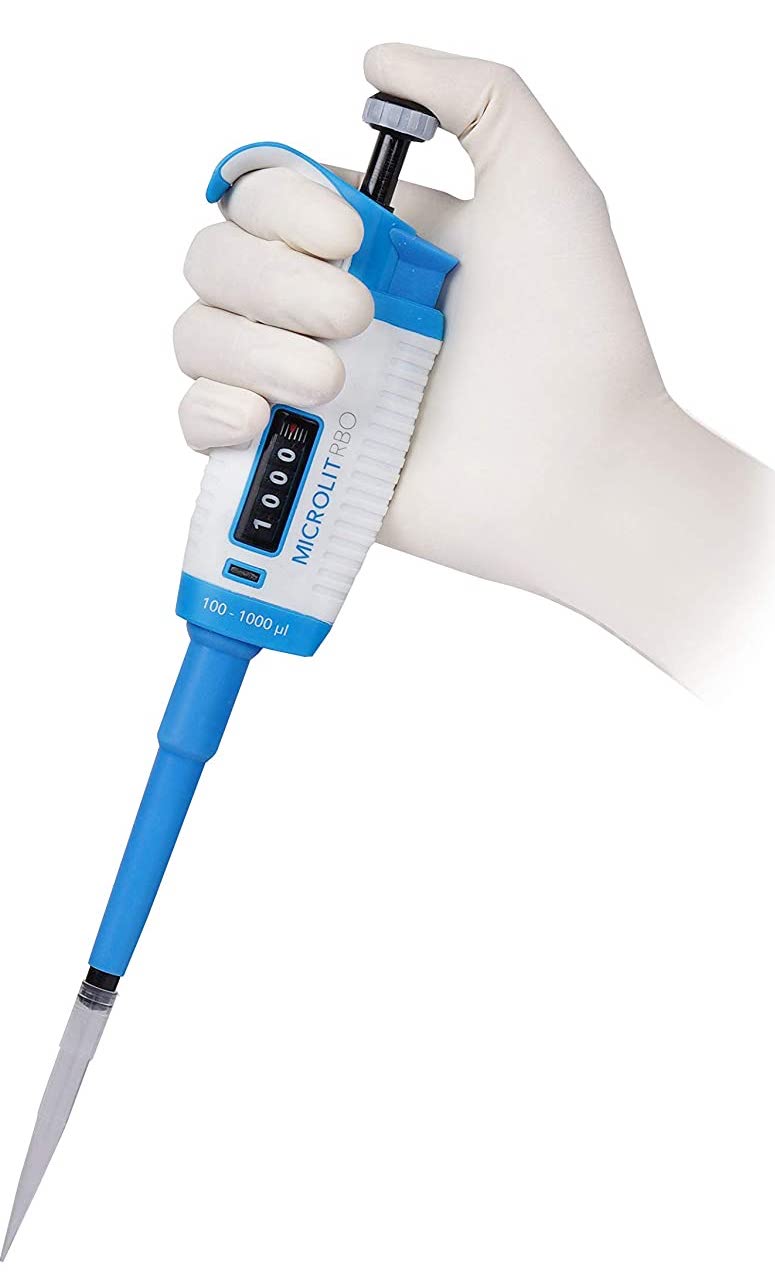
A compatible tip should create an appropriate seal around the pipette’s tip cone. This seal is important because air-displacement micropipettes rely on controlled air movement to aspirate and dispense liquids.
If the tip is loose, incorrectly sized, or poorly fitted, air can leak through the connection. This may lead to inconsistent aspiration or dispensing.
Conversely, if a tip requires excessive force to attach, it can make routine pipetting uncomfortable and may increase the force required for tip ejection.
The objective is therefore simple: select a tip that fits securely, seals correctly, handles the required volume, and suits the application.
Why Does Tip Compatibility Matter?
Pipette tips are sometimes treated as simple disposable accessories, but they form an essential part of the pipetting system.
Poor tip compatibility can potentially contribute to:
- Air leakage
- Incomplete aspiration
- Inconsistent dispensing
- Reduced accuracy and precision
- Tip loosening or falling off
- Excessive tip-loading force
- Difficult tip ejection
- Increased operator fatigue
- Sample loss or wastage
When laboratories perform hundreds or thousands of liquid transfers, even small inconsistencies can accumulate and affect workflow efficiency.
Tip selection should therefore be considered part of good pipetting practice rather than simply a purchasing decision.
-
Match the Tip to the Pipette Volume Range
The first step is to identify the micropipette’s operating volume.
Pipettes are designed for specific volume ranges, and tips should be capable of safely accommodating those volumes.
For example, a laboratory may work with micropipettes covering microlitre volumes ranging from very small quantities to 1,000 µL or more. The appropriate tip depends on the pipette’s specified range and the actual volume being transferred.
Using a tip that is too small may exceed its liquid capacity. An unnecessarily large tip, meanwhile, may not be ideal for transferring very small volumes.
Always check the tip manufacturer’s specified volume range and ensure that it corresponds appropriately with the micropipette and application.
-
Check the Tip Cone Fit
Two tips with similar capacities do not necessarily have identical geometries.
Micropipette tip cones can differ in dimensions and design. The tip must fit sufficiently well to form a reliable seal.
A suitable tip should attach securely without requiring excessive force.
If operators repeatedly push, twist, or hammer a pipette into a tip rack to achieve a seal, this can increase hand and wrist strain and may potentially damage components over time.
After attaching a new type of tip, laboratories should evaluate the fit and pipetting performance before introducing it into routine workflows.
-
Consider Universal Pipette Tips
Managing different proprietary tips for multiple pipette brands can complicate laboratory inventory.
This is why universal pipette tips are particularly useful in laboratories operating micropipettes from different manufacturers.
Universal tips are designed to fit a broad range of commonly used micropipettes. This can help laboratories simplify consumable purchasing, reduce the number of tip types they need to stock, and improve flexibility across workstations.
However, the word “universal” should not eliminate the need for validation. Laboratories should still confirm the fit and performance of the selected tip-pipette combination, particularly for critical quantitative applications.
-
Choose Tips According to the Application
Tip compatibility is not only about whether a tip physically fits the pipette. The tip should also be suitable for the laboratory application.
Standard pipette tips are commonly used for routine liquid transfer and general laboratory applications.
Filter tips contain a barrier intended to help reduce the risk of aerosols or liquids reaching the pipette shaft. They are particularly useful in applications where contamination control is important.
Depending on the laboratory’s requirements, sterile tips may be preferred for microbiology, cell culture, molecular biology, or other contamination-sensitive workflows.
For specialised applications, laboratories may also require tips designed for particular liquid properties, vessel formats, or sample-recovery requirements.
The application should therefore be evaluated alongside physical compatibility.
-
Consider Tip Material and Quality
Most disposable pipette tips are manufactured from polypropylene (PP) because it offers properties suitable for many laboratory liquid-handling applications.
However, manufacturing quality can significantly influence tip performance.
Dimensions, mould quality, surface characteristics, straightness, orifice consistency, and material quality can all affect the way a tip fits and handles liquid.
High-quality manufacturing is especially important in multichannel applications because all tips need to fit consistently across multiple channels.
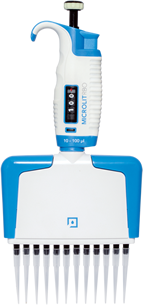
A single poorly fitting tip in an 8- or 12-channel configuration can disrupt an otherwise uniform plate-based workflow.
-
Single-Channel vs Multichannel Tip Compatibility
Tip selection becomes particularly important with multichannel micropipettes.
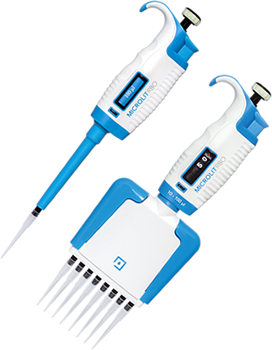
With a single-channel pipette, only one tip-to-cone connection needs to be established at a time. With an 8- or 12-channel pipette, every tip needs to fit properly and consistently.
Uneven tip loading can potentially result in differences in aspiration or dispensing between channels.
For multichannel pipettes, check that:
- All tips attach uniformly.
- Tips remain aligned.
- Similar loading force is achieved across channels.
- Tips do not loosen during operation.
- Tip ejection remains convenient.
- The tip rack supports efficient multichannel loading.
These factors are especially important in PCR, ELISA, assay development, diagnostics, and other microplate-based applications.
-
Pay Attention to Liquid Properties
The liquid itself can influence the type of tip required.
Aqueous buffers and routine reagents are generally straightforward to pipette. However, viscous, volatile, foaming, or low-surface-tension liquids may require different pipetting techniques or specialised tips.
For difficult liquids, laboratories should evaluate the complete system: pipette, tip, technique, operating mode, and liquid properties.
Pre-wetting the tip, adjusting aspiration and dispensing speed, or using alternative pipetting techniques may improve results depending on the application.
-
Test the Pipette-Tip Combination
Even when a tip appears to fit correctly, laboratories should assess performance before using a new combination for critical work.
A simple preliminary check can identify obvious leakage or inconsistent liquid handling.
For quantitative applications, more formal performance verification may be appropriate. Gravimetric testing can be used to evaluate pipette performance under controlled conditions.
Laboratories working under quality systems should follow applicable internal procedures, manufacturer recommendations, and relevant requirements such as ISO 8655, where appropriate.
Microlit Universal Tip Compatibility
Microlit micropipettes are designed with universal tip compatibility, providing laboratories with greater flexibility when selecting commonly available compatible pipette tips.
Universal compatibility can be particularly valuable for laboratories operating multiple pipettes or managing large consumable inventories. Rather than depending exclusively on a highly restricted tip ecosystem, laboratories can have greater flexibility in sourcing suitable tips for routine applications.
Microlit’s micropipette portfolio includes NERO®, RAMBO, and AQUA solutions across manual and electronic liquid handling, including single-channel and multichannel configurations.
The ability to use universally compatible tips can help laboratories:
- Simplify tip inventory management
- Improve flexibility in consumable procurement
- Reduce dependence on proprietary consumables
- Standardise commonly used tip formats across workstations
- Manage consumable availability more efficiently
For best results, however, laboratories should always ensure that the chosen tip matches the pipette’s volume range and provides an appropriate seal. For critical applications, the complete pipette-tip combination should be verified according to the laboratory’s quality procedures.
How to Select the Right Pipette Tip: A Quick Checklist
Before choosing a tip, ask:
Does it match the micropipette’s volume range?
Does it fit securely without excessive force?
Does it provide a reliable seal?
Is it suitable for single- or multichannel operation?
Does the application require sterile or filter tips?
Is the tip material compatible with the sample?
Has the pipette-tip combination been verified for critical applications?
If these factors are addressed, laboratories can significantly reduce problems associated with unsuitable tips.
Selecting the right pipette tip is an important part of achieving reliable liquid-handling performance.
Compatibility involves much more than simply finding a tip that can be attached to a micropipette. Laboratories should consider volume range, tip-cone fit, sealing, material quality, application, contamination requirements, liquid properties, and single- or multichannel use.
Universal tip compatibility can make this process more convenient by giving laboratories greater flexibility when managing different pipettes and consumables.
With universally compatible tip cones across its micropipette solutions, Microlit helps laboratories combine pipetting performance with greater consumable flexibility. Whether using manual or electronic, single-channel or multichannel micropipettes, choosing a suitable high-quality tip remains essential for dependable results.
Ultimately, the best pipetting performance comes from treating the pipette and tip as one complete liquid-handling system because even the most precise micropipette needs the right tip to perform at its best.