




 639
639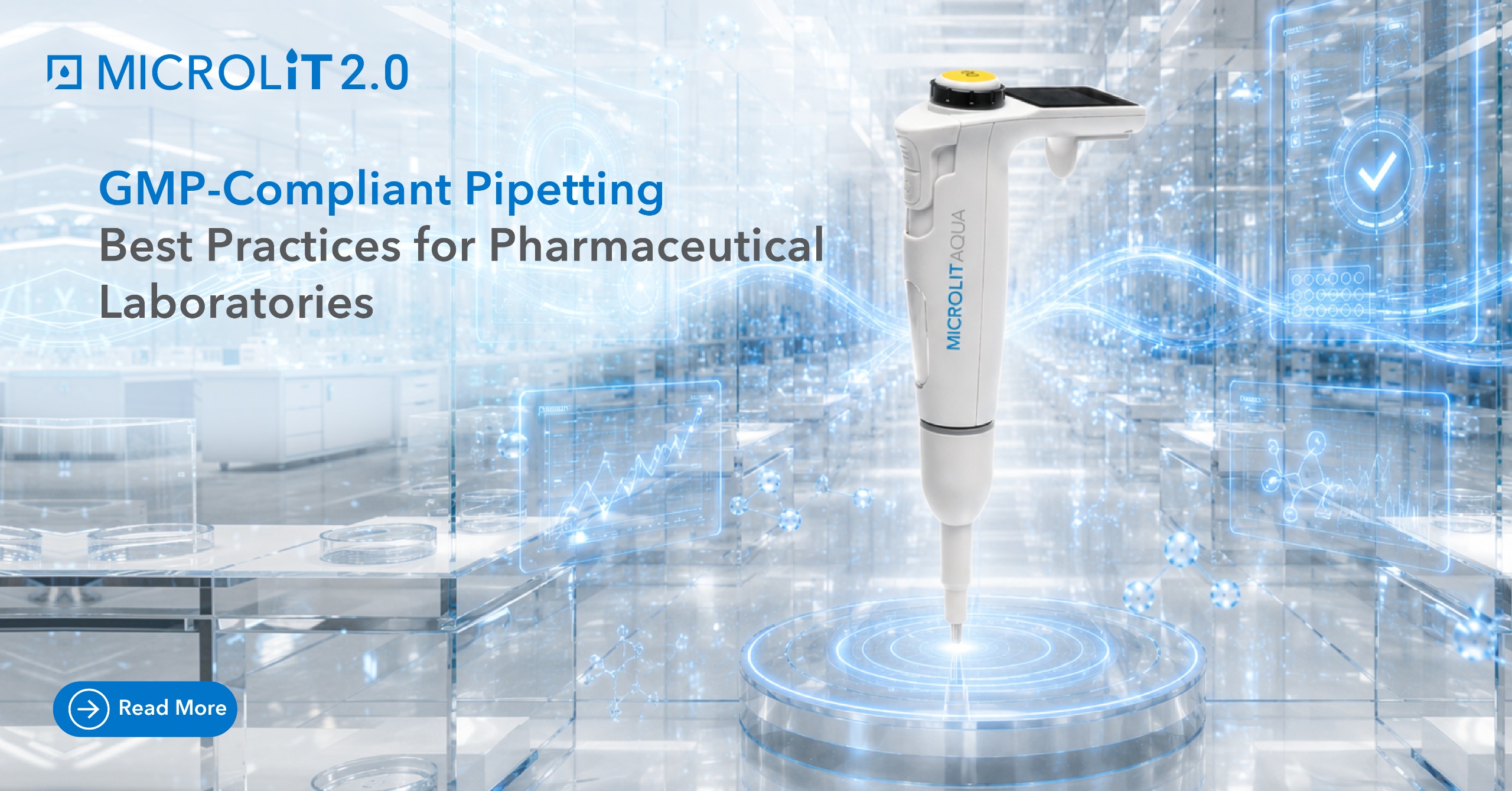
In pharmaceutical laboratories, precision is more than a scientific requirement, it is a regulatory obligation. From drug discovery and formulation development to quality control and batch release testing, every liquid transfer must be performed with exceptional accuracy, consistency, and traceability.
Even a minor pipetting error can compromise experimental results, delay product development or lead to regulatory non-compliance. This is why Good Manufacturing Practice (GMP) places significant emphasis on validated processes, calibrated equipment and standardized laboratory practices.
Micropipettes are among the most frequently used instruments in pharmaceutical laboratories, making their proper selection, calibration, maintenance and operation essential for maintaining GMP compliance.
In this blog, we explore the importance of GMP-compliant pipetting and share best practices that help pharmaceutical laboratories ensure reliable, reproducible and audit-ready liquid handling.
Understanding GMP in Pharmaceutical Laboratories
Good Manufacturing Practice (GMP) is a system of regulations, guidelines, and procedures designed to ensure that pharmaceutical products are consistently produced and controlled according to established quality standards.
GMP applies to every aspect of pharmaceutical manufacturing and laboratory operations, including:
- Personnel competency
- Equipment qualification
- Process validation
- Documentation
- Calibration and maintenance
- Data integrity
- Quality control testing
Laboratory pipetting directly influences analytical accuracy, making it a critical component of GMP compliance.
Why Pipetting Accuracy Matters in Pharmaceutical Laboratories
Pharmaceutical laboratories routinely perform applications such as:
- Sample preparation
- Standard preparation
- Reagent dispensing
- Analytical testing
- Microbiological analysis
- Stability studies
- Method validation
Each application depends on transferring the correct liquid volume.
Inaccurate pipetting can result in:
- Incorrect concentrations
- Failed analytical methods
- Inconsistent product quality
- Out-of-specification (OOS) results
- Repeat testing
- Increased operational costs
- Regulatory observations during audits
Reliable pipetting minimizes these risks while improving laboratory productivity and confidence in test results.
Best Practice 1: Choose the Right Pipette for the Application
Selecting the appropriate pipette is the first step toward GMP-compliant liquid handling.
Factors to consider include:
- Volume range
- Required accuracy
- Sample type
- Frequency of use
- Workflow complexity
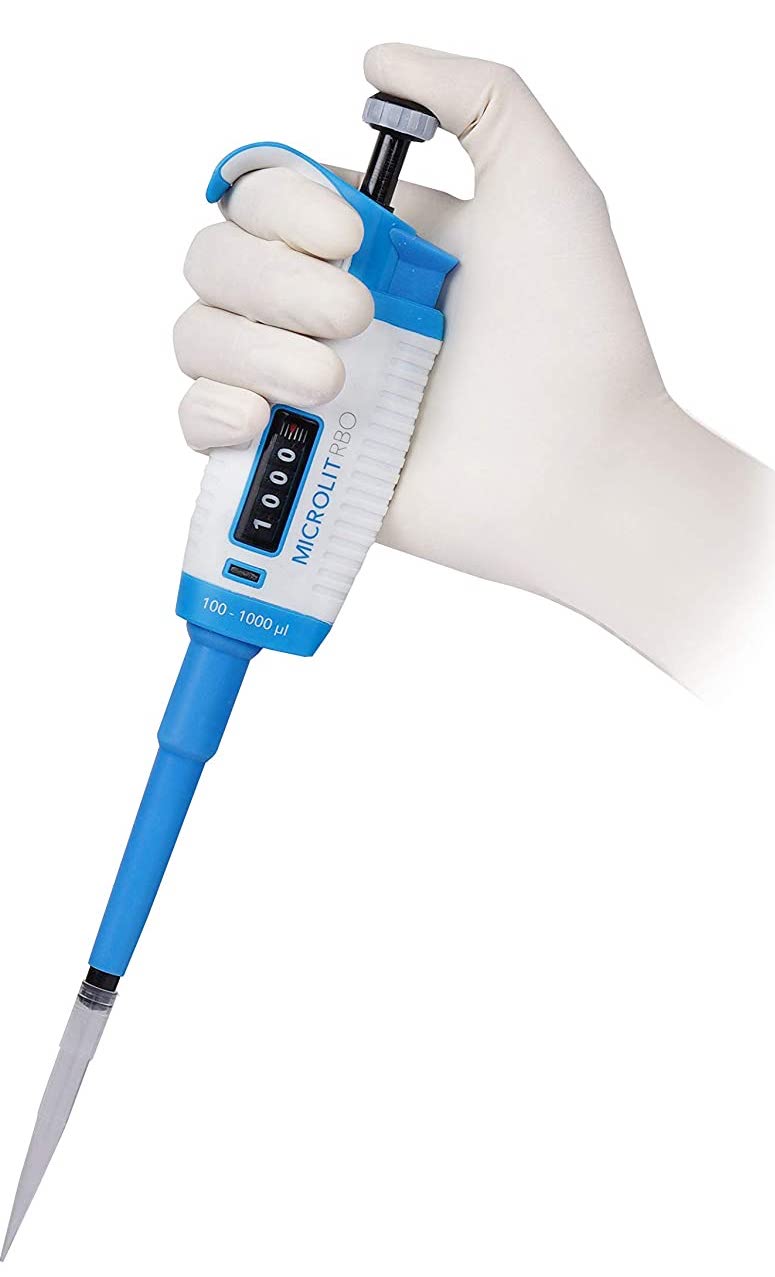
For routine laboratory applications, mechanical micropipettes provide dependable performance and ergonomic handling.
For repetitive dispensing or advanced liquid handling workflows, electronic pipettes help improve consistency while reducing operator fatigue.
Microlit’s portfolio of precision liquid handling solutions supports a wide range of pharmaceutical applications:
- Microlit RAMBO Mechanical Micropipettes for accurate everyday pipetting
- Microlit NERO Mechanical Micropipettes for reliable and ergonomic manual liquid handling
- Microlit AQUA Electronic Pipettes for enhanced precision, repeatability, and workflow efficiency in repetitive pipetting tasks
Choosing the right instrument ensures better accuracy while supporting laboratory efficiency.
Best Practice 2: Use ISO 8655-Compliant Pipettes
GMP requires laboratories to use equipment capable of delivering reliable and consistent performance.
Pipettes manufactured and tested in accordance with ISO 8655 provide confidence that they meet internationally recognized standards for:
- Accuracy
- Precision
- Calibration
- Performance verification
Regular verification of pipette performance ensures compliance throughout the instrument’s lifecycle.
Best Practice 3: Establish a Routine Calibration Program
Calibration is one of the most important GMP requirements for laboratory equipment.
Even high-quality micropipettes can gradually drift from their specified accuracy due to frequent use or improper handling.
A robust calibration program should include:
- Scheduled calibration intervals
- Performance verification
- Documentation of results
- Adjustment when required
- Traceable calibration records
Maintaining calibration records also supports regulatory inspections and internal quality audits.
Best Practice 4: Follow Standardized Pipetting Techniques
Even the most advanced pipette cannot compensate for poor pipetting technique.
Laboratory personnel should follow standardized operating procedures (SOPs) to ensure consistency.
Recommended practices include:
- Pre-wetting the pipette tip when appropriate
- Holding the pipette vertically during aspiration
- Maintaining consistent immersion depth
- Aspirating and dispensing at a controlled speed
- Avoiding air bubbles
- Touching off residual droplets against the vessel wall when required
Standardized techniques reduce operator-to-operator variability and improve reproducibility.
Best Practice 5: Use High-Quality Compatible Pipette Tips
Pipette tips play a significant role in liquid transfer accuracy.
Poorly fitting or low-quality tips may cause:
- Air leakage
- Sample retention
- Inconsistent dispensing
- Reduced accuracy
Using high-quality, compatible pipette tips ensures:
- Secure sealing
- Reliable aspiration
- Consistent liquid delivery
- Better experimental reproducibility
Best Practice 6: Prevent Cross-Contamination
Cross-contamination is a major concern in pharmaceutical laboratories, particularly when handling potent compounds, biological samples, or quality control materials.
To minimize contamination risks:
- Use fresh pipette tips for every sample
- Avoid touching sterile surfaces
- Prevent sample carryover
- Follow laboratory cleaning procedures
- Store pipettes appropriately after use
Electronic pipettes with programmable dispensing modes can further reduce unnecessary sample handling.
Best Practice 7: Train Laboratory Personnel Regularly
Personnel competency is a fundamental GMP requirement.
Regular training should include:
- Pipette operation
- Pipetting techniques
- Calibration awareness
- Equipment maintenance
- Good documentation practices
- Laboratory safety
Periodic competency assessments help ensure that laboratory personnel continue to perform pipetting tasks accurately and consistently.
Best Practice 8: Maintain Complete Documentation
Documentation is often summarized by the GMP principle:
“If it isn’t documented, it didn’t happen.”
Laboratories should maintain records of:
- Pipette calibration
- Maintenance activities
- Repair history
- SOP compliance
- User training
- Equipment identification
Comprehensive documentation supports traceability and simplifies regulatory inspections.
Best Practice 9: Perform Preventive Maintenance
Routine maintenance extends pipette life and helps maintain consistent performance.
Preventive maintenance includes:
- Cleaning external surfaces
- Inspecting pistons and seals
- Replacing worn components
- Lubricating moving parts where recommended
- Verifying smooth plunger operation
Well-maintained pipettes reduce downtime and improve operational reliability.
Best Practice 10: Select Ergonomic Pipettes to Reduce Operator Fatigue
Pharmaceutical laboratories often perform thousands of pipetting cycles each day.
Repeated manual pipetting can lead to:
- Hand fatigue
- Wrist strain
- Reduced accuracy
- Operator discomfort
Ergonomically designed mechanical micropipettes, such as Microlit RAMBO and Microlit NERO, help reduce pipetting effort during routine laboratory work.
For repetitive dispensing and prolonged workflows, Microlit AQUA Electronic Pipettes further enhance user comfort by automating aspiration and dispensing operations, minimizing repetitive thumb movement while improving consistency.
Better ergonomics contribute not only to operator well-being but also to improved laboratory performance.
Building a GMP-Compliant Pipetting Workflow
An effective GMP-compliant pipetting program should integrate:
- Qualified equipment
- ISO 8655-compliant pipettes
- Regular calibration
- Preventive maintenance
- Standard operating procedures
- Personnel training
- Proper documentation
- Continuous performance monitoring
Together, these practices create a robust quality system that supports reliable analytical results and regulatory compliance.
Why Precision Liquid Handling Matters
In the pharmaceutical industry, every microlitre transferred contributes to product quality and patient safety.
Reliable pipetting helps laboratories:
- Improve data integrity
- Reduce repeat testing
- Enhance analytical confidence
- Maintain regulatory compliance
- Increase operational efficiency
- Support reproducible scientific research
Investing in high-quality pipetting solutions is therefore an investment in laboratory excellence.
GMP-compliant pipetting is not simply about using a calibrated micropipette—it is about adopting a comprehensive approach to quality, consistency, and traceability.
By selecting precision-engineered pipettes, following standardized operating procedures, maintaining regular calibration schedules, and training laboratory personnel, pharmaceutical laboratories can significantly improve the reliability of their liquid handling processes.
Whether performing routine quality control, analytical testing, formulation development, or research, laboratories require liquid handling solutions that deliver confidence in every transfer.
At Microlit, we are committed to supporting pharmaceutical laboratories with precision-engineered liquid handling solutions, including RAMBO Mechanical Micropipettes, NERO Mechanical Micropipettes, and AQUA Electronic Pipettes. Designed for accuracy, reliability, and user comfort, our pipettes help laboratories meet the rigorous demands of modern pharmaceutical workflows while supporting best practices aligned with GMP and ISO 8655 standards.
Because when it comes to pharmaceutical quality, every drop matters—and every transfer counts.