




 1203
1203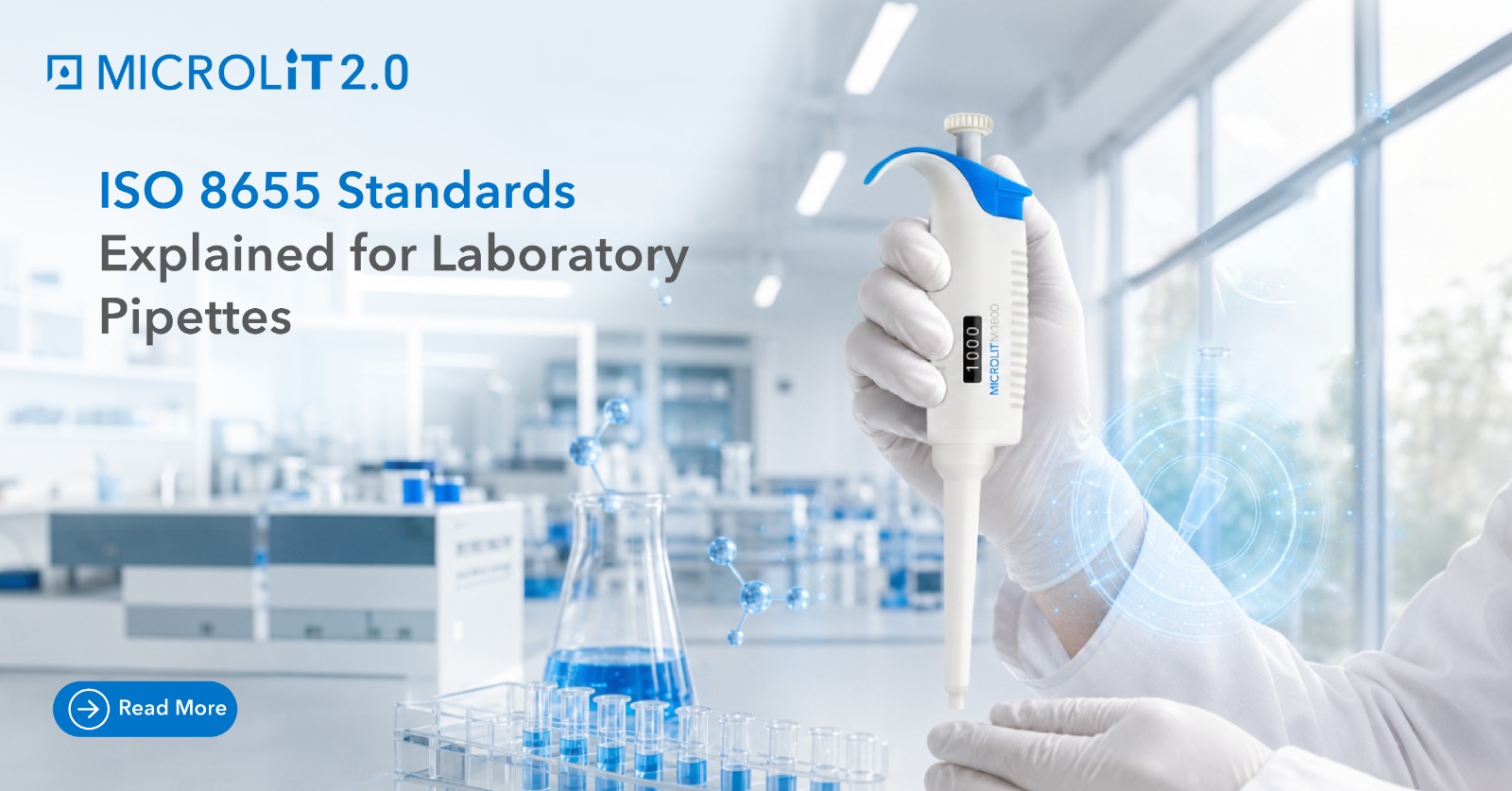
In modern laboratories, accuracy and precision are the foundation of reliable scientific results. Whether it is pharmaceutical research, biotechnology, clinical diagnostics, environmental testing, food analysis or academic research, accurate liquid handling plays a critical role in achieving reproducible outcomes.
Micropipettes are among the most essential instruments used for transferring precise volumes of liquids in the microlitre range. From preparing samples and reagents to conducting complex experiments, the performance of a micropipette directly influences the quality and reliability of laboratory results.
However, achieving accurate liquid transfer depends on more than just instrument design. It requires compliance with internationally recognized performance standards.
The ISO 8655 standard provides globally accepted guidelines for evaluating the accuracy and precision of piston-operated volumetric instruments, including manual micropipettes, electronic pipettes, dispensers and other liquid handling devices.
Microlit’s precision liquid handling portfolio, including RAMBO Mechanical Micropipettes, NERO Mechanical Micropipettes, and AQUA Electronic Pipettes, is designed to support laboratories in achieving consistent, reliable, and precise liquid handling performance.
What is ISO 8655?
ISO 8655 is an international standard developed by the International Organization for Standardization (ISO) that specifies requirements, testing procedures, and performance limits for piston-operated volumetric instruments.
The standard evaluates critical parameters such as:
- Accuracy
- Precision
- Calibration procedures
- Maximum permissible errors
- Testing conditions
ISO 8655 applies to various laboratory liquid handling instruments, including:
- Mechanical micropipettes
- Electronic pipettes
- Multichannel pipettes
- Bottle top dispensers
- Piston burettes
- Dilutors
The objective of this standard is to ensure that liquid handling instruments deliver consistent and reliable volume performance throughout their operational life.
Why ISO 8655 Compliance Matters for Micropipettes
Micropipettes often handle extremely small volumes where even minor variations can impact experimental outcomes.
For example:
- Incorrect reagent volumes may affect chemical reactions.
- Inconsistent sample preparation may reduce reproducibility.
- Pipetting errors may compromise diagnostic accuracy.
ISO 8655 compliance ensures that micropipettes deliver:
Accuracy
Accuracy defines how close the delivered volume is to the selected volume.
Example:
If a micropipette is set to dispense 100 µL, the actual delivered volume should be as close as possible to 100 µL.
Precision
Precision defines how consistently the instrument delivers the same volume during repeated operations.
A precise micropipette ensures dependable and reproducible results.
Understanding ISO 8655 Parts Relevant to Pipettes
ISO 8655-1: General Requirements
This section provides general principles applicable to piston-operated volumetric instruments.
It covers:
- Definitions
- Measurement principles
- General performance requirements
- Testing concepts
ISO 8655-2: Pipettes
ISO 8655-2 specifically covers piston-operated pipettes, including:
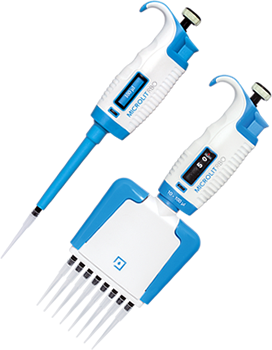
- Single-channel micropipettes
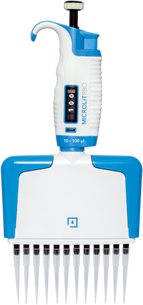
- Multichannel micropipettes
- Adjustable volume micropipettes
- Fixed volume micropipettes
- Mechanical micropipettes
This section defines requirements for:
- Maximum permissible systematic error
- Maximum permissible random error
- Performance verification
Mechanical Micropipettes and ISO 8655
Mechanical micropipettes are widely used across laboratories due to their reliability, accuracy, and ease of operation.
These piston-operated instruments work through manual movement of the plunger mechanism to aspirate and dispense liquids.
Microlit offers advanced mechanical micropipettes designed for precise and consistent liquid handling.
Microlit RAMBO Mechanical Micropipette
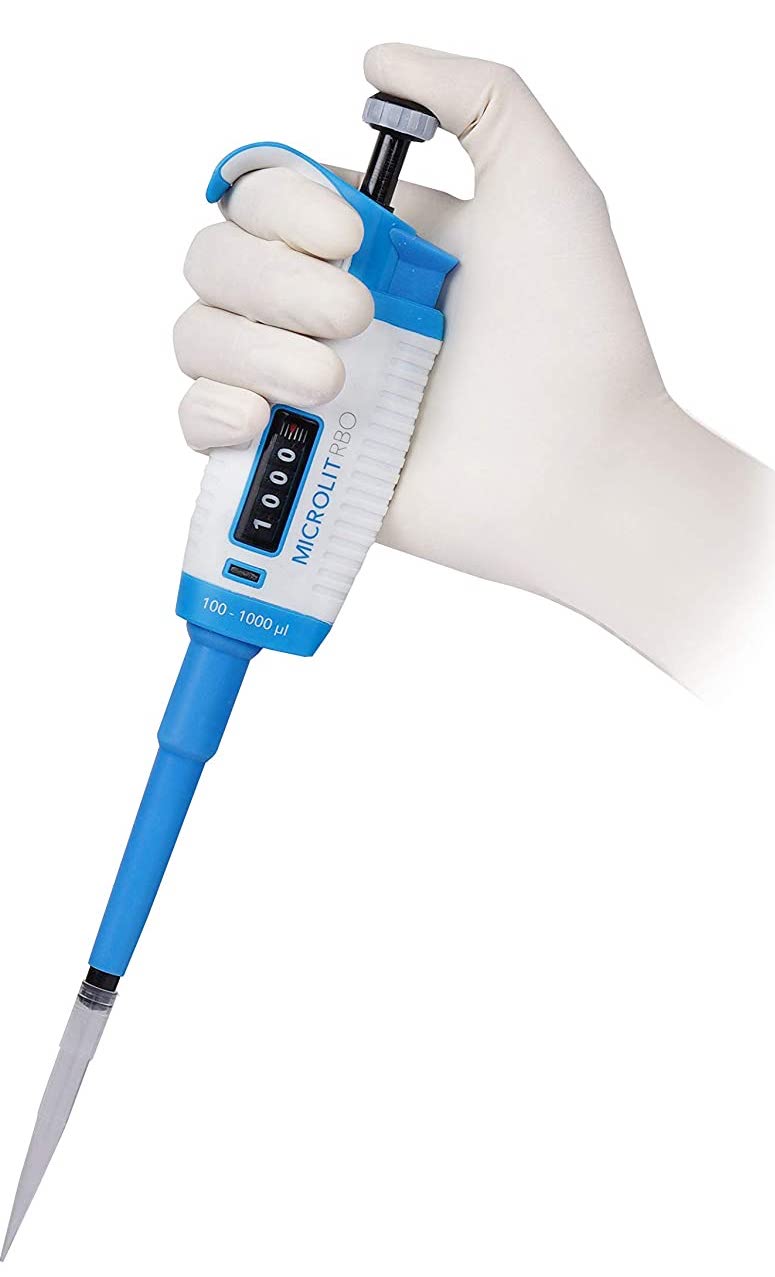
Microlit RAMBO is a precision-engineered mechanical micropipette designed to provide accurate, reliable, and repeatable liquid transfer performance.
Developed for demanding laboratory applications, RAMBO supports accurate volume delivery through:
- Smooth plunger operation
- Ergonomic design
- Reliable piston mechanism
- Consistent performance
- User-friendly handling
RAMBO mechanical micropipettes are suitable for applications including:
- Molecular biology
- Pharmaceutical research
- Biotechnology
- Clinical laboratories
- Quality control testing
As a piston-operated micropipette, RAMBO performance can be evaluated using ISO 8655-compliant testing procedures to verify accuracy and precision.
Microlit NERO Mechanical Micropipette
Microlit NERO is a high-performance mechanical micropipette designed for laboratories requiring dependable and precise liquid handling solutions.
NERO focuses on providing:
- Accurate liquid transfer
- Comfortable operation
- Reduced user fatigue
- Consistent repeatability
- Reliable laboratory performance
It is suitable for various applications including:
- Research workflows
- Diagnostic laboratories
- Pharmaceutical testing
- Academic laboratories
Like other mechanical micropipettes, NERO follows the performance principles defined under ISO 8655, where accuracy and precision are verified through controlled testing methods.
Multichannel Micropipettes
ISO 8655 also applies to multichannel pipettes designed for simultaneous transfer of multiple samples.
Common configurations include:
- 8-channel micropipettes
- 12-channel micropipettes
Applications include:
- ELISA testing
- Microplate preparation
- High-throughput screening
- Sample processing
Multichannel micropipettes improve efficiency while maintaining precision across multiple liquid transfers.
Adjustable Volume Micropipettes
Adjustable volume micropipettes allow users to select different volumes within a defined range.
Advantages include:
- Flexibility
- Reduced requirement for multiple instruments
- Support for different laboratory applications
Fixed Volume Micropipettes
Fixed volume micropipettes deliver a specific preset volume.
They are preferred where:
- High repeatability is required
- Standardized workflows are followed
- Frequent volume adjustments are not needed
Electronic Pipettes and ISO 8655
Electronic pipettes use motor-driven piston movement to automate aspiration and dispensing.
Compared with manual micropipettes, electronic pipettes reduce variations caused by user technique and improve workflow consistency.
They are especially useful for:
- Repetitive pipetting operations
- High-throughput applications
- Complex liquid handling protocols
Microlit AQUA Electronic Pipette
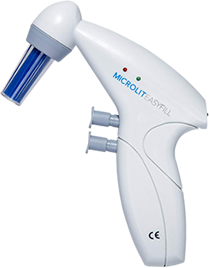
Microlit AQUA is an advanced electronic pipette designed to deliver enhanced precision, efficiency, and user convenience.
AQUA supports modern laboratory workflows through:
- Automated aspiration and dispensing
- Multiple pipetting modes
- Improved repeatability
- Reduced manual effort
- Enhanced user control
It is suitable for laboratories performing:
- Research applications
- Pharmaceutical workflows
- Biotechnology processes
- Repetitive liquid handling tasks
By reducing dependence on manual pipetting technique, AQUA helps laboratories achieve greater consistency and reliability in liquid transfer operations.
ISO 8655-6: Gravimetric Testing Method
ISO 8655 performance verification commonly uses the gravimetric testing method.
The process involves:
Step 1: Dispensing Test Liquid
The pipette dispenses distilled water under controlled conditions.
Step 2: Measuring Weight
The liquid is weighed using a calibrated analytical balance.
Step 3: Volume Calculation
The weight is converted into volume.
Step 4: Performance Evaluation
Results are evaluated for:
- Systematic error (accuracy)
- Random error (precision)
Importance of Calibration for Micropipettes
Regular calibration ensures continued accuracy and compliance.
Calibration involves:
- Instrument inspection
- Performance testing
- Error calculation
- Adjustment, if required
Regular calibration helps maintain:
✓ Reliable results
✓ Better reproducibility
✓ Compliance with quality requirements
Factors Affecting Micropipette Accuracy
Pipetting Technique
Correct technique includes:
- Proper immersion depth
- Consistent plunger movement
- Correct aspiration speed
Temperature
Temperature differences between:
- Liquid
- Pipette
- Laboratory environment
can influence volume accuracy.
Pipette Tips
High-quality compatible tips ensure:
- Proper sealing
- Reduced leakage
- Accurate liquid transfer
Liquid Properties
Characteristics such as:
- Viscosity
- Density
- Volatility
can affect pipetting performance.
Selecting the Right ISO 8655 Compliant Pipette
Laboratories should consider:
✔ ISO 8655 compliance
✔ Accuracy and precision specifications
✔ Calibration support
✔ Ergonomic design
✔ Application requirements
✔ Tip compatibility
✔ Service availability
Whether selecting the dependable Microlit RAMBO Mechanical Micropipette, the efficient Microlit NERO Mechanical Micropipette, or the advanced Microlit AQUA Electronic Pipette, choosing a precision-engineered solution ensures confidence in every liquid transfer.
ISO 8655 standards provide the foundation for reliable and accurate liquid handling in laboratories worldwide. By defining strict requirements for accuracy, precision, and testing methods, ISO 8655 helps laboratories achieve confidence in their measurements.
Mechanical micropipettes such as Microlit RAMBO and Microlit NERO, along with advanced electronic pipetting solutions like Microlit AQUA, support modern laboratories in achieving consistent and dependable liquid handling performance.
Because in laboratory science, every microlitre matters and precision begins with the right pipetting technology.