• Multiple Offers
    Multiple Offers
  • Support
    Real-Time Support
  • Free Replacement
    1-Year Free Replacement Warranty
  • (732) 321-0852

Upgradation of Microlit E-burette Software

The Food and Drug Administration (FDA) introduced Title 21 of the Code of Federal Regulations (CFR) in the year 1997. The FDA 21 CFR Part 11 lays special focus on regulating the use of electronic records and electronic signatures. This regulation is of importance to pharmaceutical, healthcare, and other biological & drug manufacturers. These clear and concise regulations were brought into action with the advancement of technology and when many companies shifted to digital record keeping.

Though digital record keeping is cost and time effective, it has its own drawbacks with respect to validity, authenticity, and reliability. To address these issues, the FDA brought into action FDA 21 CFR Part 11. The regulation has three specific goals:

1. The authenticity of the validity of electronic records

2. Confirming the authenticity of electronic records and signatures

3. Validating the reliability of electronic records and signatures

Forging the Microlit Values in Instruments

Microlit has always stressed on maintaining validity, reliability, and authenticity of the studies carried out with the help of its instruments. To remain aligned to its values the new robust software of Microlit is compliant with FDA 21 CFR Part 11. The users are able to create titration experiments (electronic records) and the readings (titre values) can be transferred from the e-burette to the software. Based on the user inputs and the readings, the software computes the molarity of the analyte. The data being stored here is important and its integrity is protected by following the regulations laid down by the FDA.

Benefits of Implementing FDA 21 CFR Part 11 Regulations in Microlit E-burette Software

System Validation

Under Part 11, it is a prerequisite that the electronic instrument is validated to maintain the accuracy, reliability and consistency of data. The regulation clearly defines all elements and their functions and that the system owner has to maintain all documentation for validation.

Audit Trails

For future reference and well-documented record keeping, the date and time of information and any modifications is closely tracked & secured.

Record Generation

All the records stored in the system are accurate and can easily be pulled up by following the requirement of indexing all records and providing a search facility to show the access history along with the digital signatures.

Security Checks

A person can access the records only through login ID, password and digital signature. The number of people who can access and modify the records are authorized in advance. This digital footprint allows all the activities to be tracked and ensure the integrity of the data.


Operational Checks

To ensure that the system functions are in proper sequence, operational checks are performed regularly. There is a proper workflow defined which mentions that data entry comes prior to its review, all quality checks are in place and documents are evaluated by the assigned individuals before approval.

Training

It is crucial for the electronic data system users to undergo proper training for their tasks to ensure that the processes are carried out effectively. These training sessions are to be documented.


The Microlit E-burette is a state-of-the-art motor-operated burette with sophisticated features and functionality. The features of the e-burette like Motor Controlled Piston Movement, a touch screen enabled Control Panel with an intuitive graphical user interface and 3 calibrated pre-set speed to perform highly accurate titrations, make the operation of the instrument smooth.

The Microlit E-burette can now be purchased with computer software, compliant with FDA 21 CFR Part 11, at an additional cost, to keep the data secure and control user access. Hence, moving forward, Microlit E-burette can be used by major pharmaceutical companies as their sensitive data will be in secure servers.

To know more about Microlit E-burette and the new FDA 21 CFR Part 11 compliant software drop in a mail at info-usa@microlit.com.

Top 10 Tips for Pipetting Like a Pro


Accurate and precise pipetting is a crucial element of most laboratory work. Without focus on pipetting excellence, the integrity of your experiments may be compromised and the results would not be reproducible. Worse still, your readouts would be massively inaccurate and it would be meaningless to compare them with others.

Pipettes or Micropipettes may be high-precision instruments, but the accuracy they deliver depends on how you handle it, how you maintain it, how to pipette properly, how you master your pipetting technique and understand its operation technically. Once you actually master these steps or Pipetting Tips, can you claim to be precise with these instruments.

1. Pre-Wet the Pipette Tip

Before aspirating any sample for your experiment or delivery, you should aspirate and dispense the sample liquid at least three times to pre-wet the tip. If the tip is not pre-wetted, significant sample loss may be caused by the evaporation of liquid within the tip. By pre-wetting, the humidity of the tip increases and reduces the possibility of any variation in the dispensed samples.

2. Don’t Place a Pipette with aspirated liquid on its Side

An air column separates the liquid in the pipette from the pipette barrel which holds the piston. Naturally, due to gravity, nothing can prevent the liquid from rolling down into the barrel if the pipette is placed on its side. If any liquid is left inside the pipette barrel, it may result in contamination and may even cause serious damage to the functioning of the pipette due to corrosion.

3. Test Your Pipetting Accuracy

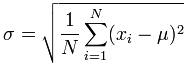
You may test the accuracy of your pipetting technique by following a simple procedure. Adjust your pipette to the maximum volume or the Nominal Volume of the pipette. Aspirate and Dispense the nominal volume onto a small container placed on an analytical balance. Record the dispensed weight as shown by the balance. Repeat this process at least 10 times and compute the Coefficient of Variation of the readings (formula below). If the CV is more than 0.5%, then you need to re-evaluate your pipetting technique.

Standard Deviation


? = Mean
xi = Volume
N = Number of readings
CV% = (SD/Mean)*100

4. Do Not Press to the Second Stop during Aspiration

Do Not Press to the Second Stop during AspirationA pipette plunger has 2 stops designed specifically for aspiration and dispensing. Amateur pipette users may press the plunger to the second stop during aspiration which will result in extra liquid to be aspirated and dispensed. Make sure to press only to the FIRST stop during aspiration and only the second stop only to blow-out and remaining liquid in the pipette tip during dispensing.
 

5. Take the Ambient Temperature into Consideration

Your pipette is most likely calibrated at room temperature but you might be working in a lab with a significantly different ambient temperature. This may result in your pipette not dispensing accurate volumes. To fix this problem, please re-calibrate your pipette in the same ambient temperature.

6. Choose the Correct Pipette for the Volume you Dispense

The accuracy and precision of your pipette decreases as the dispensed volume approaches the minimum the pipette can handle. For example, if you are dispensing 15 µL, then a 1 mL pipette would be a terrible match, a 200 µL pipette would not be so good, and 20 µL pipette would be ideal. So, choose your pipette such that the nominal volume of the pipette is slightly larger than most commonly pipetting volume for your use case, ensuring you use the most accurate pipette.

7. Check Your Pipettes for Damage

Everyday, before starting your experiments, examine the tip-cone (nose) of the pipette barrel you would be working with, for damage. If there’s any visible damage, this may result in leakage between the tip-cone and the pipette tips you attach. This leakage will cause inaccurate results, so please have the pipette repaired immediately.

8. Clean Your Pipette Before Use

Contrary to popular wisdom, your pipettes may be washed regularly with 70% ethanol. This will not damage or affect the functionality of the instrument.

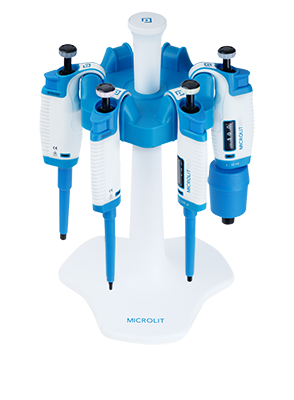
9. Store Your Pipette in a Pipette Holder

carousel standWhen you store your pipette vertically, it prevents any liquid in the pipette barrel to go further, thereby avoiding corrosion. This will significantly improve the life of your pipette.



10. Use Consistent Plunger Pressure and Speed

Try to be as consistent as possible with the force applied on the plunger during aspiration and dispense. This will improve the precision of your dispensed samples and lead to more accurate pipetting.

If you’re looking for more tips for pipetting or ways to improve your time-efficient pipetting or how to improve pipetting accuracy, feel free to contact us at info-usa@microlit.com

Bottle Top Dispensers: Facilitating Manufacturing of Cannabis Products

The US cannabis industry is growing at a remarkable pace. It is essentially being steered by the rise in the usage and sales of cannabis-derived products like hemp, CBD Oil (Cannabidiol Oil), etc. owing to their diverse medicinal applications. This exceptional surge means that the industry needs an even more stringent manufacturing and testing process and that too soon. Advanced lab equipment can easily help expedite and streamline this.

Cannabis products: Benefits & legalization

Preliminary evidence-based research suggests that cannabis & cannabis-derived products can reduce nausea and vomiting in patients undertaking chemotherapy, improve appetite in people with AIDS, reduce chronic pain & muscle spasms, and treat severe forms of epilepsy.

It is worthy to note that the medical use of cannabis is legalized in 33 states, four out of five permanently inhabited U.S. territories and DC, undeniably with a doctor’s recommendation. 14 other states have laws that limit THC content, to allow access to products that are rich in cannabidiol (CBD), a non-psychoactive component of cannabis.

Manufacturing cannabis products

Scientists use cannabis as a raw-material and process it with the help of a series of specialized processes to build a range of products. To carry out the procedure optimally, they use lab instruments like Microlit Bottle Top Dispensers that offer robust performance.

Steps that involve the use of Microlit Bottle Top Dispensers

Extraction

Extraction, as its name suggests, involves the extraction of certain compounds from the cannabis plant. The process requires bottle top dispensers to be carried out effectively. It can be done in a variety of ways. The method of marijuana potency determination by extraction of THCA from marijuana involves different kinds of solvents like methanol, ethyl acetate or hexane. Our dispensers are mounted on the top of the solvent bottles and used to accurately dispense specific quantities of these solvents which can then be used to extract THCA.

In other cases, food-grade organic alcohol may be used for extracting the cannabinoids, terpenes, and flavonoids for optimal absorption of CBD by the body. By the end of the process, the alcohol is separated from the end product and then reclaimed through evaporation.

Analysis & Testing

The right lab equipment plays a key role in testing cannabis products for quality & related parameters. Bottletop dispenser helps facilitate this process. The products that need to be analysed include – extracts and concentrates (tinctures, infusions, RDI); glycerin, alcohol or oil-based; topical salves or lotions; edibles, tablets, gel caps, and vaporizer products (Vape Pens). And, the analysis is done to usually look for – contaminants (pesticides, plant growth regulators, heavy metals, etc.), potency, homogeneity, humidity, and terpenes.

Packaging

Once the cannabis products have been prepared, they need to be filled into small containers using bottle top dispensers. This ensures safe & high precision transfer of specified quantities with no spillage.

Analysis & Testing


Experience Precision with Microlit Bottle Top Dispensers


Bottle Top DispensersAs a lab owner working in or for a cannabis manufacturing facility, wouldn’t you be delighted to save time and carry out your routine tasks with greater precision and zero spills? Even if you are just starting out and wish to set up your own lab, you can trust our bottle top dispensers to get the job done in a breeze!



 

For more details, send an email to info-usa@microlit.com.

The Fourth Agricultural Revolution will be Driven by the Heroes in the Labs

When agricultural practices begin to witness significant changes due to a marked shift in the methods of production – like adopting new techniques for better yield – an agricultural revolution is said to be underway. Such revolutions usually bear a momentous impact not only on the industry itself but also on society. 

Agricultural Revolutions So Far

Till date, the world has witnessed three great agricultural revolutions –

  1. First: Adoption of modern agriculture,
  2. Second: Post World War I mechanisation, and,
  3. Third: Green revolution

The first agricultural revolution brought with it techniques like soil management and the advent of various new farming tools.

The second revolution promoted the use of mechanised tools in farming practices, increasing the rate of production as well as the quantity of crop yield.


The third revolution or the Green Revolution was the phase when genetically modified crops began to be used by almost everyone, leading to greater output of the produce. It was essentially unveiling a green revolution that changed global agriculture forever.


Although a blessing for the industry, the Green Revolution has left our lands over-cultivated and over-used, making them unfit for use in the future and negatively impacting the ecological balance. Hence, we are now witnessing the dawn of the fourth agricultural revolution.


What does the Fourth Agricultural Revolution Entail?

The fourth agricultural revolution supports the use of technology in order to promote sustainable farming. From biotechnology to big data, science and technology are ready to take over the agricultural sector in order to elevate its efficiency and productivity levels. As a result of these developments, a number of new and better practices have risen in recent years.

Scientists have developed a new method known as genetic manipulation which yields crops of good quality, in greater amounts and with shorter maturity periods. The method involves extracting the desirable genes from a plant and inserting them in a different plant by using the technique of hybridisation.

Over time, the field of agriculture has also been benefited by great developments in the field of biotechnology. Agricultural revolution technology such as agricultural biotechnology is based on the idea of understanding and utilising useful microbes and bacteria which can play a beneficial role in boosting farming. For instance, it improves soil quality by promoting the use of certain bacteria that have the ability to convert the nitrogen from the air into soluble nitrates, which in turn, act as natural soil fertilizers.

Soil SamplingAnother effective method for better farming is soil sampling. As a part of it, researchers take soil samples from different fields and test their quality. Soil sampling allows researchers to keep a track of moisture, nutrients and other qualities that make soil ideal for farming. This method helps the farmers to understand which soil is fertile and perfect to grow which variety of crop, making his/her harvest a successful one. Information about the soil is also gathered by planting sensors in the soil which record the moisture and nutrient contents, educating the farmers to replenish the soil with the nutrients which are low in percentage.

The agriculture sector faces a lot of uncertainties in the present. And to keep track of them, scientists are using data science and technology to optimise the on-farm production and align it with the changing consumer demands. 

Agricultural Revolution 4.0 – The Need of the Hour

The farmers and producers nowadays are aware of the pressing need to have sustainable resource management. And, they are doing so by striking a balance between science & technology and agriculture. By understanding and forecasting the consumer demand with the real-time data collected, producers are now trying to meet that demand successfully by growing the required crops under favourable conditions by planting genetically modified seeds. This makes the fourth agricultural revolution not just an idea but a necessity for the future of farming.

Ensuring Product Reliability through Robust Quality Control

To build innovative solutions & achieve remarkable breakthroughs without compromising on their productivity, the world’s leading labs look for a brand that offers high-quality products along with strong technical support. Our state-of-the-art proficiency and meticulously designed equipment enable us to offer just that. 


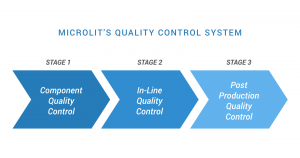
This also necessitates the need for a system of quality checks that’s authentic, failproof and verifiable. Therefore, to assess and ensure the credibility & consistent performance of our instruments, we follow an ISO 9001 certified Quality Control/Management process involving 3 key stages. 

Stage 1

Component Quality Control

Efficiency lies in the details. 

We build our high precision instruments to enable every component to play its rightful role in helping the end-user achieve accurate results in practical lab environments. Before assembling them, we vet the components thoroughly. To ensure a reliable quality check, we undertake three steps.  

Methodology: Examination of a Small Fraction of Components

Our inward-QC department initially examines a sample of 10% of all components supplied by external vendors or produced in-house. If the sample rejection rate exceeds 10%, we scrutinise the rest of the components. In the case of external vendors, we send an internal report of the inspection to get the defective pieces replaced with those that suffice industry standards. These frequent inward-QC inspections help us hold our suppliers to high standards and partner with only those who meet our strict quality standards.

Our plastic components undergo a thorough inspection with a staunch lookout for dirt, splashes and spots.


Assured Quality for Non-Microlit Products

The plastic (coloured) components for OEM products follow a strict Pantone code to adhere to our customer’s branding guidelines. Once the samples are manufactured, they are strictly checked against the Pantone code in addition to standard plastic component checks.

Raw materials that are sourced externally, such as plastic granules and PTFE rods, also go through strict QC protocols to ensure conformance with the laid down specs.

Other components such as Glass barrels (used in Bottle Top Dispensers) are carefully checked through a multi-point inspection procedure for dimensional accuracy. It directly affects the precision of the final instrument. These checks enable our products to offer quality performance in conformance with ISO 8655 standards.


Stage 2

In-line Quality Control

Incessant monitoring of equipment in production.

  1. While the products and instruments are being manufactured, all sub-assemblies, as well as the assembled products, go through a vigilant check in the production line.
  2. In this step, we mainly lookout for defects and mishaps that may have occurred in the on-going assembling procedure.
  3. A supervisor in every department helps the assembly department mandate these checks. They primarily look after the performance efficiency of every piece – be it the micropipette and its plunger force, the smoothness of the piston movement or the work-ability of every other finished product.
  4. Another responsibility of this department is to rework the demerits found in all the rejected pieces.


Stage 3

Post Production Quality Control 

Re-asserting quality through a re-inspection.

  1. The journey of a product from its birth, right from assembling components to its final manufacture and packaging, makes the product vulnerable to unsupervised mishaps. 
  2. Once every component is carefully assembled to form the final products, there’s a final check at the post-production stage. This further substantiates the quality in Microlit’s precision.
  3. A mandatory and thorough check-up reaffirms the functionality and accuracy of every piece that goes under the brand’s name. 


Microlit’s Trustworthy Innovation 

We have an ISO 9001:2015 certification that reaffirms the reliability of our Quality Control system.

Microlit’s Trustworthy Innovation

Shown above: Microlit ISO 9001 certificate


Calibration and Certifications: 

Approved and certified only when readings are in a permissible range

  1. Products are tested in an ISO 17025 certified lab with their calibration generated from a cloud-based software. 
  2. The readings procured by the software are scrupulous and error-free as they are transferred to a software directly. This rules out any possibility of the results being ambiguous.
  3. With an ISO 103485 certification, we develop and design innovative lab instruments for leading labs of the world, that speaks volumes about our coveted product designs. 
  4. ISO standards and certifications (CE) further reflect our market-leading innovation in bottle top dispensing technology and incredible delivery on the accuracy and precision front. 


A Never-Ending Vigilance 

A mandatory probe at each stage helps us uphold our ethics while we continue to innovate and execute out-of-the-box solutions. We understand that high-quality standards cannot be reliably delivered without a diligent inspection at every point. Therefore, every stakeholder at our company constantly re-examines the products that come their way, with a microscopic eye.