• Multiple Offers
    Multiple Offers
  • Support
    Real-Time Support
  • Free Replacement
    1-Year Free Replacement Warranty
  • (732) 321-0852

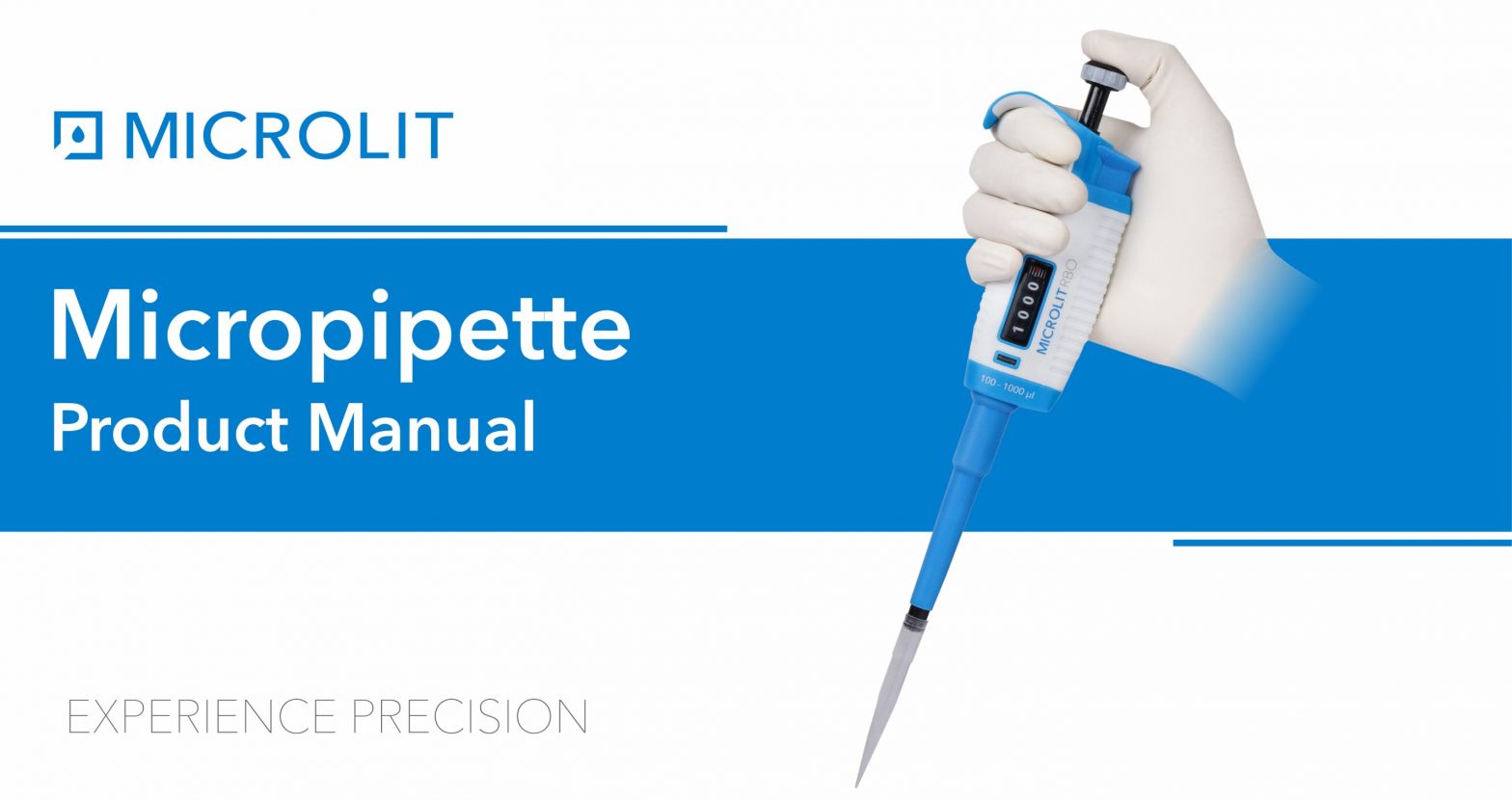
Micropipette Product Manual

1.  Product Description

MICROLIT RBO Micropipettes are continuously adjustable, general-purpose pipettes, used for sampling and dispensing accurate and precise volumes.

They operate on the principle of air displacement (i.e. an air interface is present between the piston and the reagent/solution) and use a detachable, disposable tip. The desired volume is determined by the following formula:

V=πr2h

V = desired volume,

π = constant (3.14),

r = radius, and

h = vertical distance travelled by the plunger

  • Single Channel Micropipettes cover volume range from 0.2ul to 10ml
  • Multichannel Micropipettes cover volume range from 0.5ul to 300ul

2.  Digital Display
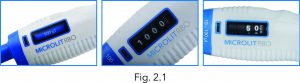
Microlit micropipette

Single Channel and Multichannel Micropipettes offer easy to read Digital Displays.

3.  Raw Material

The instruments are made of mechanically durable, autoclavable material.

4.  Micropipette Operation

Setting the delivery volume

S.No. Variable Volume Range Micropipettes Fixed Volume Range Micropipettes
1. Set the delivery volume using the push button on the top of the micropipette.
To increase the delivery volume, turn the push button counter-clockwise.
To decrease the delivery volume, turn it clockwise.
NA
2. Make sure that the desired delivery volume clicks into place. NA
3. Do not set a volume that lies outside the micropipette’s specified volume range. NA


Note: Using excessive force to turn the push button outside the range may jam the mechanism and eventually damage the micropipette.

5.  Tip Ejection
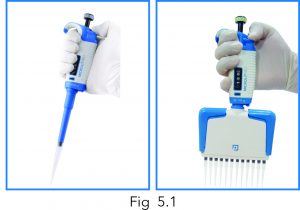
microlit micropipette

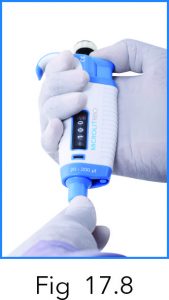
Each pipette is fitted with a Tip Ejector Button which helps to eliminate the risk of contamination. In order to eject the tip, point the micropipette at a suitable waste receptacle and press the ejector button with your thumb.

6.  Pipetting Technique

  1. Press and release the push button slowly, at all times, particularly when working with high viscosity reagents/solutions. Do not let the push button to snap.
  2. Make sure that the tip is firmly attached to the Tip cone.
  3. Before you begin your actual work, fill and empty the tip 2-3 times with the reagent or solution that you will be pipetting.
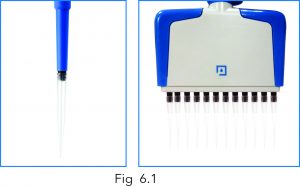
    Micropipette tipcone
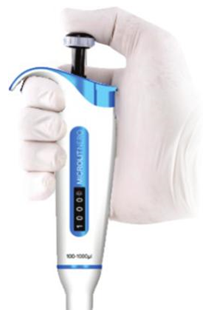
  4. Hold the micropipette in an upright position while aspirating. The Grippy must rest on your index finger.
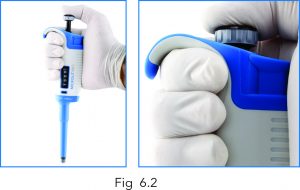
    micropipette plunger button

    Make sure that the tips, the micropipette and the reagent/solution are at the same temperature.

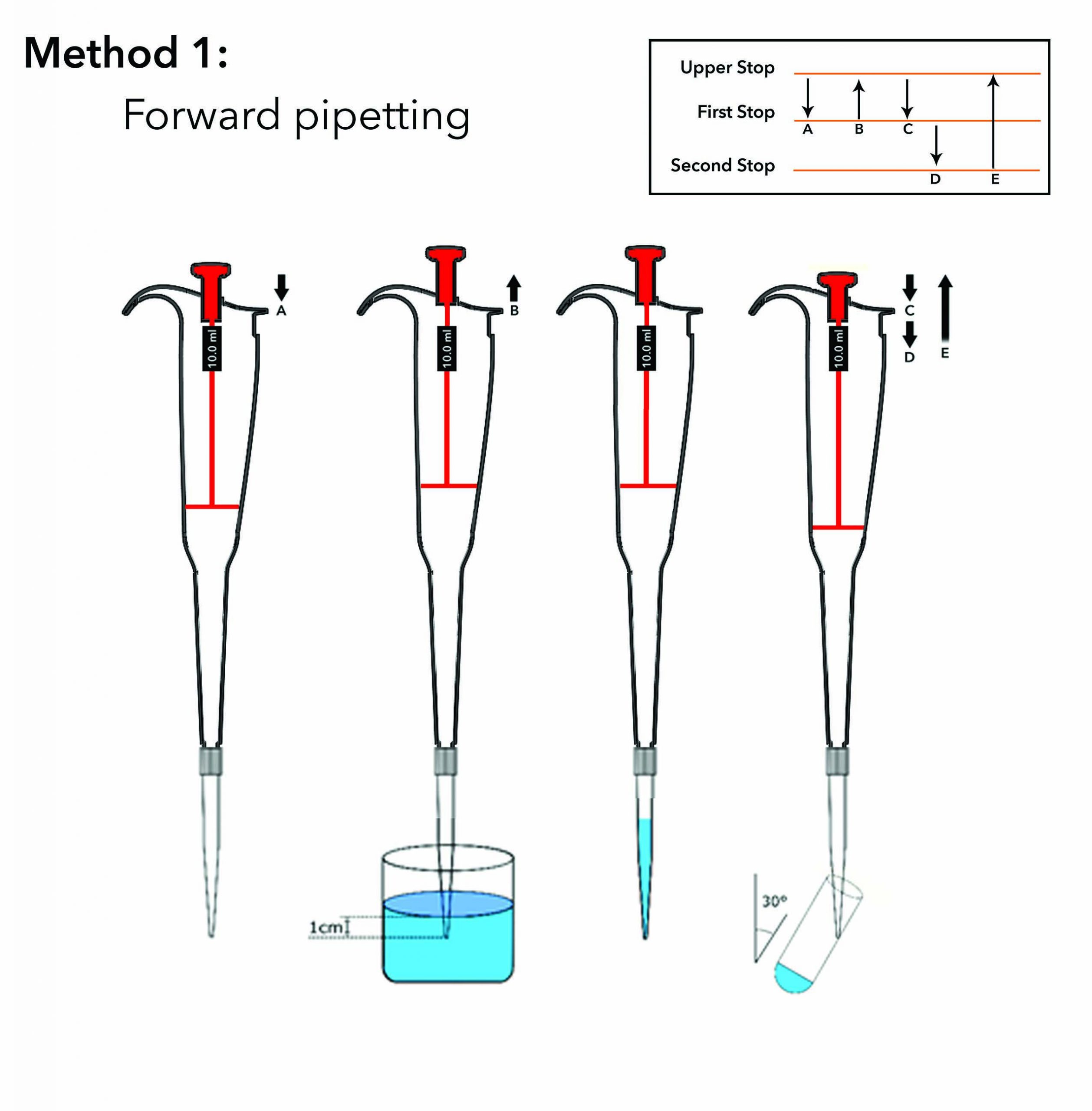
7.  Forward Technique

  1. Fill a clean reagent/solution reservoir with the reagent/solution to be dispensed.
  2. Press the push button till the first stop.
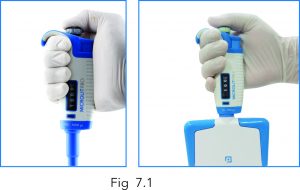
    Microlit micropipette plunger
  3. Dip the tip under the upper surface of the reagent/solution in the reservoir, till a depth of about 1 cm. Slowly release the push button.
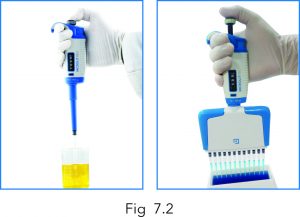
    micropipette plunger
  4. Withdraw the tip from the reagent/solution. Let it touch against the edge of the reservoir to remove the excess reagent/solution.
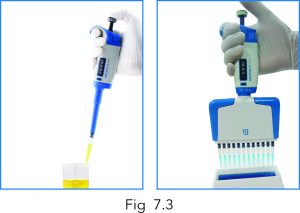
    microlit micropipette
  5. Deliver the reagent/solution by gently pressing the push button till the first stop. After a delay of about one second, stop. This action will empty the tip.
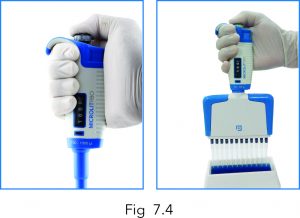
    Microlit micropipette
  6. Release the push button to let it retract to the ready position. If necessary, change the tip and continue pipetting.

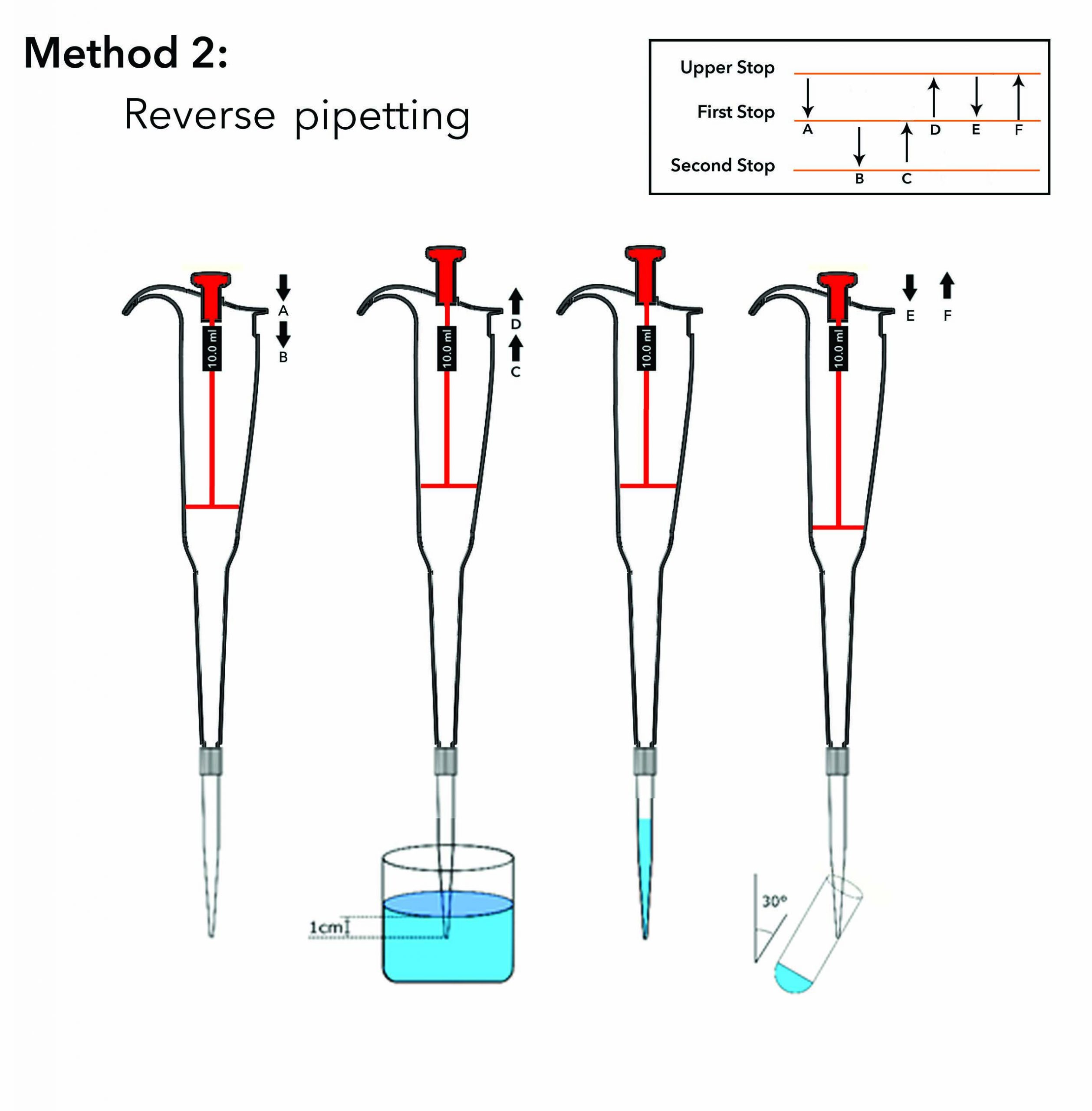
8.  Reverse Technique

The reverse technique is suitable for dispensing reagents/solutions that have a high viscosity or a tendency to foam easily. It is also recommended  for dispensing very small volumes.

  1. Fill a clean reagent/solution reservoir with the reagent/solution to be dispensed.
  2. Press the push button till the second stop.
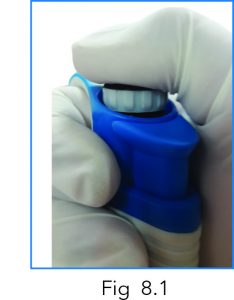
    micropipette plunger
  3. Dip the tip under the upper surface of the reagent/solution in the reservoir, till a depth of about 1 cm. Slowly release the push button.
  4. Withdraw the tip from the reagent/solution. Let it touch against the edge of the reservoir to remove the excess reagent/solution.
  5. Deliver the reagent/solution by gently pressing the push button till the first stop. After a delay of about one second, continue pressing the push button all the way till the second stop. This action will empty the tip.
  6. The remaining reagent/solution must either be discarded with the tip or pipetted back into the container to be dispensed.

9.  Repetitive Technique

The repetitive technique offers a rapid and simple procedure for repeated delivery of the same volume.

  1. Fill a clean regent/solution reservoir with the liquid to be dispensed.
  2. Press the push button till the second stop. Refer to Fig.
  3. Dip the tip under the upper surface of the reagent/solution in the reservoir, till a depth of about 1 cm. Slowly release the push button. This action will fill the tip.
  4. Withdraw the tip from the reagent/solution. Let it touch against the edge of the reservoir to remove the excess reagent/solution.
  5. Deliver the reagent/solution by gently pressing the push button till the first stop. Hold the push button at the first stop. Some liquid will remain in the tip and this must not be included in the delivery.
  6. Continue pipetting by repeating step 3 and 4.

10.  Pipetting of Heterogeneous Samples

Let’s assume that we have to determine the deproteinization in blood glucose.

  1. Use steps 1 and 2 of the forward technique to fill the tip with blood. Wipe the tip carefully with a dry and clean tissue.
  2. Immerse the tip into the reagent/solution and press the push button till the first stop, making sure the tip is well below the surface.
  3. Release the push button slowly to let it retract to the ready position. This will fill the tip. Keep the tip in the solution. Press till the first stop and release slowly. Keep repeating this procedure until the interior wall of the tip is clear.
  4. Finally, depress the push button all the way to completely empty the tip.

11.  Calibration and Adjustment

  • All the micropipettes are factory calibrated and adjusted to give the volume ads specified with distilled or deionized water, using the forward pipetting technique.
  • It must be noted that the use of other pipetting techniques may affect the calibration results. The micropipettes are constructed to permit re-adjustment for other pipetting techniques or solutions/reagents of different temperatures and viscosities.

12. Device Requirements and Test Conditions

Use an analytical balance. The scale graduation value of the balance must be chosen according to the selected test volume of the micropipette.

Readable Volume Range

Graduation under 10 ul 0.001 mg
Graduation under 100 ul 0.01 mg
Graduation above 100 ul 0.1 mg


The test liquid water is distilled or deionized “grade 3” water, conforming to ISO 3696. All the tests are done in a draft-free room at a constant (±0.5°C) temperature of water pipette and air between 15°C to 30°C. The relative humidity must be above 50%. For volume under 50 ul, the air humidity must be as high as possible to reduce the effect of evaporation. Special accessories, such as the evaporation trap, are recommended.

Pipetting of Heterogeneous Samples

  • Repeat the pipetting step 10 times with minimum volume.
  • Again, repeat the pipetting step 10 times with maximum volume.
  • Calculate the inaccuracy (A) and imprecision (CV) for both the cases.
  • Compare the result to the limits given in the table.
  • If the calculated results are within the selected limits, the adjustments of the micropipette are correct.

Single Channel Variable Volume Micropipette


Range Volume (ul) Inaccuracy Imprecision
±% ±ul ±% ±ul
0.2-2.0 ul 2 2 0.04 1.2 0.024
0.5-10 ul 10 1 0.1 0.5 0.05
2-20 ul 20 0.8 0.16 0.4 0.08
5-50 ul 50 0.8 0.4 0.4 0.2
10-100 ul 100 0.6 0.6 0.2 0.2
20-200 ul 200 0.6 1.2 0.2 1.4
100-1000 ul 1000 0.6 6 0.2 2
500-5000 ul 5000 0.6 30 0.2 10
1000-10000 ul 10000 0.6 60 0.2 20


Single Channel Fixed Volume Micropipette


Volume (ul) Inaccuracy Imprecision
±% ±ul ±% ±ul
1 5 0.05 5 0.05
2 4 0.08 2 0.04
5 2 0.1 1 0.05
10 1 0.1 0.5 0.05
20 0.8 0.16 0.4 0.08
25 0.8 0.2 0.4 0.1
50 0.8 0.4 0.4 0.2
100 0.6 0.6 0.2 0.2
200 0.6 1.2 0.2 1.4
200 0.6 1.2 0.2 1.4
250 0.6 1.5 0.2 1.5
500 0.6 3 0.2 1
1000 0.6 6 0.2 2
2000 0.6 12 0.2 4
5000 0.6 30 0.2 10
10000 0.4 40 0.2 20


Multichannel Micropipettes


Range Volume (ul) Inaccuracy (±%) Imprecision (±%)
0.5-10 ul 1 16 10
5 3.2 2
10 1.6 1
02-20 ul 2 8 4
10 1.6 0.8
20 0.8 0.4
05-50 ul 5 8 4
25 1.6 0.8
50 0.8 0.4
10-100 ul 10 8 3
50 1.6 0.6
100 0.8 0.3
20-200 ul 20 8 3
100 1.6 0.6
200 0.8 0.3
40-300 ul 40 8 3
150 1.6 0.6
300 0.8 0.3


13. Adjustment

Adjustment is done with a service tool

  1. Place the service tool into the openings of the calibration nut at the top of the handle.
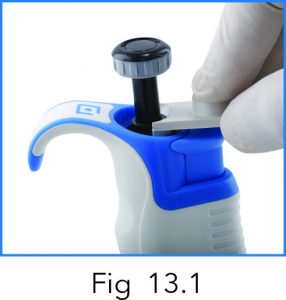
    micropipette calibration tool
  2. Turn the service tool clockwise to increase, or counter-clockwise to decrease the volume.
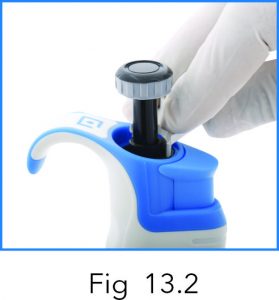
    micropipette calibration tool
  3. After adjustment, check the calibration according to the instructions given in the above section.

The formula for calculating results

  • Conversion of mass to volume

V= (w+e) x Z

where,
v = volume (ul),
w = weight (mg),
e = evaporation loss (mg), and
z = conversion factor for ul/mg.

  • Evaporation loss can be significant with low volume. To determine the loss of mass, dispense water to the weighing vessel.

Note the reading and start a stopwatch. See how much the reading decreases in
30 seconds (i.e. 6mg = 0.2 mg/s).

Compare this to the pipetting time from taring to reading. Typically, the pipetting time might be 10 seconds and the mass loss is 2 mg (10 s x 0.2 mg/s) in this example.

If an evaporation trap or lid on the vessel is used, the correction of evaporation is usually unnecessary. Factor Z is for converting the weight of the water; its value is 1.0032 ul/mg at 22°C and 95 kPa.

Refer to the conversion table.

Temperature°C kPa Air Pressure
80 85 90 95 100 101.3 105
15 1.0017 1.0018 1.0019 1.0019 1.002 1.002 1.002
15.5 1.0018 1.0019 1.0019 1.002 1.002 1.002 1.0021
16 1.0019 1.002 1.002 1.0021 1.0021 1.0021 1.0022
16.5 1.002 1.002 1.0021 1.0021  1.0022 1.0022 1.0022
17 1.0021 1.0022 1.0022 1.0022  1.0023 1.0023 1.0023
17.5 1.0022 1.0022 1.0023 1.0023  1.0024 1.0024 1.0024
18 1.0022 1.0023 1.0023 1.0024  1.0025 1.0025 1.0025
18.5 1.0023 1.0023 1.0024 1.0025  1.0025 1.0026 1.0026
19 1.0024 1.0025 1.0025 1.0026  1.0026 1.0027 1.0027
19.5 1.0025 1.0026 1.0026 1.0027  1.0027 1.0028 1.0028
20 1.0026 1.0027 1.0027 1.0028  1.0028 1.0029 1.0029
20.5 1.0027 1.0028 1.0028 1.0029  1.0029 1.003 1.003
21 1.0028 1.0029 1.0029 1.003  1.0031 1.0031 1.0031
21.5 1.003 1.0031 1.0031 1.0031  1.0032 1.0032 1.0032
22 1.0031 1.0032 1.0032 1.0032  1.0033 1.0033 1.0033
22.5 1.0032 1.0033 1.0033 1.0033  1.0034 1.0034 1.0034
23 1.0033 1.0034 1.0034 1.0034  1.0035 1.0035 1.0036
23.5 1.0034 1.0035 1.0035 1.0036  1.0036 1.0036 1.0037
24 1.0035 1.0036 1.0036 1.0037  1.0037 1.0038 1.0038
24.5 1.0037 1.0038 1.0038 1.0038  1.0039 1.0039 1.0039
25 1.0038 1.0039 1.0039 1.0039  1.004 1.004 1.004
25.5 1.0039 1.004 1.004 1.0041  1.0041 1.0041 1.0042
26 1.004 1.0041 1.0041 1.0042  1.0042 1.0043 1.0043
26.5 1.0042 1.0043 1.0043 1.0043  1.0044 1.0044 1.0044
27 1.0043 1.0044 1.0044 1.0045  1.0045 1.0045 1.0046
27.5 1.0045 1.0046 1.0046 1.0046  1.0047 1.0047 1.0047
28 1.0046 1.0047 1.0047 1.0047  1.0048 1.0048 1.0048
28.5 1.0048 1.0048 1.0048 1.0049  1.0049 1.005 1.005
29 1.0049 1.005 1.005 1.005  1.0051 1.0051 1.0051
29.5 1.0051 1.0051 1.0051 1.0052  1.0052 1.0052 1.0052
30 1.0052 1.0053 1.0053 1.0053  1.0054 1.0054 1.0054


14. Inaccuracy (Systematic Error)

Inaccuracy is the difference between the dispensed volume and the selected volume of a pipette.
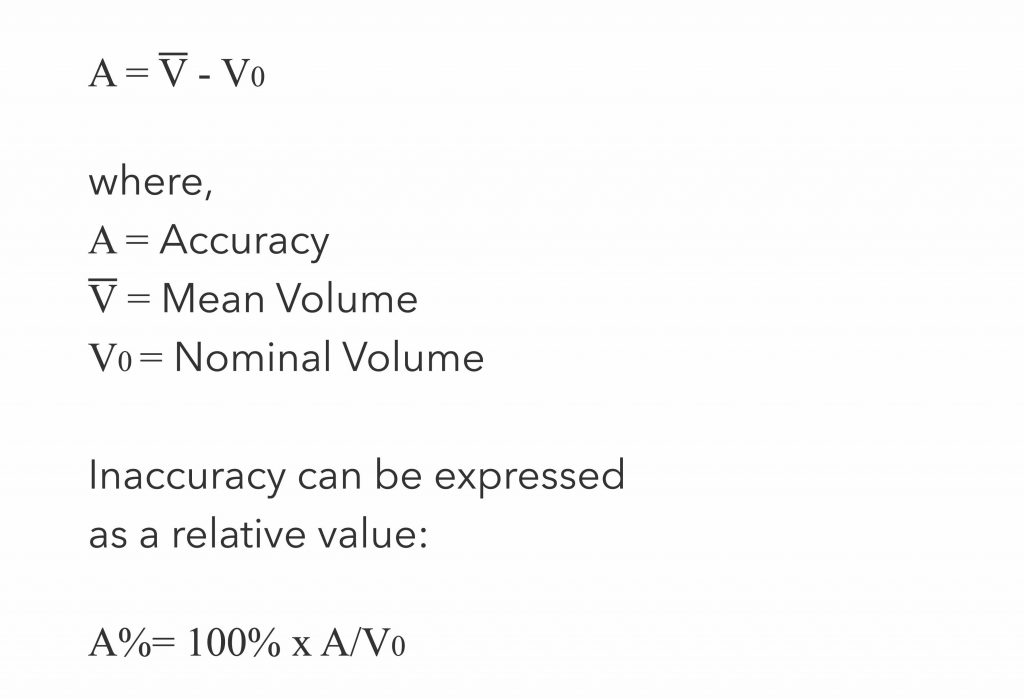
Micropipette Accuracy formula

Imprecision (random error) – Imprecision refers to the repeatability of the pipetting. It is expressed as the standard deviation (s) or coefficient of variation (CV).
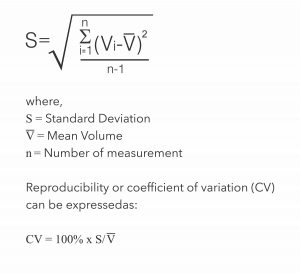
micropipette CV formula

15. Maintenance

  • When the micropipette is not in use, make sure that it is stored in an upright position.
  • We recommend a stand for this purpose.

16. Short-Term Service

  • The micropipette must be checked at the beginning of each day for dust and dirt on the outer surface. Particular attention must be paid to the Tip Cone.
  • No other solvents except 70% ethanol must be used to clean the micropipette.

17. Long-Term Service

  • If a micropipette is used daily, it must be checked every three months.
  • The servicing procedure starts with its disassembly.

Disassembly

(For Single Channel Variable Volume Ranges 0.2 ul to 200 ul & Fixed Volume Micropipette)

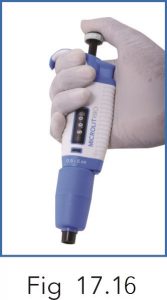
    1. Press the tip ejector button and pull the ejector out.
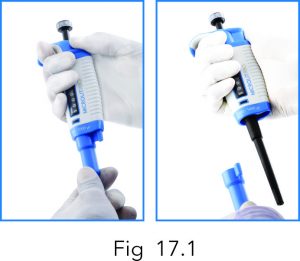
      micropipette tipcone assembly
    2. Turn the Tip Cone counterclockwise to unscrew.
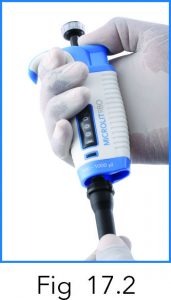
      micropipette tipcone assembly
    3. Fix the service tool on the O-ring seat and turn it clockwise to open.
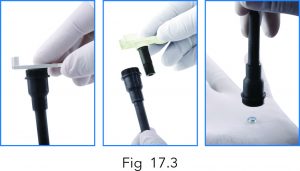
      micropipette tipcone assembly

      Pull out the O-ring seat and turn the Tip Cone upside down and retrieve the O-ring.

    4. Clean the Tip Cone.
    5. Grease the cleaned parts with a lubricant, preferably silicon grease.

Reassembly

(For Single Channel Variable Volume Ranges 0.2 ul to 200 ul & Fixed Volume Micropipette)

    1. Place the O-ring in the Tip Cone and screw the O-ring seat with help of a service tool.
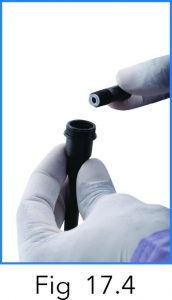
      micropipette tipcone
    2. Place the spring on the piston and slide it inside the Tip Cone.
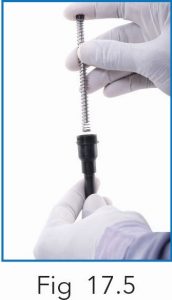
      micropipette plunger spring
    3. Screw the assembled Tip Cone on the main housing.
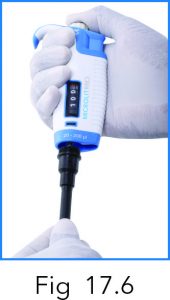
       micropipette tipcone housing
    4. Slide the tip ejector on the Tip Cone.
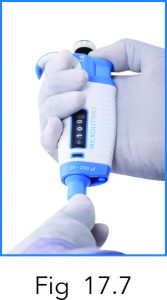
    5. Press to fit the tip ejector.
      micropipette tip ejection button

Disassembly

(For Single Channel Variable Volume & Fixed Volume Micropipettes in the ranges 0.5-5 ml and 1-10 ml)

    1. Pull the lower position of the ejector to disengage it from the upper portion.
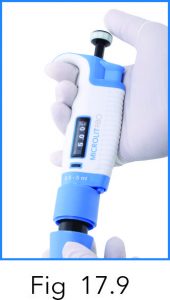
      micropipette disassembling
    2. Unscrew the Tip Cone from the main housing.
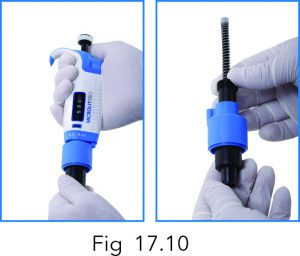
      micropipette disassembling
    3. The Tip Cone is in two portions; the lower portion can be unscrewed from the upper
      the portion to expose the piston.
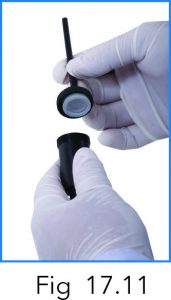
      micropipette disassembling
    4. Grease the cleaned parts with a lubricant, preferably Silicon Grease.
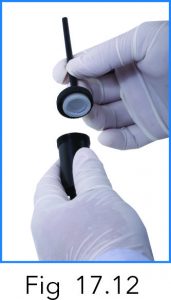
      micropipette disassembling

Reassembly

(For Single Channel Variable Volume & Fixed Volume Micropipettes in the ranges 0.5-5 ml and 1-10 ml)

    1. Screw back the lower portion of the Tip Cone on the upper part of tip cone.
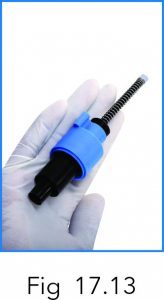
      micropipette disassembling
    2. Now place and screw back the spring shaft in the pipette housing by aligning the tip ejector top with the ejector pin.
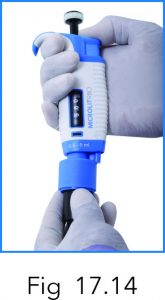
      micropipette disassembling
    3. Press fit the ejector top in the ejector pin firmly.
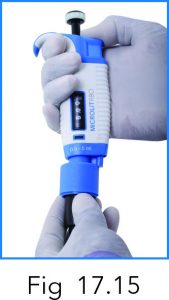
      micropipette disassembling
    4. Press fit the ejector bottom.
      micropipette disassembling

18. Performance Optimization


Activity Action
Consistent Technique Pipette with a consistent rhythm, pressure and speed.
Tip Size and Fit Use the proper size tip, firmly placed on Tip Cone.
Pre-rinse Tips Pre-rinse pipette tips for improved precision.
Sample Aspiration Keep the disposable tip immersed in fluid during aspiration. Do not let the plunger snap back to starting position.
Immersion Depth Maintain an immersion depth of 2 to 4 mm.
Viscous Samples Aspirate slowly. If bubbles are observed, resample.
Volume errors may still occur. Refer to the Calibration section.
Acid Samples Pipetting strong acids and corrosive solutions is not recommended. These liquids may damage the piston and seal.
High Vapor Pressure Samples Pipetting solutions with high vapor pressure is not recommended. These liquids may damage the piston and seal.
Sample Temperature Fluids at a temperature other than that for which the pipette and pipette tips have been calibrated may result in volume measurement errors.
Storage Store upright in a stand. Do not lay the pipette on its side with fluid in the tip. Fluid reaching the piston causes contamination and possible corrosion.
Cleaning Piston Wipe the piston with alcohol and a soft, lint-free cloth.
Dry and lightly lubricate the piston.
Performance Checks Check the accuracy and precision of your pipette
every 3-6 months depending on use and the samples aspirated.


19. Sterilization

  • The micropipettes can be sterilized by autoclaving them at 121°C (252°F) at 2ata for a minimum of 20 minutes.
  • No special preparation is needed.
  • You may use stream sterilization bags if needed. After autoclaving, the micropipette must be cooled to room temperature for at least two hours. Before pipetting, make sure that the instrument is dry.
  • We recommend that you check the calibration after every sterilization cycle to achieve the best possible precision and accuracy.

20. Troubleshooting

The table below lists possible problems and their solutions.

Single Channel Micropipettes

Problem Possible Reason Proposed Action
Liquid is leaking
from the pipette tip.
The pipette tip does not fit properly onto the tip cone. Use the appropriate tip for exact tip fitment.
The liquid being pipetted is hot or cold. The liquid being pipetted is very dense or viscous. Shorten the amount of time the liquid is in the tip, or the possible solution is to use the reverse mode of pipetting.
Pipette sealing O ring is worn. Replace the sealing O ring.
The tip is not loaded to maintain the seal. Press on the tip more firmly. (Avoid using too much force and
over inserting the tip)
Amount of
sample delivered
is not accurate.
The pipette is not within calibration specifications. Re-calibrate the pipette as per the operation Manual.
Improper pipette technique. See suggestions for improving pipetting technique and results.

Multihannel Micropipettes

Problem Possible Reason Proposed Action
Liquid is leaking
from the pipette tip.
The pipette tip does not fit properly onto the tip cone. Use the appropriate tip for exact tip fitment.
The liquid being pipetted is hot or cold. The liquid being pipetted is very dense or viscous. Shorten the amount of time the liquid is in the tip, or the possible solution is to use the reverse mode of pipetting.
Foreign particles between the tip and Tip Cone. Clean the Tip Cone with a lint-free cloth and attach new tips.
The tip is not loaded to maintain the seal. Press on the tip more firmly. (Avoid using too much force and
over inserting the tip)
Amount of
sample delivered
is not accurate.
The pipette is not within calibration specifications. Re-calibrate the pipette as per the operation Manual.
Improper pipette technique. See suggestions for improving pipetting technique and results.


21. Package

The micropipettes are shipped in specially designed packages containing the following items.

Single Channel Micropipettes

  1. The Micropipette
    micropipette fixed and variable
  2. Service Tool
    micropipette calibration tool
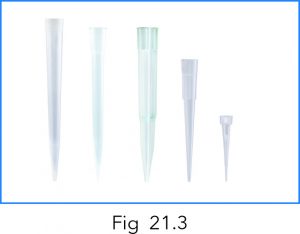
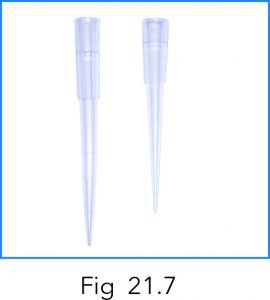
  3. Tip Sample
    Micropipette tips
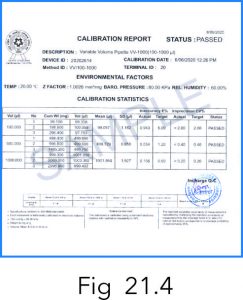
  4. Calibration Certificate
    Micropipette calibration certificate
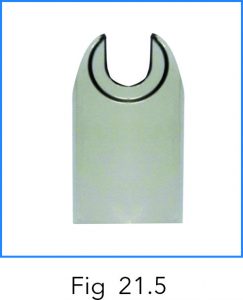
  5. Shelf Hanger
    micropipette hanger
  6. Operation Manual

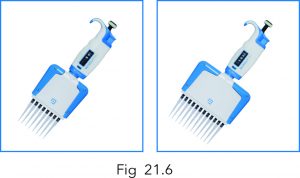
Multichannel Micropipettes

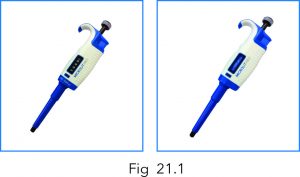
  1. The Micropipette
    multichannel micropipette
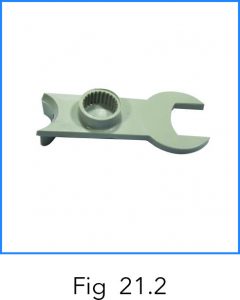
  2. Service Tool (Fig. 21.2)
  3. Tip Sample
    sample tips
  4. Calibration Certificate (Fig. 21.4)
  5. Shelf Hanger (Fig. 21.5)
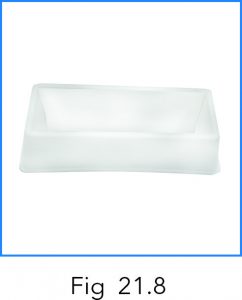
  6. Reagent Trough
    Reagent trought
  7. Operation Manual

22. Caution

The micropipettes are designed to allow easy in-lab service. If you would prefer to have us or your local representative service your instrument, please make sure it has been decontaminated before you send it to us.
Please note that the postal authorities in your country may prohibit or restrict the shipment of contaminated material by mail.

You can also download the Micropipette Micropipette product manual by clicking on the link.
Micropipette Product Guide

What is a micropipette?

A micropipette is a common yet essential laboratory instrument used to accurately and precisely transfer volumes of liquid in the microliter range. Micropipettes are available in single-channel and multi-channel variants. While the single-channel micropipettes are used in labs that perform research related to molecular biology, microbiology, immunology, cell culture, analytical chemistry, biochemistry and genetics, the multichannel micropipettes are recommended for ELISA (diagnostic test), molecular screening, kinetic studies and DNA amplification.

Components of a micropipette:

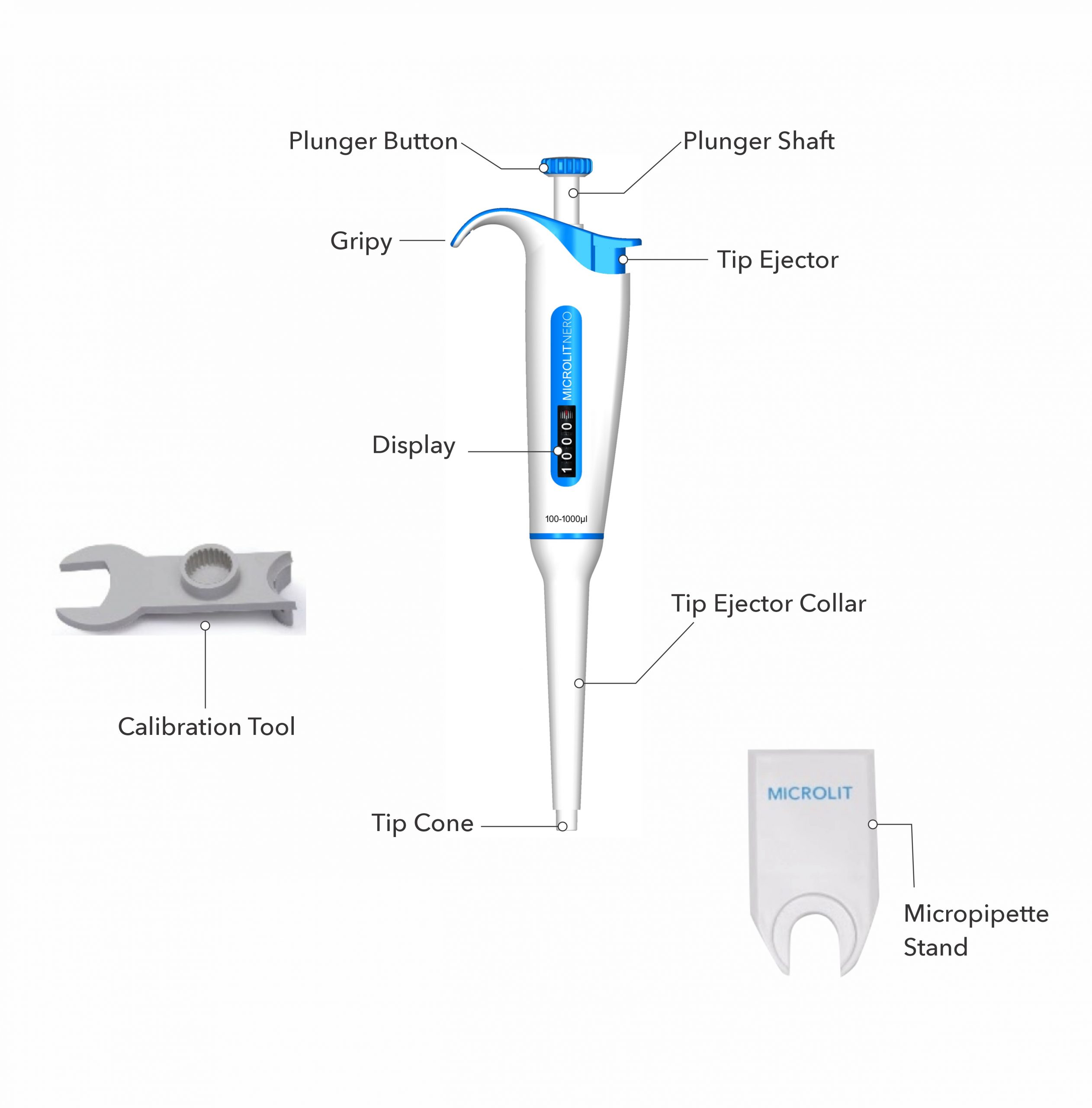
Micropipettes are available in different designs and sizes. However, there are certain components that are basic and common to all micropipettes. These include the plunger, digital display, tip cone, tip ejector and grippy. Certain micropipettes are provided with a calibration tool and a micropipette stand as an accessory, Micropipette Diagram:

Pipette Components

Plunger:

The plunger performs the following two functions- 

  1. Volume adjustment:

    Rotate the plunger clockwise/ anticlockwise to decrease/ increase the volume setting. A distinct click sound at every volume change ensures perfect volume setting and prevents any accidental volume change.

  2. Liquid aspiration/ dispensing:

    Press and depress the plunger to aspirate or dispense liquid.

Tip Ejector:

The internal mechanism of the micropipette does not come in direct contact of the sample/liquid. Instead, a disposable micropipette tip is used to draw the liquid into and dispense from the micropipette. So in order to allow the safe, effortless and quick ejection of tips, micropipettes are provided with a tip ejection system. The tips can be easily removed from the micropipette by pressing the tip ejector button. 

Volume Display:

This shows the volume of the liquid to be aspirated or dispensed.

Tip Cone:

The tip cone provides fitment to the tips. A pipette with a universal tip cone is preferred as it enhances the compatibility of the instrument with most of the standard tips.

Micropipette Uses in Laboratory

Micropipettes are vital in labs for precise liquid handling Reading micropipette measurements ensures consistent accuracy in experiments. Their uses in microbiology and molecular biology are extensive. From measuring tiny liquid volumes to conducting ELISA tests, micropipettes are indispensable. They come in various types, like single-channel or multi-channel, each serving specific lab needs. Their accuracy makes them essential for experiments in genetics, cell culture, and biochemistry.

In laboratories, micropipettes are used for accurate liquid transfer. They are crucial in tasks like DNA amplification and kinetic studies. Different pipette types, including automatic and manual, cater to diverse uses. In microbiology, micropipettes ensure precision, which is key for successful experiments. Their versatility extends to various fields, making them a fundamental tool in any lab setting.

Types of micropipette:

Micropipettes can be classified depending upon:

  • Working Principle:

The plunger performs the following two functions- 

  1. Air Displacement Micropipette:

    This type of micropipette works on the air displacement principle. It consists of a piston that aspirates and dispenses liquid samples as the air pocket moves up and down, respectively. The internal mechanism of the pipette does not come in direct contact of the sample/liquid. Instead, a disposable micropipette tip is used to draw the liquid into and dispense from the pipette.

  2. Positive Displacement Micropipette:

    In these pipettes, the piston comes in direct contact of the sample. The disposable tip in a positive displacement micropipette is a microsyringe composed of a capillary and a piston (movable inner part) which directly displaces the liquid.

  • Operating Mechanism:

  1. Mechanical Micropipette:

    These pipettes are operated manually based on a piston-shaft spring mechanism.

  2. Electronic Micropipette:

    An electronic micropipette is mostly automated. The aspirating and dispensing of liquid is performed by the one-touch buttons instead of manual plunger pressing and depressing. Electronic pipettes also often enable the user to create custom programs on the device allowing the pipettes to suit diverse application needs.

  • Number of Channels:

  1. Single Channel Micropipette:

    A single-channel micropipette is one that has a single channel to aspirate or dispense the liquid.

  2. Multi-Channel Micropipette:

    A multi-channel micropipette has multiple channels to aspirate or dispense the liquid. The commonly available multi-channel pipette variants are the 8-channel, 12-channel and 16-channel. Multichannel micropipette reduces the workload of a single-channel micropipette when working with large volumes of samples.

  • Volume/Capacity:

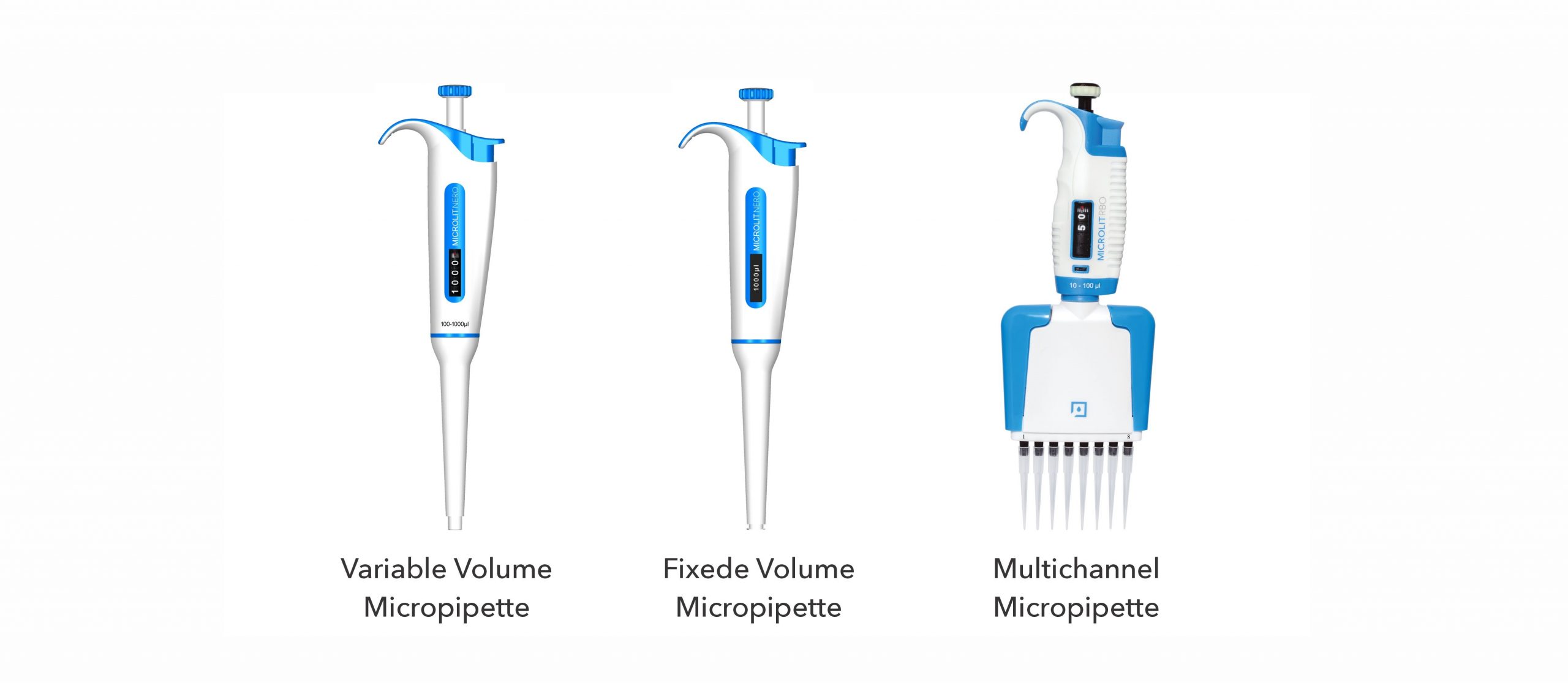
  1. Fixed Volume Micropipette:

    In a Fixed Volume Micropipette, the volume of liquid to be aspirated or dispensed remains fixed. These pipettes are used when the same volume of liquid is to be dispensed multiple times.

  2. Variable Volume Micropipette:

    This micropipette comes with a specific minimum and maximum volume range. The volume of the liquid to be aspirated or dispensed can be adjusted (within the instrument’s volume range) depending on the requirement of the user.

Micropipette Size and Range / Technical Specifications:

Micropipettes are available in different volumes ranging from 0.1 µl to 10,0000 µl. The commonly used variants of single-channel variable volume micropipettes are listed below along with their permissible error limits as specified in the ISO 8655-2 standard.

They are sometimes referred to as P10, P20, P1000, P5000 pipettes based on the maximum volume that can be aspirated/dispensed using the pipette. For instance, a 0.5-10ul Micropipette may be commonly referred to as a P10 pipette.

Volume Range
(ul)
Classification
Increment
(ul)
Accuracy
(± %)
Accuracy
(±ul)
CV
(± %)
CV
( ± ul)
0.2-2 P2 0.01 2 0.04 1.2 0.024
0.5-10 P10 0.02 1 0.1 0.5 0.05
2-20 P20 0.02 0.8 0.16 0.4 0.08
5-50 P50 0.1 0.8 0.4 0.4 0.2
10-100 P100 0.2 0.6 0.6 0.2 0.2
20-200 P200 0.2 0.6 1.2 0.2 0.4
100-1000 P1000 1.0 0.6 6 0.2 2
500-5000 P5000 10.0 0.6 30 0.2 10
1000-10000 P10000 20.0 0.6 60 0.2 20


How does a micropipette work?

Air displacement micropipettes operate by piston-driven air displacement. When the piston is pressed downwards, the air within the sleeve of the micropipette gets expelled out due to the force of which the liquid present in the tip of the micropipette also gets removed.

When the piston moves upwards, a vacuum is created in the space left vacant by the piston. This causes the air from the tip to rise in order to fill the vacant space, and the tip air is then replaced by the liquid, which is drawn up into the tip.

Positive displacement micropipettes operate by piston-driven displacement. The piston in a positive displacement micropipette is in direct contact with the liquid. When the piston is pressed downwards, the liquid which is present in the sleeve of the micropipette also moves downwards and gets removed through the tip. When the piston is pulled upwards, it also draws the liquid along with it in the upward direction.

  1. Using an Air Displacement Micropipette:

    Precise measurement of liquid depends on the correct micropipette usage. The air displacement micropipettes work on the common air displacement principle. A plunger is depressed by the thumb and as it is released, the liquid is drawn into a disposable tip. When the plunger is pressed again, the liquid is dispensed. In between these steps, there are several small steps that help in making the liquid dispensing process more precise.

    Correct Pipetting methods

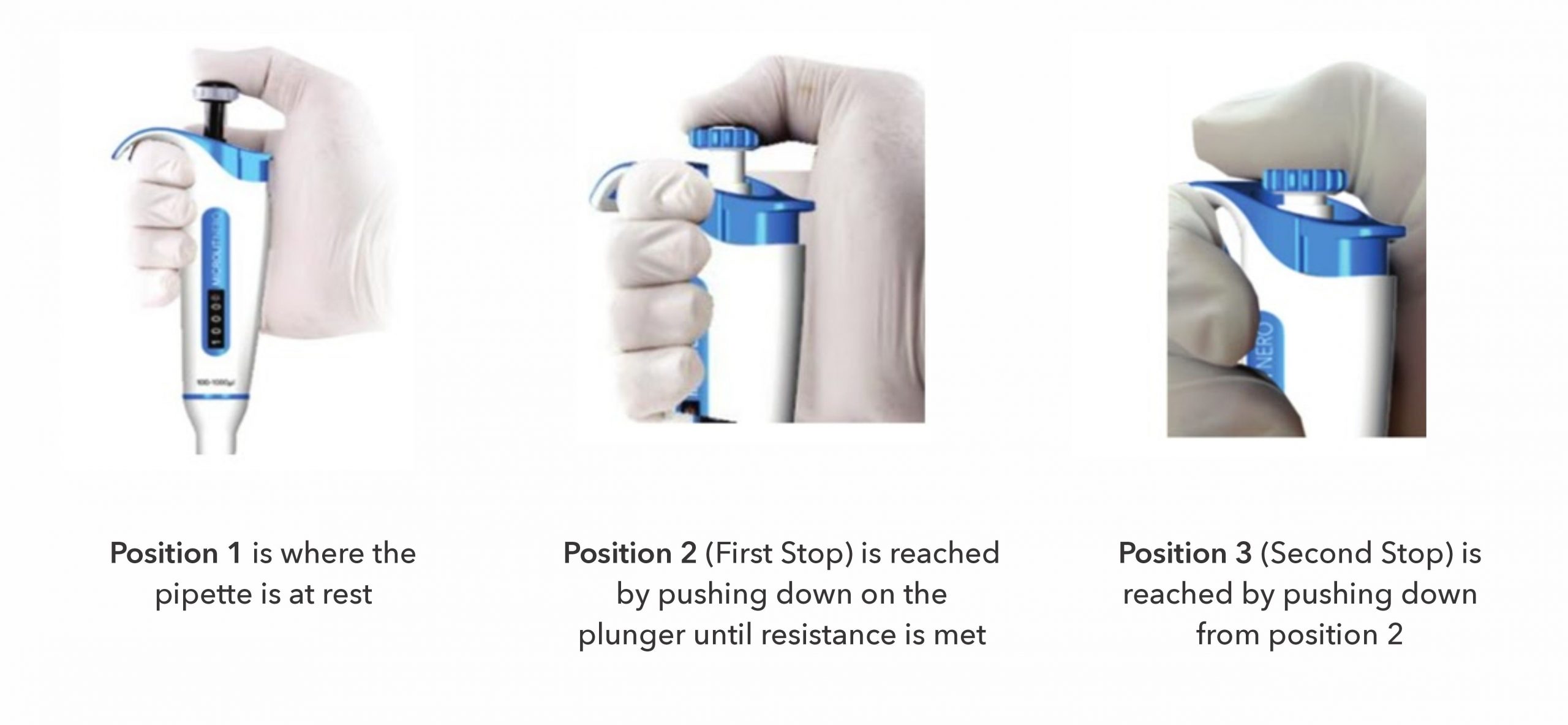
    Position 1 In this, the micropipette is at rest position. Press fit a tip to the micropipette without directly touching the tip.
    Position 2 In this, the plunger is depressed till the first stop. To aspirate the liquid in the tip, press the plunger to the first stop. Immerse the pipette tip vertically in the liquid.
    Release the plunger Slowly release the plunger while the tip is immersed. The liquid will be aspirated into the pipette tip.
    The liquid is filled in the tip as per the preset micropipette volume.
    Position 3 Depress the plunger To dispense the liquid, place the tip on the inner wall of the receiving vessel at a steep angle.
    Slowly press the plunger to the first stop to dispense the liquid.
    To empty the tip completely, press the plunger to the second stop.
    Wipe the tip on the inner wall while taking the tip out of the vessel.


    Some micropipettes deliver a fixed volume of liquid. However, the majority are adjustable with the variable volume setting. Variable volume micropipette comes with different ranges and upper & lower limits of measurement. In such cases, the error percentage may vary as per the measured liquid. Trying to dispense less than the lower value of the range will result in inaccurate liquid measurements whereas trying to dispense over the upper range will completely fill the tip and allow the liquid to enter into the pipette body.

  2. Cleaning, maintenance and storage of a micropipette

    The care and maintenance of a micropipette is an important routine in laboratories. Implementing a proper maintenance schedule can reduce the cost of a new purchase of this expensive equipment. Cleaning the micropipette takes time, focus and practice; otherwise, the micropipette can be damaged. So, it is important to handle the pipette carefully while cleaning. The following is a comprehensive guide for proper cleaning of micropipettes.

    External Cleaning: Most of the pipette can be cleaned externally with typical laboratory cleaning agents, soaps or alcohol. To ensure full sterilization, let the cleaning solution sit on the micropipette for 10-15 min before wiping it off.

    Internal Cleaning: Cleaning the interior of the micropipette can be more time-consuming because it requires full disassembly. Also, every part of the micropipette will need to be cleaned properly depending on the liquid used in sampling.
    – Refer to the instructions manual for a specific direction of the micropipette
    – Use a cotton swab with a cleaning solution and distilled water
    – Lightly grease the pistons with the lubricant provided upon purchase
    – Reassemble all parts and check to ensure the micropipette operates smoothly

    Contamination Cleaning: If the micropipette becomes contaminated with a known substance, there are specific cleaning steps that must be taken depending on the type of substance. The above cleaning routine will not be sufficient if the micropipette is cross-contaminated.

    Solution Types Process to clean
    For aqueous solutions, organic solvents and proteins Rinse the contaminated parts with distilled water or 70 percent ethanol and air dry at approx 60°F temperature.
    For infectious liquids Autoclave the lower section at a temperature of 120°C for 15-20 minutes then allow it to return at room temperature before reassembling.
    For radioactive substances Place the pipette in a solution like Decon and then rinse and air dry.
    For nucleic acids Boil the lower parts of the micropipette in glycine/ HCI buffer (pH2) for 10 minutes, rinse with distilled water, and air dry.


    A well-maintained and clean pipette ensures lab safety from hazardous solutions. It makes the pipette more accurate, reliable, long-lasting and reduces the cost of sampling.

    Proper storage of micropipettes is as important as cleaning and calibrating them. The micropipette and its accessories should be stored in a clean, cool and dry place. The storage place should have a temperature ranging from -20 °C to 50 °C (from -4 °F to 120 °F) with relative humidity between 5% and 95%. Another point to be remembered is that the instrument should be stored in an upright position. To store pipettes, Microlit recommends the use of its carousel stand, Microlit Faveo.

What are the different pipetting techniques used?

The frequently used pipetting techniques include forward pipetting and reverse pipetting. Before we understand these techniques in detail, the general instructions and micropipette diagram of pipetting listed below would be noteworthy.

  1. Microlit MicropipettesPress and release the plunger slowly, at all times, particularly when working with high-viscosity reagents/solutions. Make sure that the plunger does not snap.
  2. Make sure the tip is firmly attached to the tip cone.
  3. Before starting your experiment, fill and empty the tip 2-3 times with the reagent or solution that you will be pipetting.
  4. Hold the micropipette in an upright position while aspirating. The Grippy must rest on your index finger.
  5. Make sure that the tips, the micropipette and the reagent/solution are at the same temperature.

Forward Pipetting Technique:

  1. Forward Pipetting TechniqueTo aspirate the liquid in the tip, press the plunger to the first stop. Immerse the pipette tip vertically in the liquid.
  2. Slowly release the plunger while the tip is immersed. The liquid will be aspirated into the pipette tip.
  3. To dispense the liquid, place the tip on the inner wall of the receiving vessel at a steep angle
  4. Slowly press the plunger to the first stop to dispense the liquid.
  5. To empty the tip completely, press the plunger to the second stop.
  6. Wipe the tip on the inner wall while taking the tip out of the vessel.

Reverse Pipetting Technique:

The reverse technique is suitable for dispensing reagents/solutions that have high viscosity or a tendency to foam easily. It is also recommended for dispensing very small volumes.

  1. Reverse Pipetting Technique:To aspirate the liquid in the tip, press the plunger to the second stop and immerse the pipette tip vertically in the liquid.
  2. Slowly release the plunger while the tip is immersed. The liquid will be aspirated into the pipette tip.
  3. To dispense the liquid, place the tip on the inner wall of the tube at a steep angle.
  4. Slowly press the plunger to the first stop.
  5. Wipe the tip on the inner wall while taking the tip out of the vessel.

Note: Residual liquid remains in the tip. This does not belong to the dispense volume.

How to choose the right micropipette?

As micropipettes can be used for a number of applications, the dilemma one faces is how to choose the right micropipette while handling a specific task.

For this, you can follow our simple, stepwise guide. The preliminary step includes noting down the details of the experiment you are going to perform with the micropipette. This should ideally include the number of samples, the volume to be transferred, the number of replicates, whether sterile conditions are required and so on. Making a comprehensive list in this manner will make the process of deciding which micropipette to use easier.

  • Selecting the Type of Micropipette:

Types of  Micropipettes – Air Displacement Micropipettes and Positive Displacement Micropipettes. You can choose the right one by matching their applications to the experiment you wish to perform.

  • Next Steps:

After choosing the correct type, let’s look at the subtypes available based on criteria like the volume to be handled, quality of tips, manual or electronic pipettes, etc. This is where the more minute details regarding the experiment will come in handy.

  1. An adjustable micropipette or a fixed micropipette:

    You can either use a micropipette whose volume is already fixed or one whose volume can be adjusted as per requirement. If you regularly use a single volume such as 100 µl for your experiments, go for a fixed volume pipette like MICROLIT RBO Fixed Volume (Single Channel). If your experiment entails you working with a range of volumes, choose the variable or adjustable pipette, like MICROLIT RBO Variable Volume (Single Channel or Multichannel).

  2. The volume to be handled:

    As a standard rule, it is better to choose the smallest pipette capable of handling the required volume because when the set volume is close to the minimum capacity of the micropipette, the accuracy and precision of the readings decrease.

    1. Single channel or multichannel micropipettes:

      This decision can be made based on the number of samples or replicates you are working with. Single channel micropipettes like the MICROLIT RBO Single Channel (Fixed Volume and Variable Volume) are used when the number of samples is less whereas a large number of samples or well plates can be easily handled by multichannel micropipettes like the MICROLIT RBO Multichannel (8-channel and 12-channel).

  3. Micropipette Tips:

    Once you’ve selected your micropipette, this is the next crucial decision to make. Micropipette Tips can be graduated or not graduated, universal or pipette specific, with a filter or without filter, sterile or non-sterile etc. If the experiment requires sterile, aseptic conditions, one should use filtered and sterile tips. Universal tips can be used for a wide range of pipettes. It is also important to match the capacity of the tip with the capacity of the micropipette before use.

  4. Accuracy with specific tolerance:

    Micropipettes are designed to operate with accuracies within a few percent (generally <5%) of the intended value for the volume. Make sure your micropipette provides the same accuracy as you need for your sampling.

How is a micropipette calibrated?

Micropipette calibration is a very important part of any laboratory’s routine for accurate and precise pipetting results. To ensure the accuracy of sampling, it is important to check the pipette calibration every month or in a few months’ gap. Executing a proper micropipette calibration according to ISO 8655 standards requires special ambient conditions. Factors such as air pressure, humidity, temperature and even altitude affect the pipetting results. The below text explains the required material or equipment and all the steps that you need to perform and check the calibration of a micropipette.

Here is a list of things that you will need in order to calibrate a micropipette:

  • Micropipette that needs to be calibrated & tips
  • Distilled Water
  • Clean Beaker
  • Thermometer
  • Distilled Water Density Chart with Temperature
  • Semi-Micro Balance with a readability of at least 0.0001 g
  • Notebook to write down the results
  • Calculator

How to calibrate a pipette using a balance:

  1. Leave the distilled water out for 15-20 minutes to ensure a consistent temperature.
  2. Use the thermometer to measure the temperature of the distilled water.
  3. Place empty and clean the beaker on the balance.
  4. Take the beaker’s weight.
  5. Ensure the micropipette is clean and ready to function.
  6. When filling the micropipette up to the volume that will be calibrated (1ml, for example) with the distilled water, make sure air bubbles are not created in the flask and in the micropipette.
  7. Dispense the distilled water in the beaker using the micropipette.
  8. Use the balance to measure the distilled water’s weight.
  9. Repeat the process 5-10 times at least and note each measurement.
  10. Use the formula V = W * Z to calculate the volume dispensed by the pipette.
    W is the weight of the distilled water
    Z is the “conversion factor based on the density of the water” and
    V is the calculated volume of dispensed water
    The temperature of the water determines its density, which is why it is important to keep the water temperature as constant as possible. Skip if you have the software that automatically does that.
  11. Average the results. If you did 10 tests, divide the sum of the 10 tests by 10.
  12. The average weight of the distilled water is the  W in the equation. You can now solve the equation manually, or use the software.
  13. The next step is determining the pipette’s accuracy, manually or via software. If you have to do it manually, use the formula A = 100 x Vavg/V0
    A stands for Accuracy.
    Vavg is the average calculated volume.
    V0 is the value assigned for the pipette to dispense.
    It is recommended that the value should be between 99 and 101%.
  14. Record the results. If the micropipette is properly calibrated, you can use it. If the results are consistently wrong, do not use the pipettes or fix them before using it again.

How to sterilize a micropipette?

  • The micropipettes can be sterilized by autoclaving them at 121°C (252°F) and 15 PSI for a duration of 15-20 minutes.
  • No special preparation is needed.
  • You may use steam sterilization bags if needed. After autoclaving, the micropipette must be cooled to room temperature for at least two hours. Before pipetting, make sure that the instrument is dry.
  • It is recommended to check the calibration after every sterilization cycle to achieve the best possible precision and accuracy.

What are micropipette starter kits? How are they beneficial during lab setup?

A micropipette starter kit is the most convenient and cost-effective collection of pipetting essentials. It includes a set of micropipettes with different volume ranges, micropipette tips that can be used in given micropipettes and some other accessories for an efficient sampling process.

A micropipette starter kit is beneficial as it saves the time of selecting the micropipette and the compatible tips which can be used with it. Microlit Micropipette Starter Kit combines 4 single channel pipettes to cover the complete pipetting range (0.5-10ul pipette, 10-100ul pipette, 100-1000ul pipette, 1-10ml pipette). The micropipette kit also includes a sleek carousel stand and boxes of compatible tips for each pipette so that one does not have to go looking for the right tips.

When is micropipette calibration required?

In order to maintain the quality of sampling results, the micropipettes must be in good condition and properly calibrated. Normally, the interval at which a micropipette needs to be calibrated depends on many factors:

  1. Frequency of pipette use
  2. Type of liquid dispensed by the pipettes
  3. Handling & care of pipette
  4. Pipette applications that require superior accuracy also demand more frequent calibration

Regulations and standards published by organizations such as the FDA and ASTM International provide minimum requirements to ensure the quality of laboratory testing results. Regulations specify that all laboratory instruments used in sampling & production including micropipettes must be routinely calibrated at suitable intervals.

In the same series, the Clinical and laboratory standards institute (CSLI) has provided the guidelines for single and multi-channel micropipettes that specify these micropipettes must be calibrated every 3 to 6 months. And a minimum of two volumes must be tested with 10 replicas at both nominal and lowest settings.

Establishing an appropriate calibration frequency minimizes the chances of incorrect liquid delivery in the laboratory and ensures traceability, accountability and confidence in the results.

Applications/fields where micropipettes can be used

Micropipettes are generally used in microbiology, chemistry, and medical testing laboratories for the accurate and precise transfer of samples. While the single-channel micropipettes are used in labs that perform research related to molecular biology, microbiology, immunology, cell culture, analytical chemistry, biochemistry and genetics, the multichannel micropipettes are recommended for ELISA (diagnostic test), molecular screening, kinetic studies and DNA amplification.

Some of the major fields where micropipette is widely used are:

  1. Pharmaceuticals
  2. Health Care
  3. Food & Beverage
  4. Environmental Monitoring
  5. Academic & Research Institutes
  6. Diagnostic Kits
  7. Life Sciences

Benefits of using a micropipette

A micropipette is a reliable device to dispense precise quantities of liquid. It increases the performance of the testing efficiently. Some other benefits of using a micropipette are listed below:

  1. Time-Saving
  2. Ergonomics
  3. Accuracy & Precision
  4. Ease of Use

Where do we get the best micropipette for the lab?

Every lab technician wants a micropipette that is ergonomically designed, aesthetically presentable and provides accurate and precise measurement values. Selecting the best micropipette can be a challenging task as the market is full of micropipettes that appear to be good but do not provide reliable test results. Before going with any pipette brand, it is important to ensure some points that can save you from wrong pipette purchasing:

– Is the micropipette able to handle your pipetting range of liquid?
– Does your micropipette have a universal tip cone for handling all kinds of tips?
– Is your micropipette autoclavable at the required standard temperature?
– Does your micropipette have smooth and comfortable handling?
– Is your micropipette calibrated for precise dispensing?
– Is the accuracy and precision in readings offered by the pipette in accordance with the ISO standards?

The above points ensure your right micropipette purchasing which will work for a long time and improve the liquid handling activities in your laboratory.

Microlit designs and develops high-precision liquid handling instruments for leading laboratories around the world. It offers an advanced and innovative micropipette range that facilitates remarkable user experience in practical laboratory environments.

Types of micropipette

FAQs/Troubleshooting:

What are pipettes used for?

Pipettes are used for precise liquid transfer in laboratories, ensuring accurate measurements across various sizes.

Which pipette tips can I use with the micropipette?

It depends on your micropipette, if your micropipette has a universal tipcone, you can use it with all international tips as per your pipette volume range.

How should I sterilize the pipette?

You can sterilize your micropipette if it is autoclavable. If you use your pipette for sensitive and hazardous liquid sampling, the sterilization process is required to clean your micropipette. Check your pipette manual to know the maximum temperature and time duration for the sterilization process. Refer to the ‘Contamination Cleaning’ section to know how to sterilize your micropipette easily as per dispensed liquid in the sampling.

How can I check whether the pipette is calibrated?

It is advisable that every day when you start the pipetting in the lab, check your pipette for its reading correctness. For this, set the pipette at the nominal volume and dispense distilled water at least 5 times. Measure the dispensed liquid volume on the electronic balance. If the mean of your readings is within the ISO standard limit, the pipette is calibrated. If not, calibrate your pipette and check it again.

How often do I need to calibrate the micropipette?

Generally, it depends on how often your micropipette is used for sampling. For normal use of a micropipette, it should be checked every 3 or 6 months for calibration. As per ISO 8655 standard, it is recommended to get your micropipette calibrated annually.

How do you set the volume on a micropipette?

A small display with 3 number volume range is given on the body of every micropipette. On a fixed volume micropipette, it is a fixed volume range. On the variable volume micropipette, you can adjust it within the given volume range as per your required volume sampling. To change the volume range numbers, use the rotational dial given at the top of the pipette plunger or refer to the manual to know how to change the volume of the pipette.

Why should you avoid touching the micropipette tips?

Touching the micropipette tip can cause the liquid to stick to the outside of the tip. The heat transferred from your hands to the tips can affect the delivery of volumes. It also increases the risk of cross-contamination in the laboratory. So, it is recommended to handle the tips only with the micropipette.

What is the largest source of pipetting problems?

Human error is the largest source of pipetting problems which is caused by touching tips, handling micropipettes improperly, etc.

What happens if you release the micropipette plunger too fast?

If the micropipette plunger is released too fast, you may face the issue of less draw-up and dispensing of liquid.

For more information regarding Microlit Products, drop a mail to info-usa@microlit.com.

How Can Pipette Users Avoid Repetitive Strain Injury

What is Repetitive Strain Injury?

Repetitive Strain Injury, commonly known as RSI, is a potentially serious injury caused in a small muscle group. It is caused when people perform a repetitive task for long durations without catching a break. Symptoms of RSI can emerge over months or even years starting with intermittent discomfort and progressing to aching, tingling, muscle weakness and pulsing pain. Other common names for RSI are Cumulative Trauma Disorder (CTD) and Overuse Syndrome.

RSI is common amongst people involved in jobs where they are exposed to cumulative trauma. Manual liquid handling is one such occupation. Due to the repetitive nature of liquid handling and the frequency involved in laboratories, pipetting has been identified as the main cause for RSI. It is crucial for people working in labs to educate themselves about the risks associated with RSI and how they can prevent it. 

Symptoms of Repetitive Strain Injury

There are certain parts that are commonly affected by RSI due to the repetitive nature of a job or use of a body part. RSI affects your:

  • Wrists and Hands
  • Forearms and Elbows
  • Neck and Shoulders
  • Back

The symptoms of RSI may vary from case to case and the severity of the injury but some common symptoms are:

  • Pain, ranging from mild to severe
  • Tenderness
  • Swelling
  • Stiffness
  • Tingling or numbness
  • Throbbing
  • Weakness
  • Sensitivity to cold or heat

If one identifies any of the above mentioned symptoms consulting a doctor at the right moment is crucial. RSI is curable but only if it has been diagnosed in its early stages; if it becomes chronic it can go on to degenerate and cause permanent damage to the nerves and muscles or change to carpal tunnel syndrome.

Causes of Repetitive Strain Injury

Practice might make you perfect but doing the same action over time can lead to serious damage to your muscles and tendons. For users of manual liquid handling instruments the major cause is that the instruments are not ergonomically designed or the user has a bad posture.

Some other activities that can increase the risk of RSI are:

  • Stressing the same muscles
  • Lifting heavy objects
  • Maintaining the same posture for long durations
  • Maintaining abnormal posture for long durations
  • Being in a poor physical condition

Repetitive Strain Injury Can Be Avoided

As it has been established, prolonged working with manual liquid handling instruments i.e. pipettes are a major cause for inducing RSI in lab workers. In order to avoid it users should use proper, ergonomically designed equipment and take frequent breaks to ease off any pressure. Always remember to stretch while you are taking a break. It is equally important to maintain the right sitting and standing posture. Users should maintain a neutral arm and shoulder posture, as if they are shaking someone’s hand.. And the pressure that you apply on the instrument also plays an instrumental role in easing off the condition.

Microlit Micropipettes – The Ergonomic Solution

Usage of manual, heavy pipettes with stiff plungers and difficulty in ejecting and mounting tips is the main culprit for RSI. Users should choose the right pipette to avoid contracting RSI.

The Microlit Micropipettes are made keeping the ease of use in mind. The micropipettes have been ergonomically designed by the in-house team of experts of Microlit whose main motive is to provide the user with a pipette that facilitates intuitive handling. 

The micropipette is designed with a special Grippy that enables the user to maintain a good grip without straining the wrist. The presence of an Easy Tip Ejector allows the user to smoothly eject the tip and also gives comfortable access to bottles and tubes with narrow necks. 

Microlit has a range of air displacement micropipettes that are highly precise and are known for their ergonomic design. The range comes under the name Microlit RBO, the variants being:

Single Channel Variable Volume Micropipette: Popularly used molecular biology, genetics, immunology and biochemistry, the user just has to lock the desired volume of the reagent and proceed with the experiment. 

Single Channel Fixed Volume Micropipette: The micropipette is available in 15 fixed volumes which makes it easy for the user to carry out the experiment. It is best suited for control analysis and clinical diagnostics.

Multichannel Micropipette (8-channel and 12-channel): Best suited for DNA amplification, molecular screening and kinetic studies, the multi-channel micropipette enables the user to transfer small volumes of reagents to multiple locations at once, enhancing the user experience and accuracy of the experiment.

RSI is not an issue to be taken lightly. The use of right equipment, proper posture and early diagnosis are some ways through which the condition can be kept in control. Every lab member should be properly educated with the effects of RSI.

To find an ergonomically designed micropipette, get in touch with us at info-usa@microlit.com.

Partnering With A Promising Distributor

About Stellar Scientific

Stellar Scientific is a renowned supplier of lab equipment for partners belonging to research institutes, government, academia, biotech, food and pharmaceutical industries. Stellar Scientific provides detailed product information to enable its partners to make an informed decision. Every product is aggressively priced to ensure that the partner gets a really good deal. A family-owned business, the aim of Stellar Scientific is to make the lives of its partners easier by bringing all the necessary lab equipment and consumables on one platform. 

Bottle Top Dispensers

A Bottle Top Dispenser is a scientific apparatus that is mounted on top of a reagent bottle to dispense liquids. The Bottle Top Dispenser makes lives easy for the scientists and researchers as it saves them time, makes them efficient, and keeps them and their samples safe. 

Recognising the need for Bottle Top Dispensers, Microlit introduced four models – Microlit Scitus, Microlit Beatus, Microlit Ultimus and Microlit LentusTM.

Microlit Bottle Top Dispensers

Microlit, till date, has launched four models of the Bottle Top Dispensers and all the instruments are primarily developed keeping in mind the requirements of the users. Every Bottle Top Dispenser has a distinct feature, suiting the needs of the user, and this is what sets Microlit apart from its competitors.

Microlit Scitus – The Microlit Scitus works on the Springless ValveTM technology, built by our team of in-house product design engineers. It offers a cost-effective blend of sophisticated features and functionality and ensures smooth functioning of the dispenser.

Microlit Beatus – A notch above the Microlit Scitus, the Microlit Beatus works on the Springless ValveTM technology and also has a Recirculation Valve. The Recirculation Valve ensures that no reagent is lost during purging. 

Microlit Ultimus – The most advanced Bottle Top Dispenser, the Microlit Ultimus works on Dual IntelTM technology, an award-winning technology patented in India, the EU and the USA. The Microlit Ultimus offers four liquid handling modes – rinsing, dilution, refilling and purging – without dismounting the dispenser.

Microlit Lentus® – The Microlit Lentus® is a new age dispenser that addresses the need for a dispenser to safely dispense strong agents like Hydrofluoric acid and High Purity Media. It has been developed with carefully selected and tested materials that are compatible with strong reagents. 

Innovation and product development is an ongoing process at Microlit. The product design engineers at Microlit focus deeply on research to develop instruments that can ease operations for the users and make them efficient. Here, we are giving you a glance on some of the innovations.

Springless Valve® Technology – To ensure smooth and jam-free functioning of the Bottle Top Dispensers, the product engineers at Microlit got completely rid of the spring in the valves and placed both the Inlet and Outlet Valves vertically. The Springless Valve® technology makes the Bottle Top Dispensers universal and can be used with both organic and inorganic reagents.

PTFE Piston – The PTFE piston with an ETP O-Ring offers excellent resistance to chemicals and facilitates the smooth and effortless movement of the piston, ensuring efficient functioning of the Bottle Top Dispenser.

Dual Inlet® Technology – The Dual Inlet® technology enables the user to operate the Bottle Top Dispenser without dismounting it. The technology allows the instrument to have two valves which remove the chances of cross-contamination and offers four modes of liquid handling – rinsing, dilution, refilling and purging – without dismounting the instrument. This is an award-winning technology, and it substantially enhances the chemical compatibility and the life of the instrument.

The customer-centricity of Stellar Scientific makes it the best-fit partner for supplying Microlit products. The huge customer base of Stellar Scientific will allow more labs in the USA to procure Microlit products that are developed to serve the needs of the users with an emphasis on product innovation & technology. The goal of Stellar Scientific aligns with that of Microlit, making this partnership a strong one, for us and our customers. 

To explore Microlit products on Stellar scientific, visit: Bottle Top Dispensers.

Filter Tips are an essential part of Covid19 Testing


Pipettes are widely used in a laboratory to measure small volumes of liquids while carrying out experiments. Researchers, very carefully, select the pipette that suits their needs, is ergonomic, and of high quality & performance.

As a lot of thought is put into deciding the best model of the pipette, it is equally important to select the perfect tips for it. For the smooth functioning of a pipette, one must choose the tips that are chemically compatible and fit the pipette properly, enabling the user to carry out experiments with ease. Users should refrain from investing in low-quality pipette tips as they might not be chemically compatible.

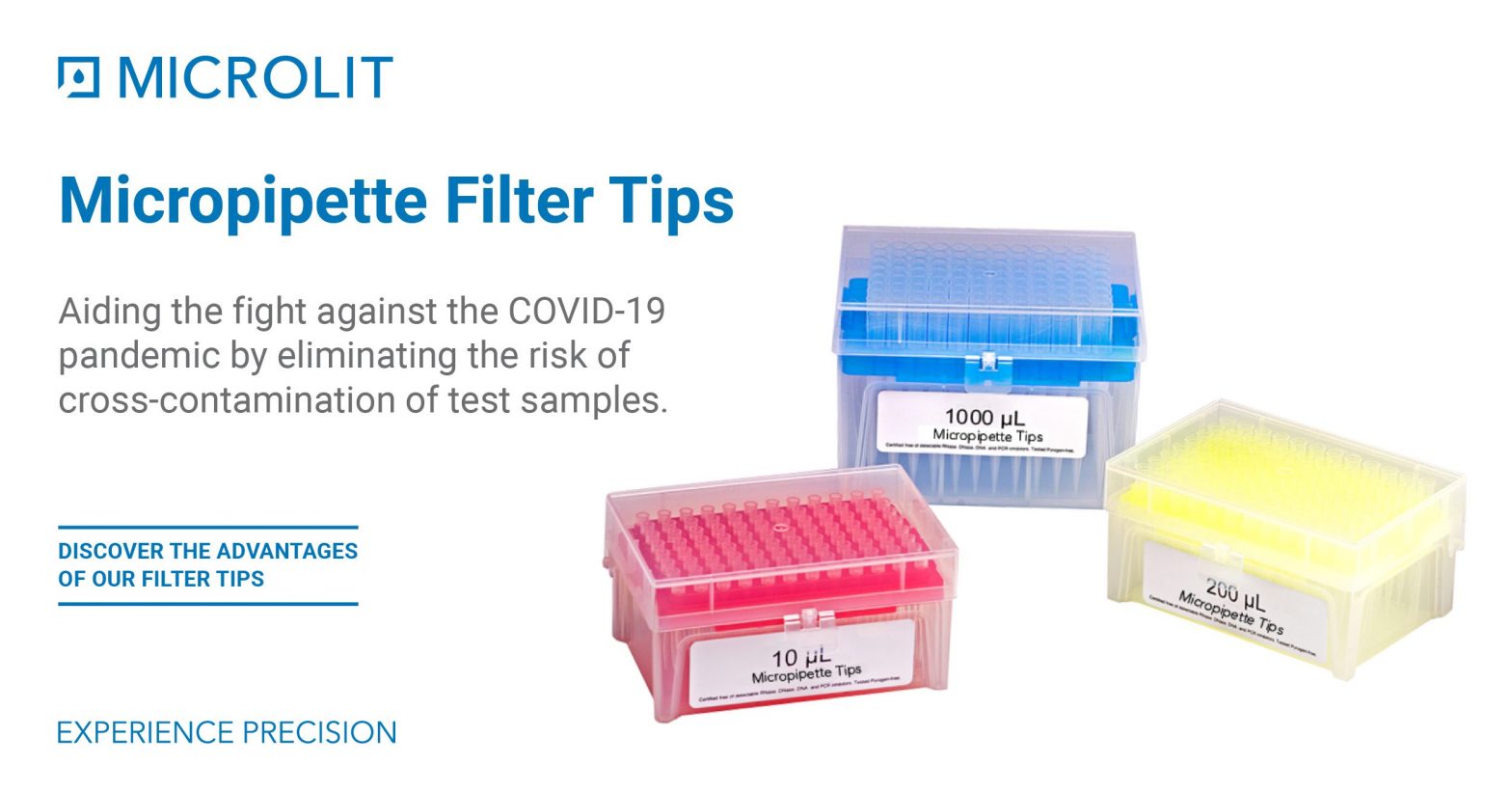
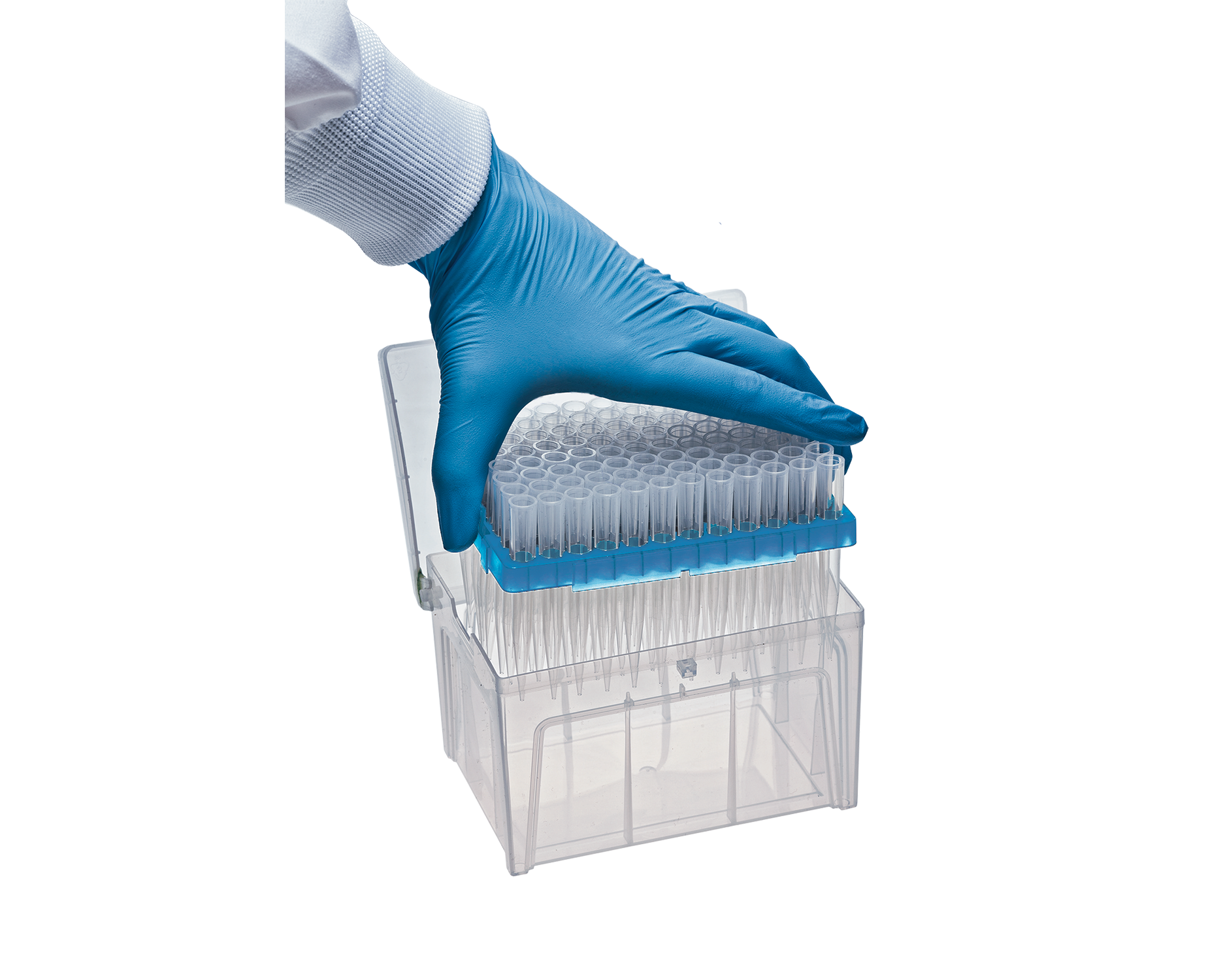
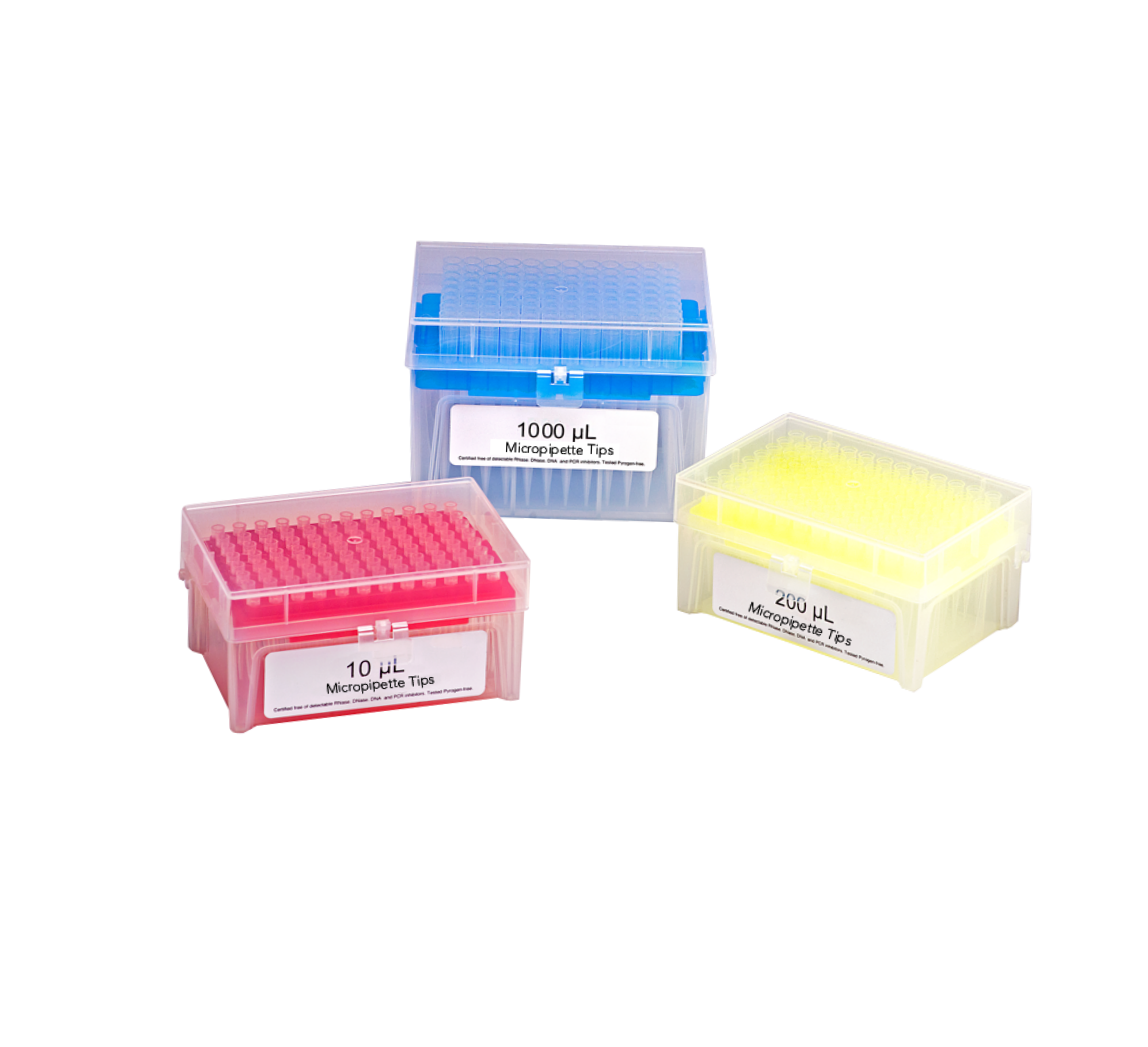
The filter pipette tips, also known as the aerosol barrier tips, serve the basic purpose of protecting your pipettes from aerosols and aspirating volatile or viscous solutions, avoiding contamination and damage of the pipette. The filter tips are pre-sterilized and are DNase/RNase-free, and are fitted inside the proximal part of the tip.

Filter tips serve two main purposes – they protect the pipette from the aerosol and protect the sample from the aerosol.

Due to the functionality of the filtered tips, they are highly valuable for ultrasensitive applications like Polymerase Chain Reaction (PCR). The filter barrier prevents any cross-contamination by eliminating the chances of carrying over the sample from the pipette, giving the user robust results.

Filter tips also aid in carrying out proper studies by new researchers. More often than not, new lab members accidentally aspirate the reagent directly into the pipette, resulting in the contamination of the pipette. To avoid this, filter tips should be fitted to the pipettes as it is more cost-effective if one has to just discard the tip rather than send the pipette for repair.

Standard Tips vs Filter Tips

Laboratories commonly use the standard pipette tips for a wide range of purposes. They can fulfil varying performance requirements like high accuracy and reagent dispensing with greater tolerance. However, a standard pipette tip may not have low-retention which in turn leads to cross-contamination. But, as established in the beginning, filter tips eliminate the risk of cross-contamination, making its use suitable for sensitive applications like clinical diagnostics.

Filter tips are also designed to prevent the formation of small particles, liquid or solid, known as aerosols. This is a big advantage as aerosols remain in the air for long durations and can be inhaled by lab users causing infections. 

Application of Filter Tips in COVID-19 Testing

With the seriousness of the COVID-19 pandemic increasing with every passing day, it has become crucial to effectively test people for the virus. For the detection of such high-stake and critical diseases, pathologists have to make sure that the sample and the testing equipment is not contaminated by the virus, hence filter pipette tips are the best option.

The FDA approved COVID-19 tests utilize a kind of PCR technology to measure the RNA instead of the DNA. The presence of the disease is detected by the RNA purified from the sample. And, to reduce the risk of aerosol-based contamination, only filter pipette tips can be used. As the current situation is alarming, one cannot risk the chances of getting false readings. If by any chance, the sample gets contaminated, the subsequent copies become inaccurate leading to an incorrect diagnosis.

As there are a large number of samples that need to be tested rapidly and effectively, testing centres have been directed by the Centres for Disease Control and Prevention (CDC) to use filter pipette tips. This eliminates the risk of cross-contamination between the samples and also keeps the lab personnel and equipment safe from contamination.

Due to the ever-increasing cases of COVID-19 and a high testing rate, testing centres are in a dire need of bulk quantities of quality filter pipette tips. Microlit has a reputation for being reliable and providing quality lab instruments & equipment. As a customer-centric organisation, we are fully stocked with filter tips and ready to serve your needs.

For more information regarding filter tips, drop a mail to info-usa@microlit.com.