• Multiple Offers
    Multiple Offers
  • Support
    Real-Time Support
  • Free Replacement
    1-Year Free Replacement Warranty
  • (732) 321-0852

Titration 101: Titration Techniques, Calculation Formulae and Digital Burette

One of the most common burette techniques of quantitative analysis in the healthcare and life sciences industry the world over is titration. It is a routine laboratory task that is typically taught while studying at a school or a university or while training and finds application in a number of industries including F&B, pharma, water treatment, among many more. The following narrative discusses titrations and elaborates on their manifold uses and benefits.

What is titration?

Titration is a technique where a solution of a known concentration is used to determine the unknown concentration of a second solution. Typically, the titrant (the known solution) is added from a burette to a known quantity of the analyte (the second solution) until the reaction is complete.

Often, a visual indicator (buffer or pH solution) is used to signal the completion (end-point). Since the volume of the titrant is already known, one can easily determine the concentration of the analyte, using the formula of titration.

There are many types of titrations with different processes and objectives. The four widely used ones include – acid-base titrations, redox titrations, complex metric titrations and precipitation titrations.

Detecting the end-point of a titration

End-point is a physical change that indicates the completion of titration. It is a signal for the user to stop adding any more titrant to the analyte. It is usually indicated by some form of a visual indicator like a color change, a visible precipitate, or a change on an electronic readout.

Performing a routine titration to determine the concentration of an analyte

The following steps employ a conventional glass burette to perform a titration. The same experiment can also be carried with the help of an electronic burettes, a better alternative that minimizes the risk posed by multiple sources of error that might occur in titrations with conventional glass burette.

  1. Place a known quantity (volume) of the solution of unknown concentration (the analyte) in an Erlenmeyer flask and fill the solution of known concentration (the titrant)in the burette.
  2. Open the tap of the burette gradually and let the titrant trickle down into the analyte. Determine the correct titration speed – too slow, and the titration period is unnecessarily prolonged; too fast, and the equivalence point is exceeded.
  3. Keep an eye on the colour of the analyte – the completion of a titration is usually indicated by a colour change.

Lastly, if the titrant and the analyte are in a 1:1 mole ratio, use the following equation to determine the concentration of the analyte.

Mtitrant x Vtitrant = Manalyte x Vanalyte

where,

Mtitrant = Molarity (M) of the titrant,
Vtitrant = Volume (V) of the titrant,
Manalyte = Molarity (M) of the analyte, and,
Vanalyte = Volume (V) of the analyte.

Note: Molarity is the concentration of a solution expressed as the number of moles of solute per liter of solution.

What is back titration?

Back Titration, also called indirect titration, is a titration done in reverse. Typically employed in acid-base titrations, back titration is used when the concentration of an excess reactant is known, but the concentration of the analyte needs to be found out. In this case:

  1. Firstly, the concentration of the analyte is determined by reacting it with a known amount of the excess reagent.
  2. The remaining excess reagent is then titrated against a second reagent, the result of which indicates how much of the excess reagent was used in the first titration.
  3. This facilitates the easy calculation of the concentration of the original analyte.

Back titration is useful in cases where the reaction between the analyte and the titrant occurs very slowly, or when the analyte is in a non-soluble solid state.

MICROLIT E-BURETTE helps in performing precise and accurate titrations
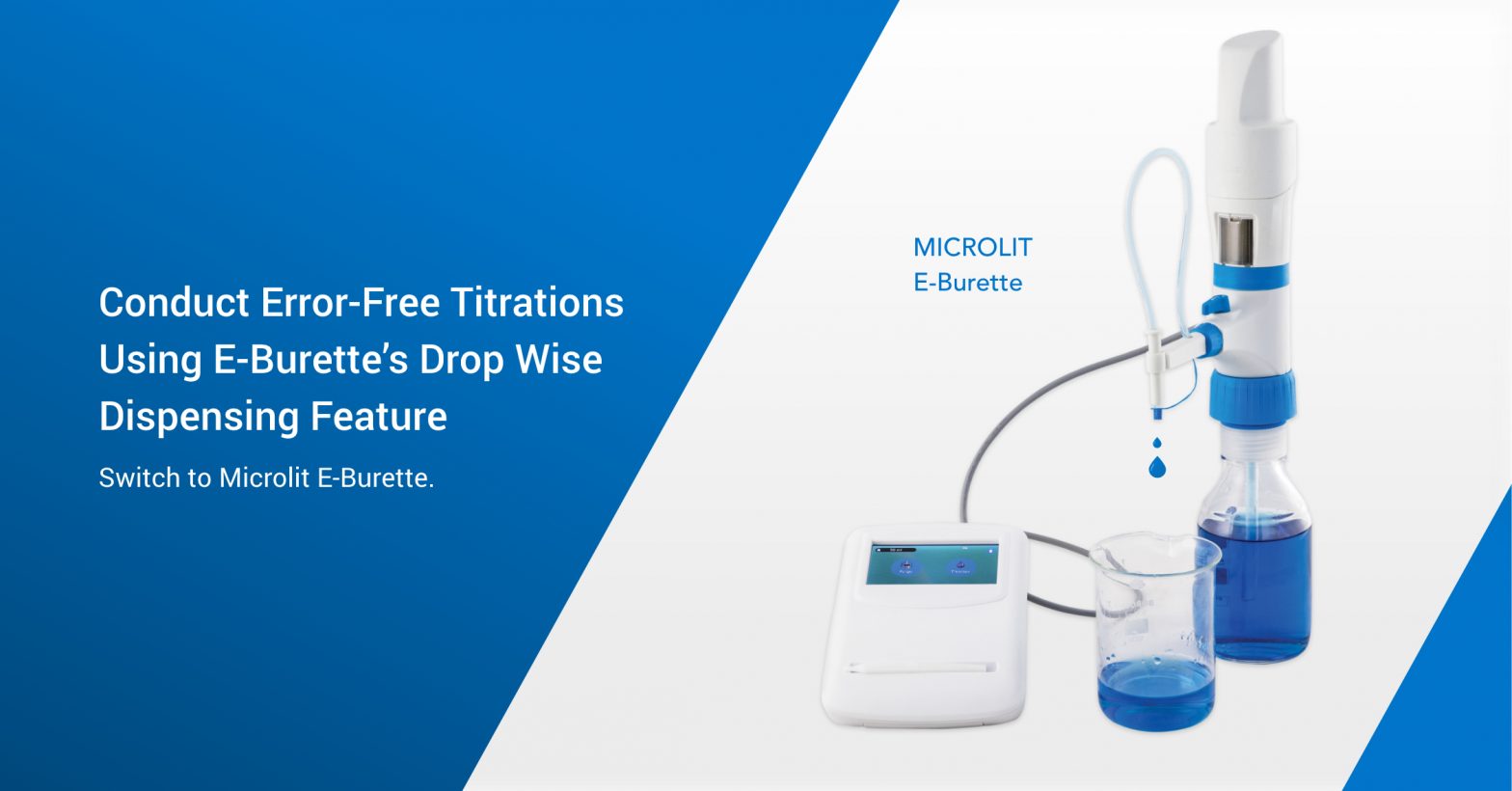
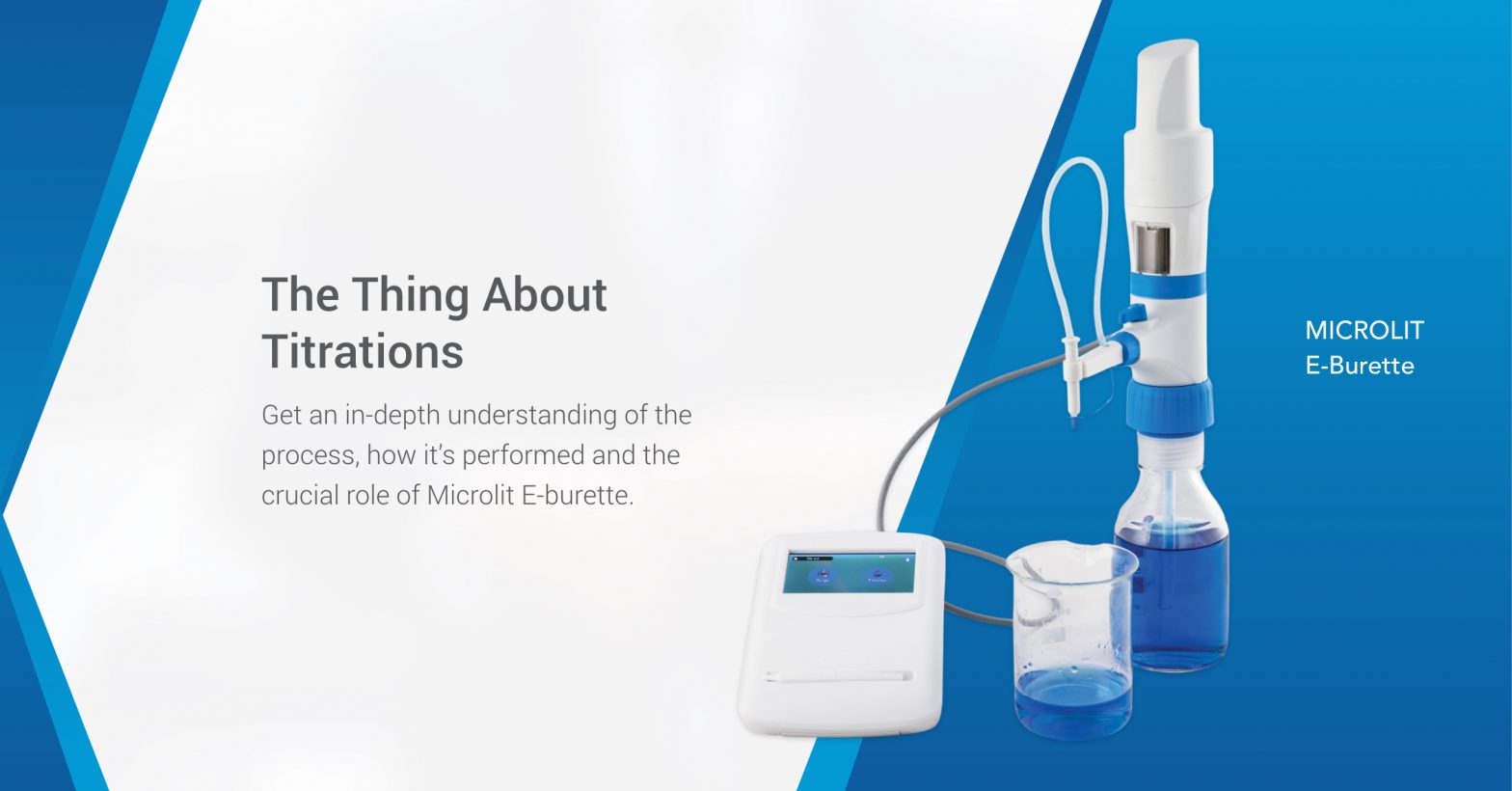
MICROLIT E-BURETTE is a state-of- the-art Motor Operated Burette. It is commonly referred to as a Digital Burette or Electronic Titrator.

Designed with ergonomics and intuitive liquid handling in mind, MICROLIT E-BURETTE is widely used in industries like Pharmaceutical, Environmental Monitoring and Food & Beverages. It exhibits excellent chemical compatibility and helps achieve precision with reliability in practical laboratory environments. It has the following key features:


1. 3 Pre-set Speeds for Dispensing

2. Motor Controlled Piston Movement

3. No wastage of reagents during purging with Recirculation Mode

4. Easy Dispensing with horizontal & vertical adjustment of the delivery nozzle

5. Quick Titrations with TFT Touchscreen

6. In-built memory slots for quick reference

For more information about Microlit E-Burette, visit: https://www.microlit.us/product-category/burette/.
 

Dispense HF Acid Fearlessly with the New Microlit Lentus®

Bottle Top Dispensers are used in labs to conveniently dispense accurate volumes of acids, bases & other reagents. While they are easy to use and offer a safe way to deliver aliquots, traditional dispensers with glass barrels cannot be used to dispense highly corrosive chemicals like Hydrofluoric acid (HF) and other high-purity media as these may erode the inner surface of the equipment, forming cracks and leading to fatal mishaps.

Addressing the market need for a Hydrofluoric acid dispenser

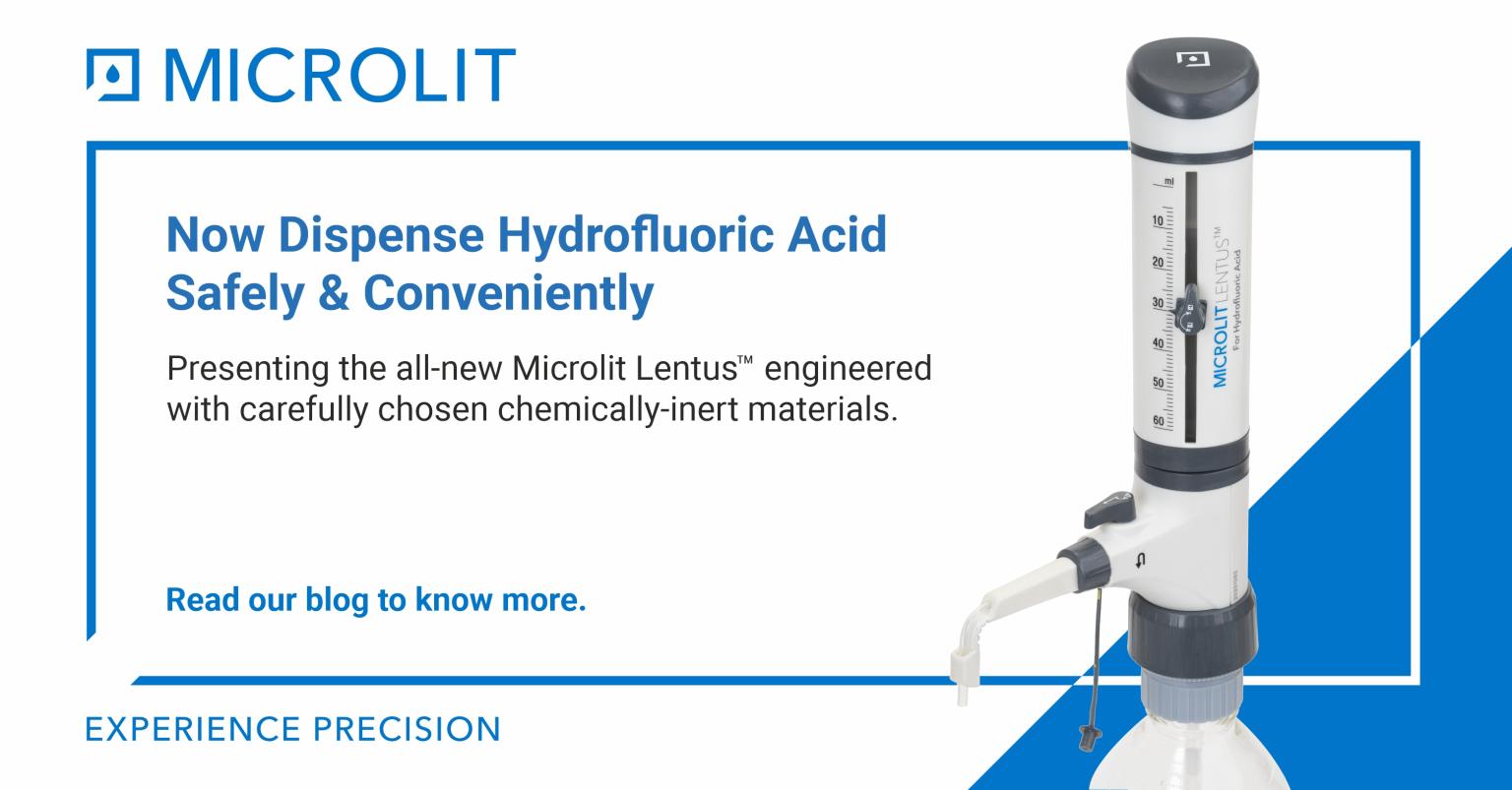
While speaking to our customers, the Microlit team realized that there is a pressing need for a dispenser that can safely dispense Hydrofluoric acid and High Purity Media. This inspired the development of a new-age dispenser called MICROLIT LENTUS™.

Microlit Lentus™ is a bottle Top Dispenser engineered with carefully selected & tested materials to safely & accurately dispense highly aggressive chemicals like Hydrofluoric acid directly from the reservoir bottle. It is calibrated following the guidelines of DIN EN ISO 8655 – 5.

Because of its specialized make, Microlit Lentus™ can easily be used to handle high-purity media. We have found that when they are dispensed using this dispenser post the requisite equipment cleaning, the high-purity reagents release virtually no metal ions. Conclusively, Microlit Lentus™ can also suitable for dispensing high-purity media.

Applications of Microlit Lentus®

Dispensing Hydrofluoric acid

What it is – Hydrofluoric acid is an extremely corrosive and hazardous chemical. To give you an idea of how corrosive it is, consider this: If accidentally spilt on the skin, the acid penetrates the upper layer easily, further dissociates into fluoride ions, destroying deep tissue layers, including bones.

Usage – Hydrofluoric acid is used to make most fluorine-containing compounds. Examples include the commonly used pharmaceutical antidepressant medication fluoxetine (Prozac) and the material PTFE (Teflon). It is also used to etch glass and silicon wafers.

Safely dispensing Hydrofluoric acid with Microlit Lentus™– Microlit Lentus™ adds high safety & convenience to the process of dispensing Hydrofluoric acid. It offers the combined advantage of a traditional bottle top dispenser along with the ability to dispense high purity media because it’s made using chemically-inert materials and features components like PTFE Piston & an ETP O-Ring, FEP inlet & outlet tubes, FEP Barrel, and a high purity ceramic valve system.

What is Trace Analysis

Trace analysis refers to using analytical methods to detect traces, i.e., significantly low amounts of a substance in another substance. It is used to determine the purity of a substance that may include anything from metals, noble metals, radionuclides to volatile organic compounds, etc. The results of this process are expressed in parts per million (ppm).

How Microlit Lentus® can facilitate dispensing high-purity media – While it is designed to dispense Hydrofluoric acid, Microlit Lentus® also facilitates dispensing high-purity media/chemicals. This is because the components of its fluid path are made using chemically inert materials like PTFE, FEP and high-purity ceramic, suitable for precise volume dispensing of high-purity media.

Prominent Features of Microlit Lentus®

Built by our in-house team of product design engineers, Microlit Lentus® uses Springless Valve®, an award-winning technology, and Recirculation Valve for preventing loss of reagent during purging. It also features two product innovations, EasyKnob® and FlexiNozzle® that enhance its ease of use & flexibility.

●. EasyKnob® is a specially designed volume adjustment knob that allows 180° rotation for easy & effortless volume setting.

●. Recirculation Valve prevents the loss of reagents during purging by re-directing them into the mounted bottle and facilitates bubble-free dispensing.

●. Springless Valve® facilitates smooth & jam-free functioning.

●. FlexiNozzle® is an adjustable delivery nozzle. It offers a high degree of flexibility, facilitating easy dispensing in demanding laboratory conditions.

Industries where Microlit Lentus®can be used

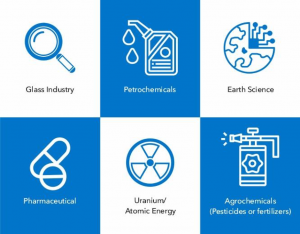
Microlit Lentus® finds application in various industries like polymer manufacturing, glass, fluorocarbons, uranium/atomic energy, metal pickling, petrochemicals, oil refining, pharma, consumer products (FMCG), geochemistry, agrochemicals, etc.

<rel=”attachment wp-att-1504″>Bottle Top Dispensers

Conclusion

If working with strong chemicals is a routine thing for you, you already know that using incorrect dispensing methods or unsuitable dispensing instruments may lead to reagent contamination, wastage, or mishap. Therefore, use specialized equipment like Microlit Lentus® along with safety gear to work fearlessly with the highly corrosive Hydrofluoric acid and other high-purity media and obtain precise results.

Interested in making Microlit Lentus™ a part of your lab or want to know more about it? Write to info-usa@microlit.com.

Become a Distribution Partner for Microlit USA

Distributors help in bridging the gap between manufacturers & customers; we ourselves have greatly benefitted from partnering with the right ones. However, the relationship between a manufacturer and a distributor is not one-sided. There are many benefits that we, as a manufacturer, can bring to the table to enhance the experience of our distributors. Take a look at how we are fostering distributor partnerships.

Sell Microlit’s Technologically Advanced Products 

Our products are technologically advanced and manufactured to fulfil the demands of our customers. With 5 trademarks, 4 design patents & many awards under our belt, Microlit products have an edge over other manufacturers. 

Our products are ergonomically designed, providing highly precise and accurate results. Each one of them is designed to solve a problem prevailing in the market. For instance, our Bottle Top Dispensers are exceptional due to their superior chemical compatibility. Our latest offering, Microlit LentusTM Bottle Top Dispenser has been designed specifically for dispensing Hydrofluoric acid and high-purity reagents for trace analysis   

Win Big Accounts

Microlit USA organises regular training sessions for and offers complete technical support to distributors to ensure that they can market the product efficiently to customers. Our sales reps frequently visit our distributor’s customers to help them with the sale of products. We also set aside a sales & marketing budget for our distributors, and often take care of the marketing collateral, to add on to the comfort & convenience.

Help Your Reps Get Regular Product Training Sessions

We organise regular training sessions for distributor reps to help them stay well-versed with the product they are selling. We understand that a representative will be able to sell the product well only when s/he is completely aware of all the features, benefits and offers that the brand has to offer. Usually, the training pieces are conducted face-to-face but during unusual times, like the current COVID-19 lockdown, we conduct virtual sessions as well.

We’re Always Ready to Deliver

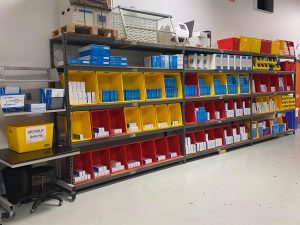
Microlit USA, invariably, has sufficient stock in all SKUs that can be dispatched the same day an order is placed. Along with key products, we are also well-stocked with compatible consumables like tips and other spare parts. We offer repair and calibration services for our distributors’ customers as well.

Shown above: Our fully stocked SKU

Receive OEM Services

We offer OEM/private label services, especially to the distributor brands placing bulk orders with us. This includes custom packaging, custom product colours, logo printing, among others. Such an offering is often lucrative to large distributors as they get to own numerous liquid handling instruments under their brand name and continue to grow their branded product portfolio.

Get 24*7 Support

We go out of our way to help our distributors and their customers and offer round the clock customer service and technical support. This ensures that they do not face any difficulties with our instruments. 

SciCal is Our Product Calibration Partner 

Microlit USA has partnered with Scientific Calibration Inc, popularly known as SciCal, for product calibration. A reputed calibration service provider, SciCal offers a wide range of calibration and repair services and maintains ISO 17025 accredited labs across the US. Along with exceptional service, they also provide the relevant certificate(s), satisfying ISO 9000, GMP, CAP and GLP requirements. 

SciCal is one of the few calibration companies that gives its services at the client location. They are carried out by professionally certified technicians using NIST (National Institute of Standards and Technology) traceable equipment.

Such benefits make Microlit USA a supplier with a wide range of benefits. To top it all, our recent collaboration with Zoro, one of the leading lab equipment suppliers in the US, showcases our strong partnerships with well-known distributors. 

Enhancing the Efficiency & Accuracy of Titrations with E-Burette

Electronic burettes have revolutionized the way titrations are carried out in laboratories across the world. They are used for the accurate dispensing of a reagent, especially of one of the reagents in a titration. Before exploring the electronic burette in further detail, let’s talk about titration.

What is titration?

Titration involves the slow addition of one solution of known concentration (titrant) to another solution of known volume but unknown concentration (titrate). In other words, it is a process that determines the concentration of an unknown solution. This process keeps happening until the reaction reaches neutralization, often indicated by a colour change. Usually, researchers use a burette to add the titrant. 

Industries where titration is crucial

  • Winemaking – The flavour of a wine is defined by the degree of acidity, otherwise known as the level of tartness. The tartness also determines how the wine will respond to ageing. This level of acidity is measured by titration, a straightforward process with minimal requirement of instruments. The titration results inform if one needs to add or subtract ingredients that will maintain the quality of the wine.


  • Acid Rain – Scientists and researchers closely study precipitation and the response of precipitation to pollution. The process of titration allows them to check the degree of contamination in the rainwater or snow. The process is feasible and preferred because it does not require expensive equipment. Also, it is quick and highly reliable.


  • Pharmacology – Titration is an important step when it comes to the development of medicines as it is heavily based on specific measurements of chemicals. Pharma labs adopt titration and many of its variations along with various specialized instruments that result in an efficient and accurate process.


  • Wastewater Analysis – Whether wastewater is fit for consumption, depends on the level of its contamination and its usability degree after filtering and cleaning. Titration is a key step in cleaning the water; special titration equipment is used to check the level of ammonia in water in combination with other reactants to quantify other chemicals present in wastewater.


Commonly available burettes

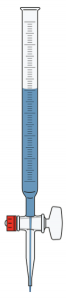
https://www.microlit.us/enhancing-the-efficiency-accuracy-of-titrations-with-e-burette/screen-shot-2020-05-27-at-12-16-07-pm/Glass Burette – A glass burette is a long, graduated glass tube with a tap and a stopcock at its lower end and a tapered capillary tube at the stopcock’s outlet. The stopcock controls the flow of the reagent from the tube to the tip. It is commonly used in school and university labs due to their low cost. 

But glass burettes have their disadvantages. The fact that it is made of glass makes it fragile and prone to breakage spilling reagents or causing lab accidents. Then, the operation of the instrument is tedious as manually using a stopcock to maintain the flow of the reagent can lead to errors. Maintaining the titration speed can also be a difficult job, making the experiment prone to more errors.

Shown beside: Illustration of a common glass burette

Digital Burette – A digital burette is easier to handle as compared to the glass burette and is a relatively high-cost instrument. It has numerous sophisticated features that make the titration process simple. This burette can be connected to the computer to save all the titration readings. 

Though the digital burette is better than the glass burette in many ways, it is still prone to deliver wrong readings. The reason – manual turning of the knob in the barrel to maintain the flow of the reagents. The slightest of human error can lead to the experiment going wrong. 

Scientists and researchers prefer an instrument that facilitates an error-free experiment. E-burettes were designed keeping this very thing in mind. 

The Microlit E-burette

An electronic burette or the e-burette, like the Microlit E-burette, is an advanced instrument built keeping in mind ergonomics and intuitive handling. The Microlit E-burette offers sophisticated features and functionality like, touch screen enabled control panel with graphical user interface (GUI), motor-controlled piston movement and three calibrated pre-set speeds to perform accurate titrations.

3 Pre-set Dispensing Speeds

Microlit E-burette offers 3 calibrated pre-set speeds allowing the user to work at the desired speed while avoiding manual error. 

  1. High Speed Dispensing – Dispenses at 1.517 ml/sec
  2. Low Speed Dispensing – Dispenses at 0.491 ml/sec
  3. Dropwise Dispensing – 0.01ml per drop

The dropwise dispensing option in the Microlit E-burette is phenomenal as it allows the user to opt for this mode when they are about to reach the end-point of the titration process to dispense droplets as small as 0.01 ml and record a highly accurate end-point.

TFT Touch Screen Control Panel

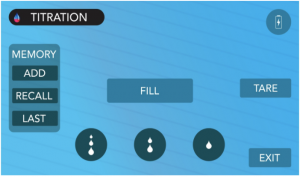
TFT Touch Screen Control Panel                Shown here: The TFT Touch Screen Control Panel for E-Burette

The TFT touchscreen helps the user to perform quick & accurate titrations, and display numeric data up to two decimal points. The user requires a Stylus and needs to keep it pressed against the screen to perform dispensing and lift it to stop. The touchscreen feature also omits any parallax error which occurs in glass burettes when it is not viewed from a perpendicular position. 

Motor Controlled Piston Movement

In the glass and digital burettes, dispensing is done manually which leads to inaccurate results. However, the E-burette has a motor controlled piston movement, at 3 pre-set speeds, which minimizes human effort as well as errors. Also, the motor controlled piston allows the lab personnel to work efficiently as s/he does not have to oversee the dispensing process at every moment. 

Operating a Microlit E-burette is easy and user-friendly. Click here to see how you can do the same.

Experience Precision with the NEW Microlit ProTipTM

When a lab professional says that a pipette is only as good as the pipette tip it is used with, s/he is not exaggerating. Tips may appear like one of those trivial lab items, but they are, in reality, an integral part of the liquid handling process. In fact, if you want to perform accurate & precise experiments, a lot of that success depends on the tips you choose. Moreover, pipette tips are of varying build & make – they might be standard or specialized, have chemical additives, may exhibit low retention, etc. If you do not pick up the right one, it will meddle with the correctness of your test results. 


So, if you are planning to buy high-quality pipettes but save time & money by buying the first set of low cost tips you can find, think twice! Simply put,

        “If you want to make a big difference, focus on the little things.”

To help you out further, in this blog, we will shed some light on the new and innovative Microlit ProTipTM and discuss what makes it the right choice for your pipetting experiments.


Microlit ProTipTM – A Grade Apart

We have recently launched ProTipTM to help lab users get ready access to pipette tips that ensure high precision & accuracy and can be used with most micropipettes in the market. 

  • High compatibility leads to more convenience

ProTipTM is compatible with all micropipettes featuring universal tip cones. Universal tip cones, as found in Microlit RBO and the new range of Microlit NERO micropipettes, are designed to fit different styles/geometries of pipette tips. And, ProTipTM is designed to be backward-compatible with such pipettes. Also, it’s Manufacturer Recommended to be used with Microlit RBO and Microlit NERO micropipettes to obtain the highest levels of precision and accuracy.  

  • Low retention leads to efficient dispensing

Another key feature of Microlit ProTipTM is that it’s extraordinarily low retention capability which enhances the performance of pipettes and facilitates accurate experiments. ProTipTM exhibits a much higher degree of hydrophobic behaviour (does not retain water) than standard tips and can be used to fully dispense highly viscous liquids like DNA, enzymes, foaming liquids, detergent and plasma.


Types of tips

Microlit ProTipTM is available in micro (up to 1000 ul) and macro sizes (up to 10 ml) in standard (non-filter, non-sterile) and filtered varieties, in racked, reloads and bulk packaging.

Macro tips are used to carry out safe and efficient handling of reagents of larger volume and are compatible with macro pipettes. They are used to handle reagents ranging from 5 ml to 10 ml. On the other hand, micro tips are used to efficiently handle smaller volumes of reagents ranging from 0.5 ul to 1250 ul. 

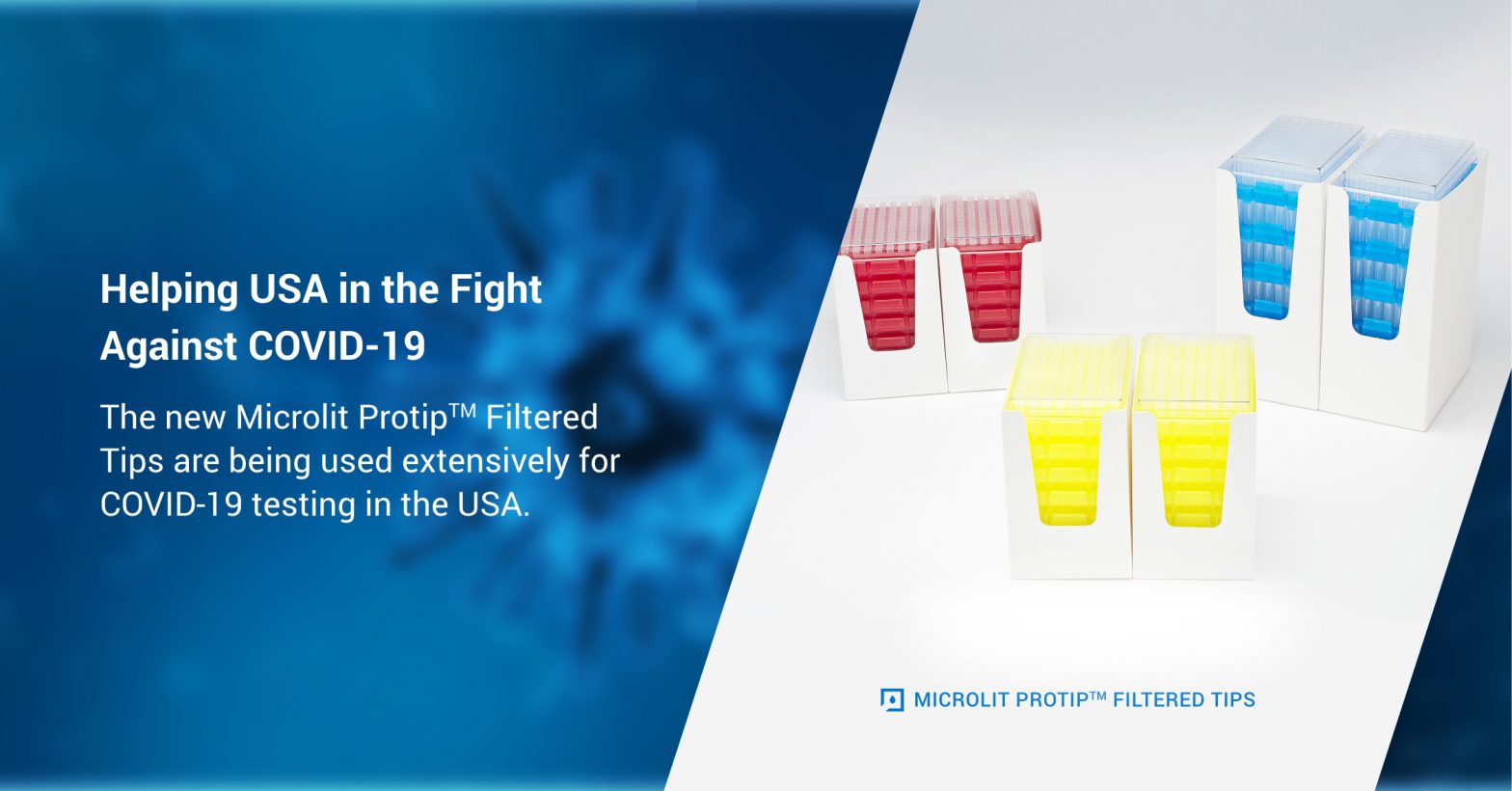
Filtered tipsFiltered tips are used to avoid cross-contamination from one sample to another. While carrying out experiments, even the tiniest foreign particle can sometimes lead to a huge difference in the result. The filter prevents the pipette from being contaminated by the sample and the sample by the pipette. Filtered tips are also being widely used for sensitive Covid19 diagnostic tests. Microlit ProTipTM offers a range of filtered tips (R-XX-FS) for such sensitive applications. 

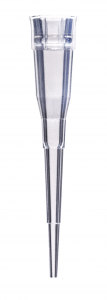
Shown above: Microlit ProTipTM Low Retention, 10ul, Filtered Tip


To achieve the highest pipetting accuracy, select the tips with capacity just higher 
than or equal to the nominal volume of the pipette that you are using. For instance, 
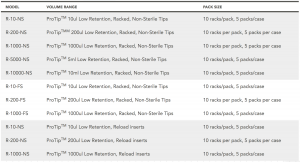
for use with RBO-20 (Nominal Volume of 20 ul), R-20-NS ProTip (see chart below ) will 
ensure higher accuracy as compared to R-200-NS, even though both tips will be 
compatible with the pipette.

Packaging for tips

Further, various types of tips packaging, including Racked, Reload and Bulk Packaging can be selected from, basis the quantity requirement and bench space availability in lab.


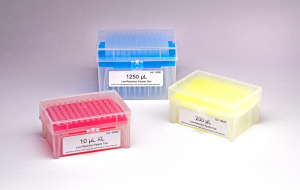
Racked packagingRacked packaging for tips is convenient and allows the scientist or researcher to pick them up by a pipette. This helps in keeping the tips free of any contamination. 


Shown above: Microlit ProTipTM Low Retention, Racked, Non-Sterile Tips

Reload packaging is a more sustainable and environmentally-friendly option to racked pipette tips since the same plastic box can be used with replaceable reloads.

Bulk packaging is more economical and retains a large number of tips in it. It usually comes in resealable ziplock bags to keep contaminants like dust away from the tips.

Bulk packaging

            Shown above: Microlit ProTipTM Models with Volume Range & Pack Size 


Microlit is committed to introducing innovative products that improve the accuracy of experiments and efficiency in labs. Microlit ProTipTM, one of our newest offerings, is highly compatible with liquid handling instruments and ensures high accuracy & precision. It enables scientists and researchers to pipette with assured accuracy and with complete peace of mind.