• Multiple Offers
    Multiple Offers
  • Support
    Real-Time Support
  • Free Replacement
    1-Year Free Replacement Warranty
  • (732) 321-0852

Bottle Top Dispenser Product Manual

1. Intended Use of the Instrument

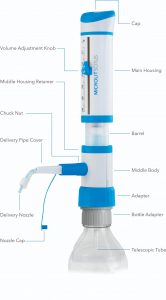
MICROLIT SCITUS, BEATUS and ULTIMUS are the Bottle Top Dispenser (BTD). It is a high precision liquid handling instrument intended for use in laboratories for dispensing reagents and chemicals that are compatible with it. (Refer to section 6)

2. Safety Instructions

This instrument may sometimes be used for operations involving hazardous materials and equipment. It is beyond the scope of this manual to address all of the potential risks associated with its use in such applications. It is the sole responsibility of the user to consult and establish appropriate safety and health practices and determine the applicability of regulatory limitations,
prior to the usage of this instrument.

NOTE: Please read the following instructions carefully.

  • Read and understand this Operation Manual thoroughly before using the instrument.
  • Follow general and safety instructions for hazard prevention. E.g., always wear protective clothing, protective gear for the eyes and hands.
  • Carefully observe the specifications provided by reagent manufacturers.
  • When dispensing inflammable fluids, avoid the built up of static charge. Make sure that you do not dispense into plastic vessels and do not wipe the instrument/equipment with a dry cloth.
  • Use the instrument only for dispensing liquids, with strict regard to the defined limitations of use and operating constraints. (Refer to section 3 and 4).
  • Observe operating exclusions. When in doubt, contact the manufacturer or supplier.
  • Always use the instrument in such a way that neither the user nor any other person is in danger. While dispensing, the discharge tube must always point away from you or any other person. Only dispense into appropriate vessels and avoid splashes.
  • Do not press the piston when the discharge tube closure is attached.
  • Do not remove the discharge tube while the dispensing cylinder is being filled.
  • Reagents can accumulate in the cap of the discharge tube. Thus, clean it regularly.
  • Do not carry the mounted instrument by the cylinder sleeve or the valve block. Breakage or loosening of the cylinder may lead to personal injury.
  • Do not use the instrument with force. Apply smooth gentle movements to operate the piston. Use only original accessories and spare parts.
  • Do not attempt to make any technical alterations. Do not dismantle the instrument any further than is described in the Operation Manual.
  • Always check the instrument for visual damage before use.
  • If there is any sign of a potential malfunction (e.g. piston difficult to move, stuck valve or leakage), immediately stop dispensing. Consult the ‘Troubleshooting’ section of this Operation Manual and contact the manufacturer if needed. (Refer to section 16)

3. Functions and Limitations of use

MICROLIT BTD is designed to dispense liquids directly from the reservoir bottle. It is calibrated in accordance with the guidelines of the DIN EN ISO 8655 – 5.
When the instrument is correctly used, the dispensed liquid comes into contact with only the following chemically resistant materials: PTFE, FEP and Borosilicate glass.

Physical limits

MICROLIT BTD is designed to be operated under the following physical limits.

  • Maintain instrument temperature between +15°C and +40°C (from 59°F to 104°F).
  • Maintain reagent vapour pressure up to 600 mbar (maximum). Aspirate slowly above 300 mbar in order to prevent the liquid from boiling.
  • Kinematic viscosity upto 500 mm²/s.
    (dynamic viscosity [mPas] = kinematic viscosity [mm² /s] x density [g/cm³])
  • Use fluids with density upto 2.2 g/cm³.

Operating limitations

  • Liquids, which form deposits, may make it difficult for the piston to move or jam it (like crystallizing solutions or concentrated alkaline solutions). If the piston becomes too difficult to move, immediately clean the instrument. (Refer to section 13)
  • While dispensing inflammable fluids, avoid the built up of static charge. Make sure that you do not dispense into plastic vessels and do not wipe instruments with a dry cloth.
  • MICROLIT SCITUS is designed for general laboratory applications and complies with relevant standards, like DIN EN ISO 8655. Please check the compatibility of the instrument for a specific application (e.g. trace material analysis, food sector etc.). Approvals for specific applications, like production and administration of food, pharmaceuticals and cosmetics are not available.

4. Operating Exclusions

Do not use the instrument with:

  • Liquids that attack FEP, PFA and PTFE (e.g. dissolved Sodium Azide*)
  • Liquids that attack borosilicate glass (e.g. Hydrofluoric acid)
  • Hydrochloric acid > 40% and Nitric acid >70% | Tetrahydrofuran | Trifluoroacetic acid
  • Explosive liquids (e.g. Carbon Disulfide)
  • Suspensions (e.g. of charcoal) as the solid particles may clog or damage the instrument.
  • Liquids that attack PP (cap)
    * The permissible concentration of dissolved Sodium Azide is not more than 0.1%.

5. Storage Conditions

Store the instrument and accessories in a clean, cool and dry place. Storage temperature may vary from – 20°C to +50°C (from – 4°F to 122°F)

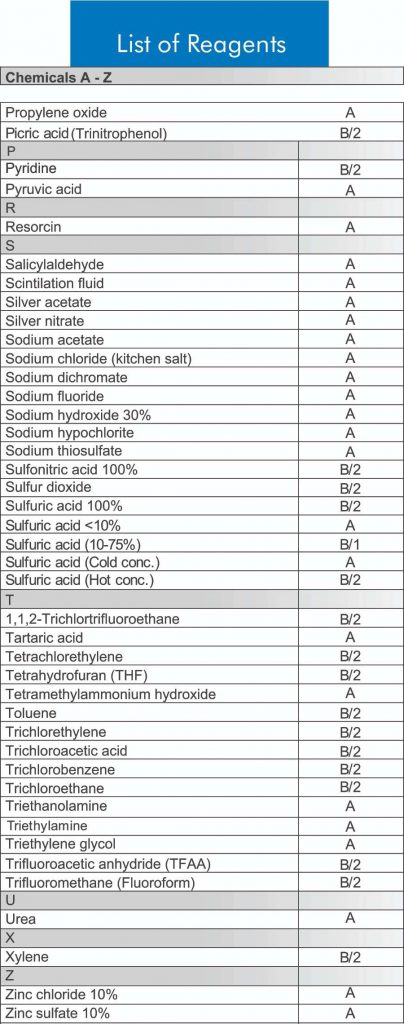
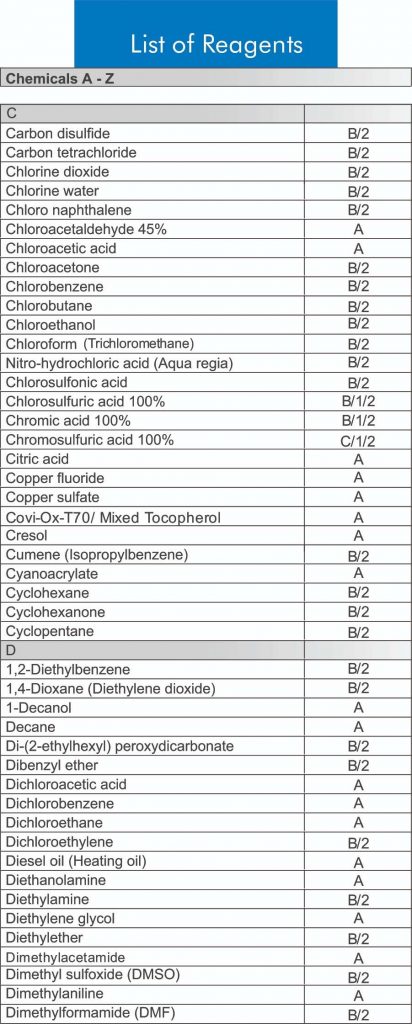
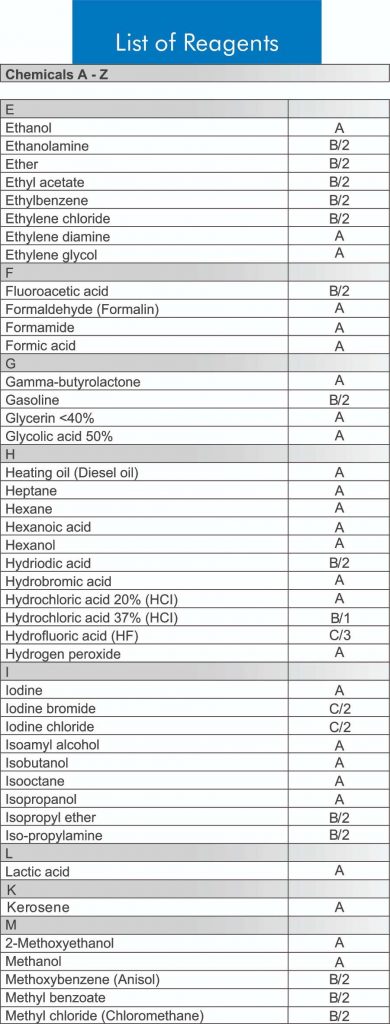
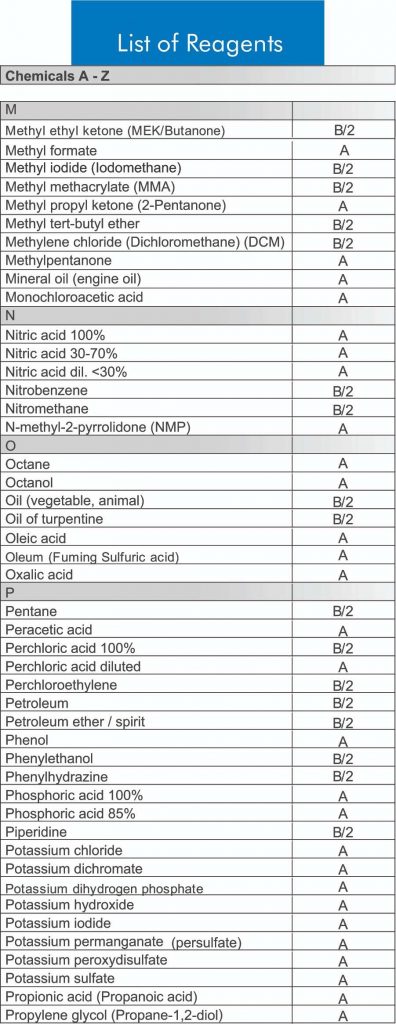
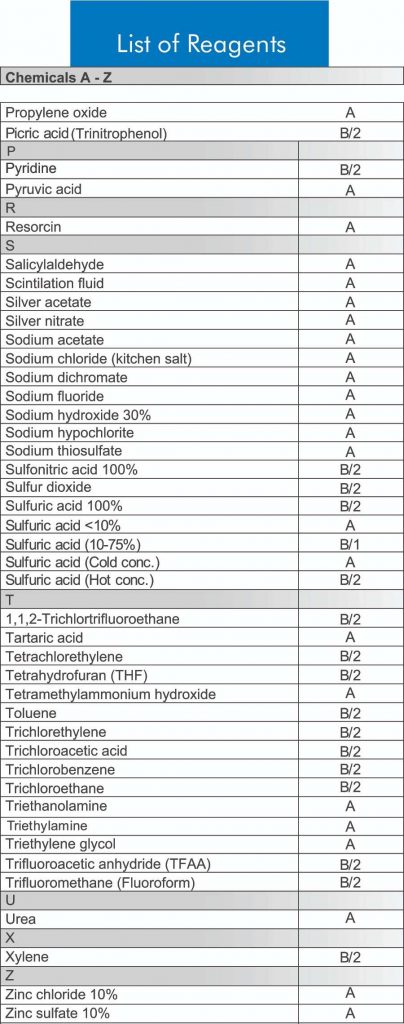
6. List of Recommended Reagents

Chemicals from A to Z
The following tables enlist the most frequently used reagents. They provide useful information for the safe and efficient use of MICROLIT SCITUS. All the safety precautions and recommendations within this Operation Manual must be followed carefully.

Code explanations:

A = Good resistance
B = Acceptable with limitations
C = Not recommended

1 = Acid vapours (better resistance with lower concentration).  Do not leave the instrument on the bottle. Rinse with distilled water after use.
2 = Risk of damage, softening or discoloration of external parts through vapours. Do not leave the instrument on the bottle. Rinse with distilled water after use.
3 = Chemical degradation of glass parts (plunger/barrel)
 

scitus marking
chart5 1 chart2
chart3 1 chart4
chart5 1 1

7. First Steps

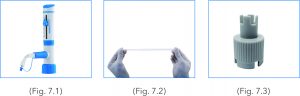
First and foremost – check whether everything is there in the package.

Verify that the package includes:

  1. 1 Bottle Top Dispenser (Refer to Fig. 7.1)
  2. 1 Telescopic Tube (Refer to Fig. 7.2)
  3. 1 Calibration Tool (Refer to Fig. 7.3)
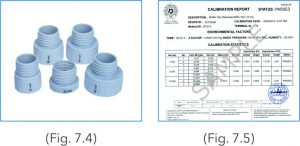
  4. 5 Bottle Adapters (28 mm, 32 mm, 38 mm, 40 mm, 45 mm) (Refer to Fig. 7.4)
  5. 1 Calibration Certificate (Refer to Fig. 7.5)
  6. 1 Operation Manual
 Sictus7a

Scitus 7b
Scitus 7b

8. Setting up

NOTE: Wear protective clothing, protective gear for the eyes and hands. Follow all safety  instructions and observe limitations of use and operating constraints. (Refer to sections – 2,3,4)

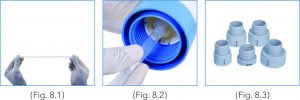
1.  Adjust the length of the telescopic tube to fit your particular reservoir. If you require a  longer tube, it is provided on request. (Fig. 8.1)

2.  Fix the telescopic tube. The tube’s ends have different diameters. Please select the correct side for your instrument. (Fig. 8.2)

3.  Choose the correct adapter for the bottle. The threaded platform base has a 30 mm
screw thread. Five adapters are supplied to suit containers with a 28, 32, 38, 40, 45 mm
and 30 mm (inbuilt adapter) screw neck. (Fig. 8.3)
Scitus 8

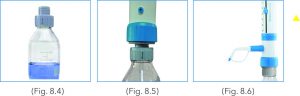
4.  Fix the adapter. (Fig. 8.4)

5.  Mount the instrument. Screw it to the reservoir by applying gentle hand torque applied to the threaded platform base only. In case of removal, apply the same technique to the base, in the opposite direction. (Fig. 8.5)
Scitus 8b

The instrument is all set up and ready to use.
Do not operate the piston until the entire unit is safely and fully mounted on the reservoir bottle.
Always wear rubber gloves while operating the instrument or handling the bottle, especially when working with hazardous liquids. When mounted to a reagent bottle, always carry the instrument carefully.

Do not press the piston down when the cap is on. Avoid splashing the reagent. The reagent can drip out from the discharge tube and cap. (Fig. 8.6)

9. Priming

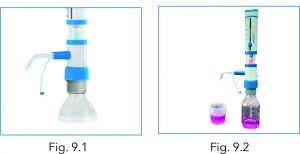
1.  Place a receiving vessel under the Dispenser’s delivery nozzle.

2.  Remove the Nozzle Cap

3.  Prime the unit with a few gentle up and down strokes, taking the piston down to its lowest stop position and lifting it up.

4.  Repeat until a steady bubble free flow is visible in the barrel.

To avoid splashes while priming, hold the discharge tube against the inner wall of the appropriate receiving vessel. Dispense liquid to prime the discharge tube until it is bubble free. Wipe away any remaining drops from the discharge tube.

Before using the instrument for the first time, ensure that it has been rinsed carefully and discard the first few samples dispensed. Avoid splashing.
Microlit Scitus Bottle Top Dispenser

10. Volume Setting and Dispensing

Volume Setting

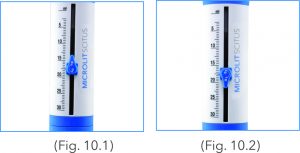
Volume Adjustment Knob is simple and easy to operate. There are two positions of the knob as shown:

Position 1 Locked (Fig. 10.1)

       Position 2 Unlocked (Fig. 10.2)
To set the volume, follow these simple steps:

  1. Unlock the Knob by rotating it ANTICLOCKWISE.
  2. The slider is now loose and can be moved up and down.
  3. Set your desired volume by aligning the pointer with the scale.
  4. To lock the set volume, turn the Knob from Position 2 to Position 1 by rotating it CLOCKWISE.

NOTE: Over rotating the knob may lead to breakage.

Dispensing

Wear protective clothing, protective gear for the eyes and hands. Liquid may accumulate in the cap. To avoid splashes, dispense slowly. Follow all safety instructions and observe limitations of use and operating constraints.

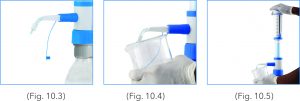
1.  Remove cap from the discharge tube. (Fig. 10.3)

2.  Hold the discharge tube orifice against the inner wall of the appropriate receiving vessel. (Fig. 10.4)

3.  Gently lift the piston until the upper end. Press the piston downwards slowly and steadily with minimal force until the lower end. (Fig. 10.5)
4.  Wipe off the discharge tube against the inner wall of the receiving vessel.

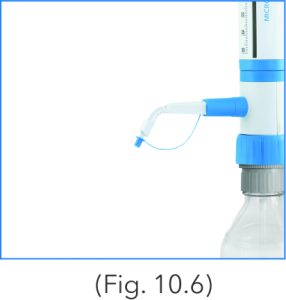
5.  Reattach the cap to the discharge tube. (Fig. 10.6)
11. Error Limits

The error limits (Accuracy and Coefficient of Variation) mentioned below are in accordance with the nominal capacity (or maximum volume) indicated on the instrument. These are obtained by using the instrument with distilled water at equilibrium, ambient temperature of 20 °C or 68°F, while operating the device smoothly and steadily.
The error limits are well within the limits of DIN EN ISO 8655-5.

Volume Range Increment Specifications ISO 8655
Accuracy CV
±% ±ml ±% ±ml
0.25 – 2.5 ml 0.05 ml 0.06 0.015 0.2 0.005
0.5 – 5 ml 0.1 ml 0.06 0.030 0.2 0.010
1 – 10 ml 0.2 ml 0.06 0.060 0.2 0.020
2.5 – 30 ml 0.5 ml 0.06 0.180 0.2 0.060
5 – 60 ml 1.0 ml 0.06 0.360 0.2 0.120
10 – 100 ml 2.0 ml 0.06 0.600 0.2 0.200

12. User Calibration Procedure

MICROLIT SCITUS is laboratory calibrated at its nominal volume. However, due to changes in environmental conditions and the viscosity of the media / fluids which are dispensed, we recommend gravimetric volume testing every 3-12 months.
Gravimetric volume testing, in accordance with DIN EN ISO 8655-6, is performed as follows (for measurement conditions, see section12):

Re-calibration

 1.  Set the instrument to the nominal volume or any other volume which is most commonly used by you. Follow the common rules for calibration used in statistical quality control (ISO 8655-5).

2.  Set the volume and dispense five full volumes of distilled water at 20°C on an electronic balance to establish the actual mean volume of liquid dispensed. If the gravitational average result varies from the volume displayed, you should re-calibrate the instrument.

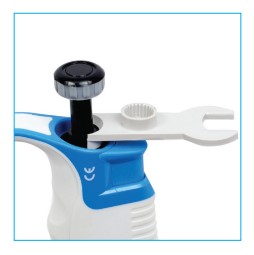
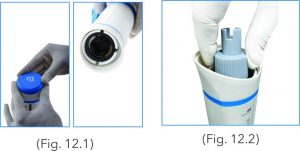
3. For re-calibration, pull the cap outwards to expose the calibration nut. (Fig. 12.1)

4.  Using the calibration tool, turn the calibration nut clockwise to reduce the volume and anticlockwise to increase it. Repeat this procedure till the desired volume is achieved on the electronic balance. (Fig. 12.2)
Scitus 12

13. Maintenance/ Cleaning

MICROLIT SCITUS should be cleaned in the following situations:

  • Immediately when the piston is difficult to move
  • Before changing the reagent
  • Prior to long term storage
  • Prior to dismantling the instrument
  • Prior to autoclaving
  • Prior to changing the valve
  • Regularly when using liquids which form deposits (e.g. crystallizing liquids)
  • Regularly, when liquids accumulate in the cap.
  • All maintenance/cleaning procedures should be carried out while wearing suitable eye protection and protective clothing. When in doubt, consult your safety officer.
  • Make sure that the instrument is completely empty.
  • Place the instrument into an empty sink together with its reservoir.
  • Unscrew the threaded platform base from the reservoir and lift the instrument’s intake tube carefully out of the reservoir, whilst tapping it against the reservoir’s aperture to shake off any droplets from the intake tube.
  • Hold the dispensing nozzle over the aperture of the reservoir and apply gentle piston strokes in order to return any contents into the reservoir.
  • Empty the instrument completely and flush thoroughly with distilled water.
  • If the piston barrel is still not completely clean, you need to disassemble
    the instrument. (Refer to section 14)

14. Disassembling and Assembling for Cleaning and Servicing

Procedure to disassemble the piston:

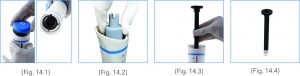
1.  Pull the cap outwards to expose the calibration nut. (Fig. 14.1)

2.  Unscrew the calibration nut with the help of calibration tool to disassemble the piston and
shaft from the main housing. (Fig. 14.2)

3.  After unscrewing, pull out the shaft. (Fig. 14.3)

4. Rinse the piston and shaft with deionized water. (Fig. 14.4)
Scitus 14

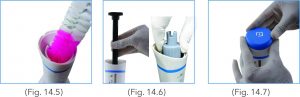
5.  Clean the cylinder with a bottle-brush. If necessary, carefully remove deposits at the edge of the glass cylinder. (Fig. 14.5)

6.  Flush all the parts of the instrument with deionized water.

7.  Insert the piston completely into the cylinder and then reassemble the instrument using the calibration tool by screwing back the piston. (Fig. 14.6)

8.  Snap the cap back to complete the assembly. (Fig. 14.7)
Scitus 14b

Procedure to disassemble the Delivery Pipe

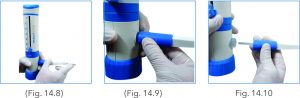
1.  Straighten the delivery nozzle. (Fig. 14.8)

2.  Unscrew the chuck nut. (Fig. 14.9)

3.  Pull the pipe out of the housing so that the complete delivery pipe is disassembled from the instrument. Do not remove the delivery pipe out of the delivery pipe cover. Delivery pipe housing will look as shown in Fig. 14.10
Scitus 14c

4.  Clean the pipe with deionized water.

Procedure to reassemble the Delivery Pipe

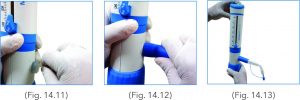
1.  First push the delivery pipe into the housing so that it is completely and securely fitted. (Fig. 14.11)

2.  Screw the chuck nut to complete the assembly (Fig. 14.12)

3.  Adjust the delivery nozzle. (Fig. 14.13)
Scitus 14d

15. Autoclaving

MICROLIT SCITUS is fully autoclavable at 121°C (or 250°F) and 1 bar absolute (15 psi) with a holding time of at least 15 minutes.
NOTE – Only the piston needs to be removed for autoclaving the instrument. Piston is also autoclavable.

Disassembling for autoclaving

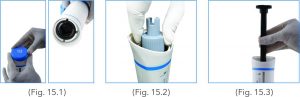
1.  Pull the cap outwards to expose the calibration nut. (Fig. 15.1)

2.  Unscrew the calibration nut with the help of calibration tool to disassemble the piston and shaft from the main housing. (Fig. 15.2)

3.  After unscrewing, pull out the shaft. (Fig. 15.3)
Scitus 15

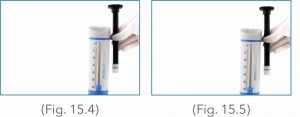
4.  This is the piston-shaft sub-assembly. (Fig. 15.4)

5.  Autoclave the two sub-assemblies at 121°C and 15 psi pressure for 10-15 minutes. (Fig. 15.5)
6.  The volume adjustment knob should always be kept in the ‘unlocked’ position
while autoclaving (Refer fig 10.2).

Cooling
After autoclaving, cool the dispenser at room temperature for at least 2 hours before use.

Re-assembling after autoclaving

 1.  Insert the piston completely into the cylinder and then reassemble the instrument. Use the calibration tool to screwing the piston. (Fig. 15.6)

2.  Snap the cap back to complete the assembly. (Fig. 15.7)

Dispenser is now ready for use. Recalibration is required after autoclaving.

16. Troubleshooting

Problem Possible Cause Solution
Piston difficult to move Formation of crystals or
deposition of dirt
Stop dispensing immediately. Loosen piston in circular motion, but do not disassemble.
Follow the cleaning instructions.
(Refer to section13)
Air bubbles appear in the instrument Reagent with high vapour
pressure has been drawn
in too quickly.
The instrument has not been primed.
Filling tube is loose or damaged.
Liquid reservoir is empty.
The filling action is too fast.
The piston is leaking.
The discharge valve is leaking
Draw the reagent slowly.
Prime the instrument
(Refer to section 9)
Push the filling tube on firmly.
If necessary, cut off approx.
1 cm of the tube at the upper
end and then re-connect it
or replace it.
Refill reservoir and prime the unit.
Fill and dispense slowly.
Clean the piston. Refer to
section 13. If problem persists, replace it.
Clean by flushing thoroughly
with distilled water.
(Refer to section 13)
Dispensing not possible Dispensing nozzle is blocked.
Discharge valve is stuck.
Disassemble the dispensing
nozzle and flush thoroughly
with distilled water.
Clean the unit by immersing
valve assembly in distilled water.
(Refer to section 13)
Wrong dispensing volume The instrument is not calibrated. Follow user calibration steps.
(Refer to section 12)
Barrel does not fill with liquid Inlet tube is not fitted firmly. Connect inlet tube correctly.
(Refer to section 8)
Filling not possible Adjust volume to minimum setting. Set to the required volume.
(Refer to section 10)

17. Guidelines for Return

Follow these guidelines, before sending the instrument for repair:

  • Please clean the instrument carefully.
  • On no account should the sent instrument contain any reagent.
  • The sent instrument can only be checked and repaired if it has been carefully cleaned and decontaminated, beforehand.
  • Forcefully opening the instrument invalidates any warranty claim.
  • While packing the instrument for return, please enclose a detailed description of the trouble that has occurred and the reagents that were used with the instrument.
What is autoclaving and how is it relevant to liquid handling instruments?

What is Autoclaving or Autoclave?

Autoclaving is the most effective method of sterilization for lab equipment, particularly liquid handling products, to eliminate harmful bacteria, viruses, fungi, and spores. What is autoclaving? It is a machine that uses high pressure to sterilize equipment by increasing the boiling point of water (or steam). The autoclave sterilization process typically involves an autoclave temperature of 250°F (121°C) for 15-20 minutes to effectively sterilize items. Autoclave sterilization, also known as steam sterilization, is widely used across various industries, including medicine, dentistry, microbiology, and veterinary science.

The Steam Digester, now commonly known as a pressure cooker, was invented by French physician Denis Papin around 1681 for food preparation. The autoclaving process was re-invented for medical and scientific use by Charles Chamberland in 1879. 

Modern autoclave sterilization technology was introduced with the first pressure steam sterilizer in 1933, which controlled sterilizing performance by measuring the temperature in the chamber. Over time, advancements like pre-vacuum cycles in 1958 and steam-flush pressure-pulse in 1987 further enhanced autoclave sterilization technology.

How Does an Autoclave Work?

When learning how to use an autoclave, the process begins when the autoclave door is locked with a sealed chamber, a vacuum pump removes all air present in the chamber, and replaces it with steam. Now, pressure is applied to the steam to achieve the desired lab equipment sterilization for the desired time duration. Once the cycle is complete, the steam is exhausted and the lab equipment is removed from the chamber carefully.

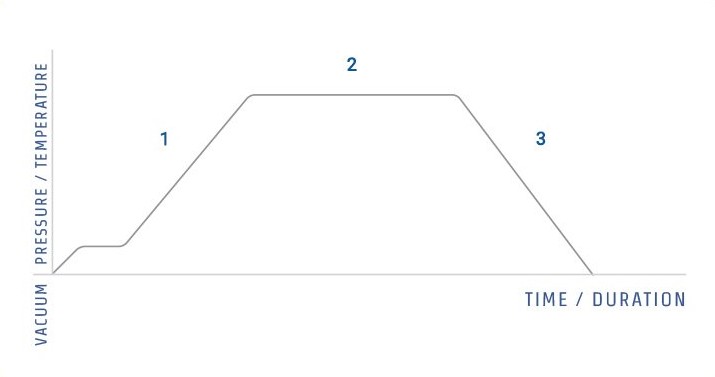
For more detailed explanation of the various phases of a sterilization cycle, please refer to the list and image shown below:

steam sterlization
  1. Purge Phase: The air must be removed from the chamber during the first phase of the sterilization cycle known as Purge Phase. The vacuum system given in the autoclave machine, is designed to replace the air with steam in the sealed chamber.
  2. Exposure (Sterilization) Phase: After the air is removed, the sterilizer drain closes and steam is continuously admitted in the chamber, which results in the increment of pressure and temperature inside the chamber at desired level. Now the cycle enters the exposure phase and the lab equipment is held at the sterilization temperature for a recommended period of time.
  3. Exhaust Phase: In the last, pressure is released from the chamber through an exhaust valve and the interior is restored to ambient pressure.

Advantages/ Disadvantages of an Autoclave

Advantages:

  1. Economical or cheap
  2. Short procedure time
  3. Provides good penetration on all surfaces
  4. No additional chemicals or disposables required

Disadvantages:

  1. Moisture retention
  2. Carbon steel can get damaged due to moisture exposure
  3. Only stainless steel instruments and plastics which can bear the heat be sterilized

How is the autoclave process relevant to liquid handling instruments?

It is essential to keep all lab equipment free from microorganisms, bacteria, fungi, and other hazardous contaminants to ensure the safety of lab technicians and prevent cross-contamination between experiments. In some cases, spot sterilization or external cleaning is not enough to ensure sterility of the instruments. Steam Sterilization or autoclaving is a simple and quick way to decontaminate. Sterilization is achieved by exposing liquid handling products to saturated steam at high temperature (approx. 121°C) for a desired period of time. 

The process of autoclaving is not appropriate for many materials due to the high temperature involved. Before autoclaving, ensure that the liquid handling device to be placed in the autoclave is compatible with the recommended [autoclave temperature and pressure] to ensure safe and effective steam sterilization.

Microlit products: Conveniently autoclavable

Microlit has designed liquid handling products that can be easily autoclaved to ensure technician safety and prevent cross-contamination in experiments. Microlit micropipettes are fully autoclavable at 121°C, 15 psi for a duration of 15-20 mins, which means that our pipettes can be placed in an autoclave for laboratory use without disassembling any parts or components. This enables convenient autoclaving in the lab.

Microlit bottle top dispensers can also be autoclaved for sterilization at 121°C, 15 psi for a duration of 15-20 mins. However, the piston needs to be disassembled from the assembly before autoclaving. The housing and the piston can then be sterilized separately. For complete autoclaving instructions, please refer to the instruction manual of Scitus bottle top dispenser.

To learn more about Microlit products and their autoclavability, and to explore how they relate to Autoclave sterilization in the US, please visit the Microlit products page.

Relevant FAQ’s –

What is an autoclave?

An autoclave is a machine used to sterilize equipment and materials by using high-pressure steam. Think of it like a super-powerful pressure cooker; it kills bacteria, viruses, fungi, and spores by exposing them to steam at very high temperatures (usually around 121°C or 250°F) for a set amount of time.

What is the process of autoclaving?

Autoclaving is steam sterilization that destroys all forms of microorganisms like bacteria, fungi, and spores from equipment and materials. It’s one of the safest methods for ensuring lab and medical equipment are completely clean and ready to be reused.

Choosing the Right Bottle Top Dispenser

What is a Bottle Top Dispenser?

A Bottle Top Dispenser is a widely used scientific apparatus that helps in dispensing chemical reagents (acids, bases, alkalis, etc.). It is popularly used in academic research, food & beverage industry, biotechnology labs, wineries, distilleries and many more industries.

Although the process of dispensing can be carried out manually, it possesses risks like spilling of chemicals, inaccurate measurement of the reagents and even fatal lab accidents. To prevent such hazards and enhance lab safety, Bottle Top Dispensers are one of the best dispensing alternatives available to scientists.

The Microlit Bottle Top Dispensers, through intensive research, have solved the biggest problem that users face: Re-filling the bottle and rinsing the instrument without the need to dismount it from the bottle.

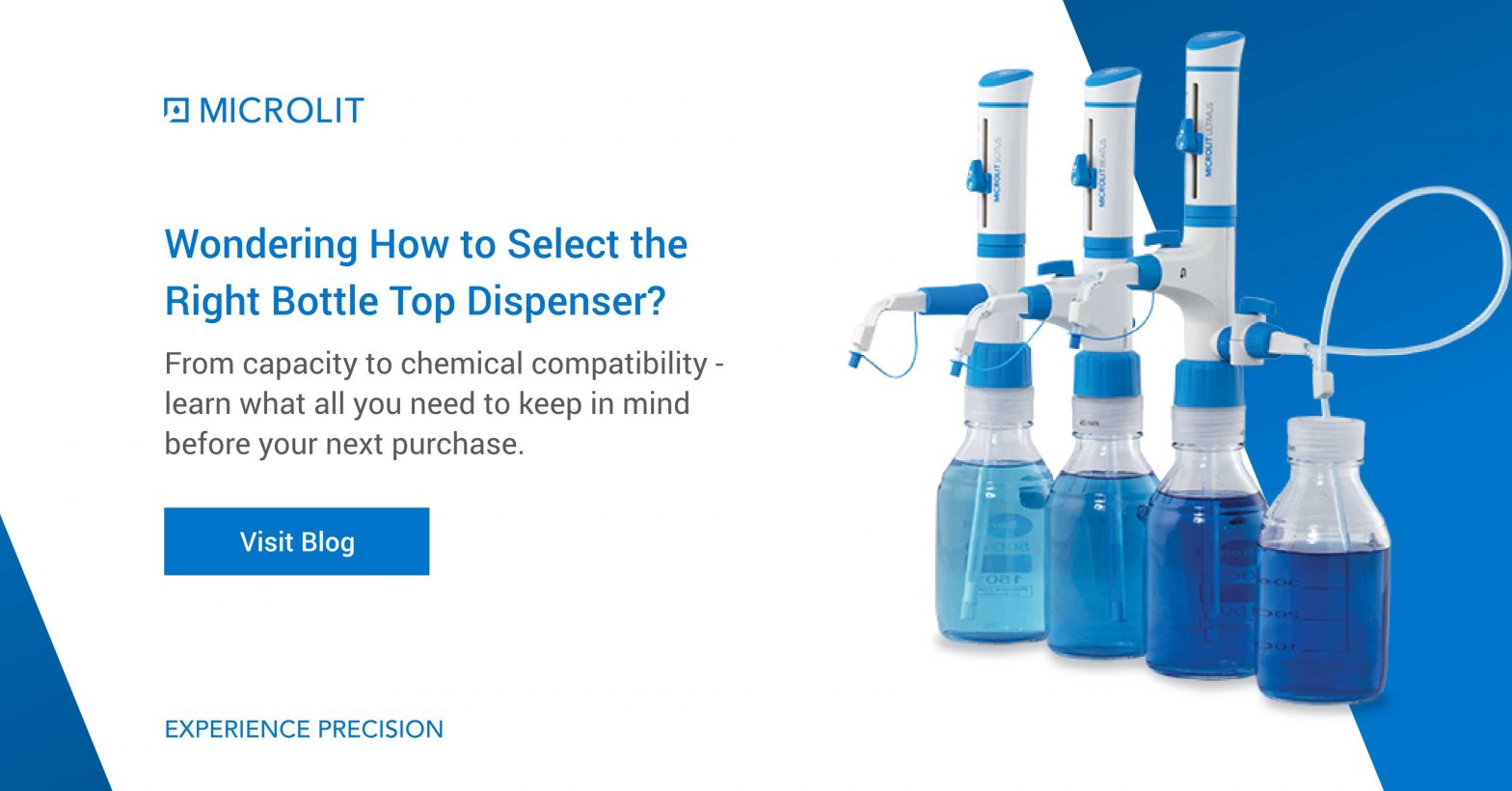
How to Select the Right Bottle Top Dispenser

There is a variety of Bottle Top Dispensers and each of them can be used for specific purposes. While choosing the right dispenser one should keep in mind the following points:

1. The Capacity of the Dispenser

Bottle Top Dispensers come in both fixed and variable volume ranges models. The most popular amongst them is the variable volume model which allows the user to select the volume to dispense, based on the volume range and volume increments supported. The volume can either be adjusted manually with the help of a knob or a dial or electronically through a control panel.

The Microlit Bottle Top Dispensers – Ultimus, Beatus, Scitus & LentusTM – are also available in variable volumes.

S.No. Microlit Ultimus Microlit Beatus Microlit Scitus Microlit LentusTM
1. 0.25 – 2.5 ml 0.25 – 2.5 ml 0.25 – 2.5 ml 0.25 – 2.5 ml
2. 0.5 – 5 ml 0.5 – 5 ml 0.5 – 5 ml 0.5 – 5 ml
3. 1 – 10 ml 1 – 10 ml 1 – 10 ml 1 – 10 ml
4. 2.5 – 30 ml 2.5 – 30 ml 2.5 – 30 ml 2.5 – 30 ml
5. 5 – 60 ml 5 – 60 ml 5 – 60 ml 5 – 60 ml
6. 10 – 100 ml 10 – 100 ml 10 – 100 ml

2. Chemical Compatibility

While choosing a Bottle Top Dispenser, the user must check for the chemical compatibility of the dispenser. A chemically compatible dispenser delivers accurate results and also enables easy maintenance. Generally, the compatibility of a chemical with a dispenser can be grouped into four main categories. These include acids, bases, solvents, and highly corrosive liquids.

For instance, strong chemicals like Hydrofluoric Acid and other High Purity Media cannot be dispensed using a normal dispenser, owing to their corrosive properties. To address this problem, we launched Microlit LentusTM that has been designed with carefully selected & tested materials to safely & accurately dispense highly aggressive chemicals like Hydrofluoric acid directly from the reservoir bottle. Check out the compatibility charts for Microlit Scitus and Microlit Beatus.

3. The Viscosity of the Reagent

The viscosity of the reagent is another important point that a user must consider before choosing a Bottle Top Dispenser. Highly viscous reagents with a kinematic viscosity between 75 and 500 mm2/second will require careful selection while reagents below 75 mm2/second can be used with efficiency dispensers.

The Microlit Bottle Top Dispensers can be readily used with liquids with viscosities up to 500 cp which covers most oils.

Benefits of a Bottle Top Dispenser

1. Accuracy & Precision

Bottle Top Dispensers enhance the accuracy and precision of your daily lab work. They are known to offer 0.5% – 0.6% accuracy (approx).

2. Time Saved

One of the biggest advantages of a Bottle Top Dispenser is that it enhances productivity by increasing the pace of work. Traditionally, it would take hours to prepare multiple samples of the same quantity by pouring it manually from the source container to the receiver. However, Bottle Top Dispensers enable the user to prepare multiple samples in a short time.

3. Ease of Use

Bottle Top Dispensers are known for their ease of use and safety. They provide a closed, ideal environment for reagents, preventing accidental spilling and reducing the risk of exposing the users to hazardous chemicals. The adapters provided with most Bottle Top Dispensers allow the dispenser to fit most lab reagent bottles comfortably.

4. No Wastage of Chemicals

Designed ergonomically, Bottle Top Dispensers prevent wastage and accidental spilling of reagents. They are equipped with a recirculation valve which prevents the loss of reagents during purging by redirecting them into the mounted bottle and facilitating bubble-free dispensing. Other than this, if the recirculation valve is closed and the piston is pressed down accidentally, the reagent will go back into the bottle rather than spilling out.

Innovative Design Features of Microlit Bottle Top Dispensers

While selecting the perfect Bottle Top Dispenser, a user should take into account certain innovative design features. Some of the features that are present in the Microlit Bottle Top Dispensers are highlighted below:

Feature exclusive to Microlit Ultimus

  • Dual InletTM technology is an award-winning technology patented in India, the EU and the US. Microlit Ultimus with Dual InletTM technology is a state-of-the-art dispenser across the globe. It offers 4 liquid handling modes – rinsing, dilution, refilling, purging – without dismounting the dispens

Feature exclusive to Microlit LentusTM

  • The Microlit LentusTM is made using chemically-inert materials and features components like PTFE Piston & an ETP O-Ring, FEP inlet & outlet tubes, FEP Barrel, and a high purity ceramic valve system for safe dispensing of Hydrofluoric Acid & High Purity Media.

Feature exclusive to Microlit Beatus & Microlit LentusTM

  • Recirculation Valve prevents the loss of reagents during purging by re-directing them into the mounted bottle and facilitates bubble-free dispensing.

Features common across all Microlit Bottle Top Dispensers – Ultimus, Beatus, Scitus & LentusTM

  • Springless Valve™ facilitates smooth & jam-free functioning.
  • EasyKnob™ is a specially designed volume adjustment knob that allows 180° rotation for easy & effortless volume setting.
  • FlexiNozzle™ is an adjustable delivery nozzle. It offers a high degree of flexibility, facilitating easy dispensing in demanding laboratory conditions.

Obtaining correct results in the designated timelines is the objective of any study. With the help of Bottle Top Dispensers, the user gets a step closer to getting accurate and precise results, with efficient time utilisation. It is strongly recommended to give considerable time & attention to the variant of the Bottle Top Dispenser that will best suit the study being carried out.

Microlit offers you a choice of four Bottle Top Dispensers – Ultimus, Beatus, Scitus & LentusTMwhich are all easy to use and help you achieve the desired results at a rapid pace.

Visit Bottle Top Dispensers to know more.

Setting up a Bottle Top Dispenser

What is a Bottle Top Dispenser?

 A Bottle Top Dispenser (BTD) is a scientific apparatus that helps dispense chemical reagents (acids, bases, alkalis, etc.).

When a lab assistant carries out the procedure manually, they do so, not without multiple risks that come with it. Chemical spillage, inaccurate measurements, and even fatal lab accidents have always acted as speed bumps in laboratories.

To prevent such hazards and enhance lab safety, Bottle Top Dispensers are among the best dispensing alternatives available to scientists. With accurate fittings and thoughtful design, every bottle top dispenser prepared at Microlit is safe and easy to use.

Setting up a Bottle Top Dispenser

1. Checking the calibration report

  • Start by thoroughly going through the calibration report generated by the Bottle Top Dispenser.
  • The report must show the factory calibration process on the monitor with the listed serial number.
  • By examining the report, we can now estimate the instrument’s behaviour.

2. Choosing the right adapter

  • An adapter is provided that helps in mounting the dispenser. It’s attached to the reagent bottle.
  • Choosing the right size and material of the adapter plays a pivotal role in its administration.
  • Adapters made with polypropylene work for most applications.
  • ETFE/PTFE adapters are used for aggressive acids and solvents.
  • The available sizes are – 28 mm, 32 mm, 36 mm, 40 mm, and 45 mm.

3. Attaching the inlet tube or extension

  • The Telescoping tubes are adjusted to the varied bottle sizes.

4. Mounting the dispenser on the reagent bottle

  • After connecting the inlet tube to the dispenser, mount it on the reagent bottle and screw the dispenser tightly onto the bottle.

5. Purging the dispenser

  • It is crucial to remove the air (purge) from the dispenser.
  • Turn on the recirculation knob.
  • Run the dispenser a few times till the barrel is bubble-free.
  • Turn off the recirculation knob.
  • Run the dispenser to ensure bubble-free dispensing.

6. Setting the right volume

  • To start dispensing, the user should set the right volume that he/she needs to administer.
  • EasyKnobTM is a specially designed volume adjustment knob that allows 180° rotation for easy and effortless volume setting.

7. Dispensing

  • FlexiNozzleTM is an adjustable delivery nozzle. It offers a high degree of flexibility, facilitating easy dispensing in demanding laboratory conditions.

Types of Bottle Top Dispensers

Microlit Ultimus with Dual InletTM Technology

This Bottle Top Dispenser comes with a patented Dual Inlet™functionality enabling 4 modes of operation – Rinsing, Dilution, Re-filling, and Purging – without dismounting the dispenser from the bottle it is mounted on. Its features are as follows:

  • Accurate and jam-free dispensing
  • Recirculation Valve technology to prime the instrument without loss of reagent
  • High chemical compatibility with SpringlessValveTM and PTFE piston
  • Optimized user experience with EasyKnob™ and FlexiNozzle™
  • Calibration certificate provided – Conforms to ISO 8655 standards
  • Certifications – ISO 9001, ISO 13485, ISO 17025, CE

You can view the setting up of Microlit Ultimus Bottle Top Dispenser here.

Microlit Beatus with Recirculation Valve and Springless ValveTM Technology

This Bottle Top Dispenser has a dual-mode recirculation valve that primes the instrument without the loss of reagent. Its features are as follows:

  • Accurate and jam-free dispensing
  • High chemical compatibility with SpringlessValveTM and PTFE piston
  • Optimized user experience with EasyKnob™ and FlexiNozzle™
  • Calibration certificate provided – Conforms to ISO 8655 standards
  • Certifications – ISO 9001, ISO 13485, ISO 17025, CE

You can view the setting up of Microlit Beatus Bottle Top Dispenser here.

Microlit Scitus with Springless ValveTM Technology

This bottle top dispenser is simple and cost-effective and offers smooth, jam-free functioning. Its features are as follows:

  • High chemical compatibility with SpringlessValveTM and PTFE piston
  • Optimized user experience with EasyKnob™ and FlexiNozzle™
  • Calibration certificate provided – Conforms to ISO 8655 standards
  • Certifications – ISO 9001, ISO 13485, ISO 17025, CE

Microlit LentusTM with Recirculation Valve and Springless ValveTM Technology

MICROLIT LENTUS™ Bottle Top Dispenser (BTD) is a high precision liquid handling instrument. This bottle top dispenser is used to dispense Hydrofluoric Acid, high-purity media, acids and bases, and Trace Analysis. It has been engineered with carefully selected and tested materials for use with Hydrofluoric Acid (HF).

Key Features of a Microlit Bottle Top Dispenser

Autoclaving – Microlit Bottle Top Dispensers are fully autoclavable at 121 °C and 15 psi for 10 – 15 minutes.

Calibration – Microlit provides the user with a calibration tool inside the package for quick in-lab calibration.

Cleaning – For effective results, cleaning the dispenser is vital. Pure chemicals used for analytical purposes are used for this cleaning procedure.

Precautions and Safety Measures

Before disassembling the device, it is vital to get rid of the residues of the liquid. Here, rinsing the dispenser with demineralized water a couple of times will do the job. Afterwards, fresh water and a mild detergent, and a soft brush can be used to clean the piston and cylinder. Pipe cleaners can be used to clean the tubes.

Precision and Accuracy – Our ultimate purpose

Following the steps mentioned above will enable the users to carry out the dispensing process without any hassle and ensure that the study results are accurate.

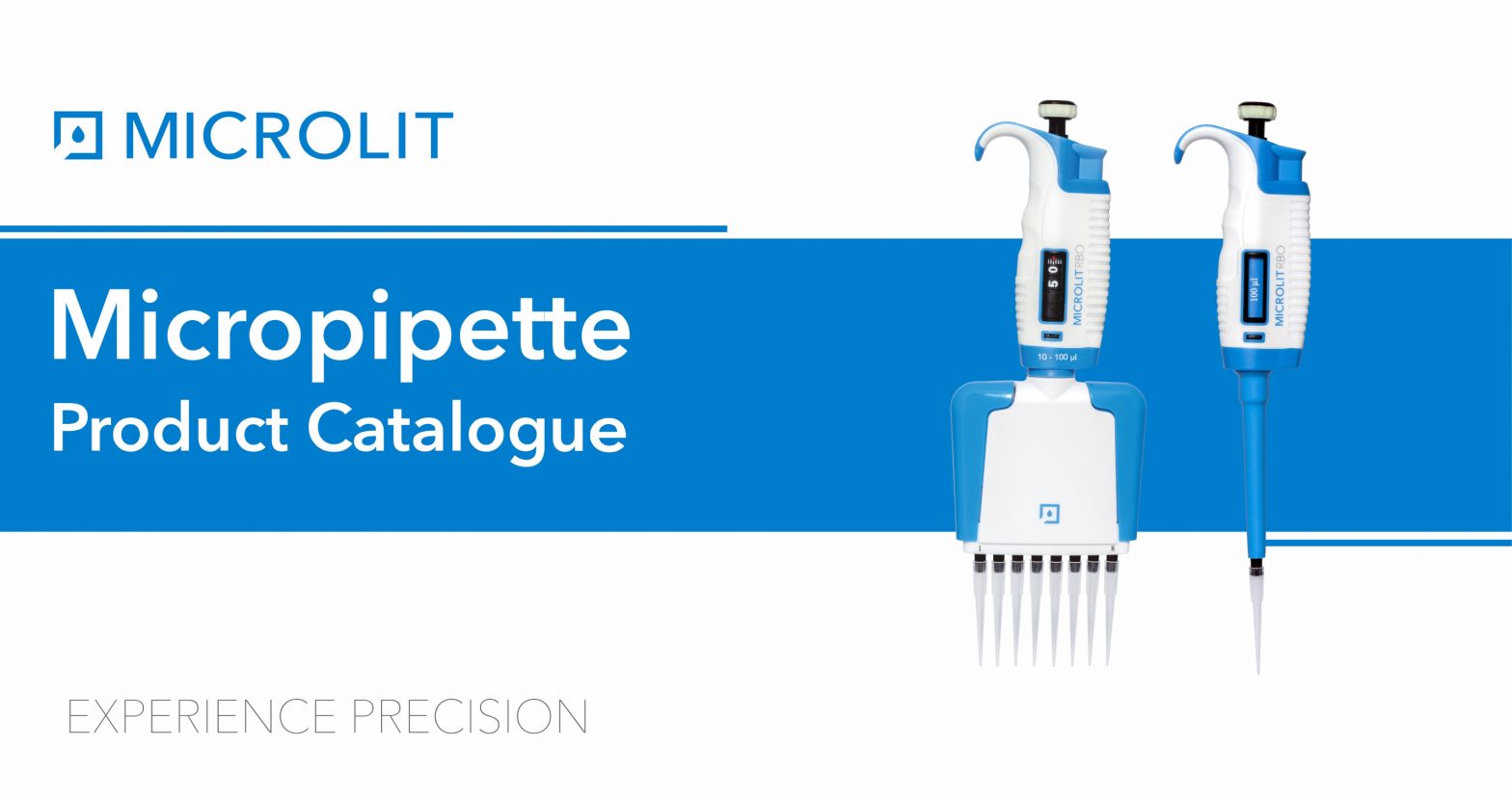
Micropipette Product Catalogue

Single Channel Variable Volume Micropipette

  • The instrument is fully autoclavable at 121 °C and 15 psi for a duration of 10 – 15 minutes.
  • Prominently used for Molecular Biology, Microbiology, Immunology,
    Cell Culture, Analytical Chemistry, Biochemistry, Genetics.


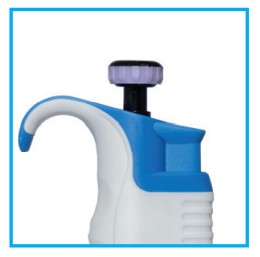
Micropipette1 Adjust Volume Easily with Plunger
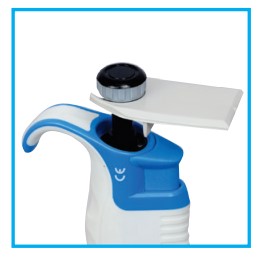
The Plunger has been carefully designed with a high-quality spring mechanism to ensure snag-free and soft movement. Simply turn it to adjust the instrument’s volume comfortably.
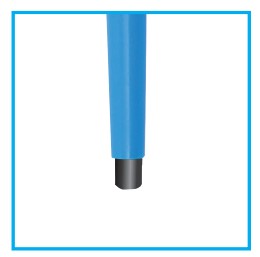
Micropipette2 Use Various Tips with a Universal Tipcone
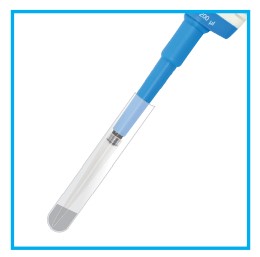
A Universal Tipcone enhances the compatibility of the instrument and enables it to easily work with most of the internationally accepted standard tips.
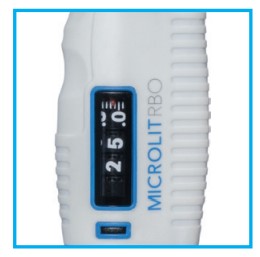
Micropipette3 Set the Volume with Perfection
A soft click sound at every increment ensures perfect volume setting and
prevents any accidental changes. It also facilitates single handed operation.
Micropipette4 Store Safely with a Holder
The instrument includes a Holder that enables easy, efficient and safe storage.
Micropipette5 Eject Tips Easily with a Tip Ejector
An in-built, streamlined Tip Ejector enables easy tip ejection and comfortable access to bottles and tubes with narrow necks.
Micropipette6 Work with a Good Grip
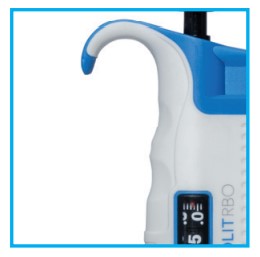
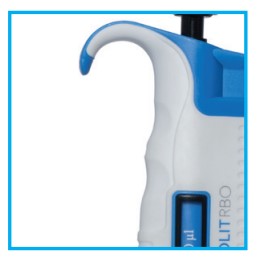
A specially designed large Grippy provides good grip and great ease of use while operating.


The Single Channel Variable Volume Micropipette is available in 9 unique volume ranges from 0.2 μl to 10 ml.

Model Volume Range Inc. (ul) A CV
±% ±ul ±% ±ul
RBO-2 0.2-2.0 ul 0.01 2 0.04 1.2 0.024
RBO-10 0.5-10 ul 0.02 1 0.1 0.5 0.05
RBO-20 2-20 ul 0.02 0.8 0.16 0.4 0.08
RBO-50 5-50 ul 0.1 0.8 0.4 0.4 0.2
RBO-100 10-100 ul 0.2 0.6 0.6 0.2 0.2
RBO-200 20-200 ul 0.2 0.6 1.2 0.2 1.4
RBO-1000 100-1000 ul 1.0 0.6 6 0.2 2
RBO-5000 0.5-5 ml 10.0 0.6 30 0.2 10
RBO-10000 1-10 ml 20.0 0.6 60 0.2 20


The error limits (Accuracy and Coefficient of Variation) mentioned above are in accordance with the nominal capacity (or maximum volume) indicated on the instrument. These are obtained by using the instrument with distilled water at equilibrium, the ambient temperature of 20 °C while operating it smoothly and steadily. The error limits are in accordance with DIN EN ISO 8655-2.

Single Channel Fixed Volume Micropipette

  • The instrument is fully autoclavable at 121 °C and 15 psi for a duration of 10 – 15 minutes.
  • Recommended for Clinical Diagnostics, Control Analysis.


Use Various Tips with a Universal Tipcone
A Universal Tipcone enhances the compatibility of the instrument and enables it to easily work with most of the internationally accepted standard tips.
Micropipette7 Work with a Good Grip
A specially designed large Grippy provides good grip and great ease of use while operating.
Store Safely with a Holder
The instrument includes a Holder that enables easy, efficient and safe storage.
Eject Tips Easily with a Tip Ejector
An in-built, streamlined Tip Ejector enables easy tip ejection and comfortable access to bottles and tubes with narrow necks.


The Single Channel Fixed Volume is available in 15 unique volumes from 1.0 μl to 10 ml.


Model Volume (ul) A CV
±% ±ul ±% ±ul
RBO-F-1 1.0 5 0.05 5 0.05
RBO-F-2 2.0 4 0.08 2 0.04
RBO-F-5 5.0 2 0.1 1 0.05
RBO-F-10 10.0 1 0.1 0.5 0.05
RBO-F-20 20.0 0.8 0.16 0.4 0.08
RBO-F-25 25.0 0.8 0.2 0.4 0.1
RBO-F-50 50.0 0.8 0.4 0.4 0.2
RBO-F-100 100.0 0.6 0.6 0.2 0.2
RBO-F-200 200.0 0.6 1.2 0.2 0.4
RBO-F-250 250.0 0.6 1.5 0.2 0.5
RBO-F-500 500.0 0.6 3 0.2 1
RBO-F-1000 1000.0 0.6 6 0.2 2
RBO-F-2000 2000.0 0.6 12 0.2 4
RBO-F-5000 5000.0 0.6 30 0.2 10
RBO-F-10000 10000.0 0.4 40 0.2 20


The error limits (Accuracy and Coefficient of Variation) mentioned above are in accordance with the nominal capacity (or maximum volume) indicated on the instrument. These are obtained by using the instrument with distilled water at equilibrium, the ambient temperature of 20 °C while operating it smoothly and steadily. The error limits are in accordance with DIN EN ISO 8655-2.

The precision and accuracy of our liquid handling instruments is twice better than industry standards.*
*ISO 8655 is the globally accepted industry standard for piston-operated volumetric apparatus. The evaluation was performed by trained and certified personnel at an ISO17025 accredited lab.

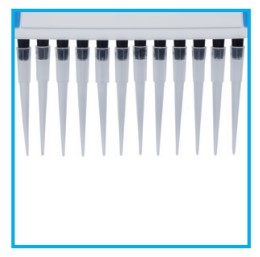
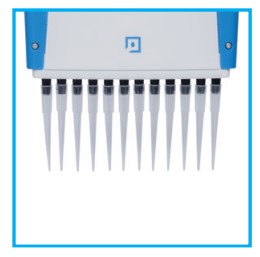
Multichannel (8-channel and 12-channel) Micropipette

  • The instrument is fully autoclavable at 121 °C and 15 psi for a duration of 10 – 15 minutes.
  • Recommended for ELISA (Diagnostic Test), Molecular Screening, Kinetic Studies, DNA Amplification.
Adjust Volume Easily with Plunger
The Plunger has been carefully designed with a high-quality spring mechanism to ensure snag-free and soft movement. Simply turn it to adjust the instrument’s volume comfortably.
Micropipette8 Use Various Tips with a Universal Tipcone
A Universal Tipcone enhances the compatibility of the instrument and enables it to easily work with most of the internationally accepted standard tips.
Set the Volume with Perfection
A soft click sound at every increment ensures perfect volume setting and
prevents any accidental changes. It also facilitates single-handed operation.
Work with a Good Grip
A specially designed large Grippy provides a good grip and great ease of use while operating.
Store Safely with a Holder
The instrument includes a Holder that enables easy, efficient and safe storage.
Micropipette9 Eject Tips with a Sequential Tip Ejector
A specially designed Sequential Tip Ejector and Tip Ejection Knob facilitate easy and effortless tip ejection, single-handedly.
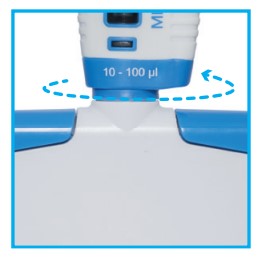
Micropipette10 Operate Flexibly
The lower housing of both instruments can be rotated 360°, providing enhanced operational flexibility.

Both 8-channel and 12-channel Micropipettes are offered in 6 models, covering volume ranges from 0.5-10 μl to 40-300 μl.

For 8-Channel Micropipette:

Model Volume Range Inc. (ul) A CV
±% ±ul ±% ±ul
RBO-MCA-8/10 0.5-10 ul 0.02 1.6 0.16 1 0.1
RBO-MCA-8/20 2-20 ul 0.02 0.8 0.16 0.4 0.08
RBO-MCA-8/50 5-50 ul 0.1 0.8 0.4 0.4 0.02
RBO-MCA-8/100 10-100 ul 0.2 0.8 0.8 0.3 0.3
RBO-MCA-8/200 20-200 ul 0.2 0.8 1.6 0.3 0.6
RBO-MCA-8/300 40-300 ul 0.2 0.6 2.4 0.3 0.9

For 12-Channel Micropipette:

Model Volume Range Inc. (ul) A CV
±% ±ul ±% ±ul
RBO-MCA-12/10 0.5-10 ul 0.02 1.6 0.16 1 0.1
RBO-MCA-12/20 2-20 ul 0.02 0.8 0.16 0.4 0.08
RBO-MCA-12/50 5-50 ul 0.1 0.8 0.4 0.4 0.02
RBO-MCA-12/100 10-100 ul 0.2 0.8 0.8 0.3 0.3
RBO-MCA-12/200 20-200 ul 0.2 0.8 1.6 0.3 0.6
RBO-MCA-12/300 40-300 ul 0.2 0.6 2.4 0.3 0.9


The error limits (Accuracy and Coefficient of Variation) mentioned above are in accordance with the nominal capacity (or maximum volume) indicated on the instrument. These are obtained by using the instrument with distilled water at equilibrium, the ambient temperature of 20 °C while operating it smoothly and steadily. The error limits are in accordance with DIN EN ISO 8655-2.


Experience the Power of Precision During Routine Laboratory Operations

MICROLIT RBO is a range of High Precision Micropipettes that offer a sophisticated blend of features and functionality. Built by our in-house team of product design engineers, it is categorized into Single Channel (Fixed and Variable Volume) and Multichannel (8-channel and 12-channel) Micropipettes.

These instruments are designed with ergonomics and intuitive handling in mind, and
facilitate remarkable user experiences in practical laboratory environments.

Assured Quality with ISO 8655 Conformed Calibration

Micropipette11 MICROLIT RBO is calibrated in an ISO 17025 accredited laboratory according to ISO 8655 standards.
A calibration certificate is included inside the product package.
A calibration tool is also included for quick in-lab recalibration.

Colour Coding for Easy Identification

Color-coding for different capacities facilitates easy identification during daily laboratory routines.

Our Product Excellence

 Industrial Innovation Awards 2016 Our products reflect the design philosophy of our organization, combining the best performance parameters with the best user experience.
We were honoured by CII Industrial Innovation Awards and adjudged a place in the top 25 Most Innovative Companies of 2016.
We are also accredited by a number of global organizations and have earned worldwide credibility.

You can also download the Microlit Micropipette Product catalogue by clicking on the link.