• Multiple Offers
    Multiple Offers
  • Support
    Real-Time Support
  • Free Replacement
    1-Year Free Replacement Warranty
  • (732) 321-0852

Are Electronic Micropipettes Worth It?

When they were introduced, electronic micropipettes proved to be a defining improvement in pipetting technology. They swiftly revolutionized the handling and measurement of reagents in labs. Everyone who has used an electronic pipette to date can vouch for their precision and performance but research suggests that they enjoy just 10% of the market share. Given the advantages they offer, isn’t this a surprisingly low figure? Is there something more to electronic micropipettes that’s often overlooked? Let’s find out.

Who is using electronic pipettes today?

Electronic micropipettes are routinely used in academic set-ups, pharma labs and state-of-the-art research facilities. Other disciplines like molecular biology, analytical chemistry, and medical tests also find them useful.

Advantages of Electronic Micropipettes

  • User-friendly, effortless and efficient

Manual micropipettes can cause repetitive strain injury that severely affects the normal functioning of the thumb or wrist. An electronic micropipette minimizes hand movement and human involvement in liquid handling. This makes them highly ergonomic and user-friendly.

  • Precise and accurate

Electronic pipettes control piston movement through a motor. This enables them to accurately dispense the programmed volume of the reagent, eradicating the chance of human error due to approximation and parallax.

  • Simplifying complex pipetting

Electronic pipettes give you the option to tailor your protocols and define step-based custom programs. This eliminates the complexity that often comes with manual pipetting carried out at varying speeds.

  • Time-saving

Electronic pipettes take a very important task off the researcher’s hand – finding the time to focus on other more crucial tasks. This way, they are responsible for enhancing a lab’s productivity levels.

What is Repetitive Strain Injury?

Repetitive strain injury or RSI is the result of hours of unvarying motion without a break. RSI symptoms can take months or even years to emerge. Some of the common complaints include intermittent discomfort and pain, tingling, weak muscle, and pulsing. Cumulative Trauma Disorder (CTD) and Surgeon Syndrome are also common names for RSI.

Electronic pipettes eliminate the risk of RSI. You can also eliminate the same by following a few simple measures diligently:

  • Make sure you’re relaxed while pipetting.
  • Steer clear of hunched shoulders or dangling feet. Pipetting goes best with a natural and good body posture.
  • Make sure your workspace is ergonomically designed, uncluttered and organized.
  • Using electronic pipettes and/or setting timers for regular breaks can also reduce the chances of injury.
  • Optimize your pipetting process by double-checking your instruments and apparatus.

Disadvantages of Electronic Pipettes

  • High acquisition cost

Electronic pipettes are usually two to three times more expensive than manual pipettes. If a single-channel manual pipette costs around $300, an electronic pipette will cost you anywhere from $1000 to $1500.

  • High maintenance cost

Owing to their high-tech machinery and single-use batteries, electronic pipettes incur significant maintenance costs and inconvenience as compared to manual pipettes.

  • Slower operation due to motor

Electronic pipettes utilize a motor operating at a fixed speed. As compared to manual pipettes, electronic pipettes therefore cannot run at a swifter pace than the one dictated by their motor.

  • No consistency with respect to user interfaces

As of yet, there doesn’t exist a single, standardized user interface for electronic pipettes. Every brand’s electronic pipette has its own unique user interface that you have to understand (and get used to) before you can begin using it for experiments. This makes them harder to operate than manual micropipettes.

Am I choosing the right pipette?

Well, just like there is a perfect fit for every piece in a puzzle, the decision to go for a specific product should arise from your own requirements. If you wish to go for either electronic or manual pipettes, consider their pros and cons; discuss them with your lab mates if needed. If you’re thinking of buying electronic pipettes, do discuss if the pros are worth the extra cost.

Our company, Microlit, has a wide range of products that can fulfill your requirement perfectly. Unlike other lab equipment suppliers, we manufacture our own products. This enables us to provide great prices for high-quality pieces, coupled with strong technical support. To know more about our products, visit Single Channel Micropipettes.

If you seek assistance in choosing the perfect pipette for your lab, get in touch with us at info-usa@microlit.com.


Top 10 Research Institutes in South America

Although research institutes in South America may not be as popular as the ones in North America, many South American countries have good Science, Technology and Innovation (STI) Policies. This has led to strong growth in participation in higher education and R&D in scientific production. 

Countries like Brazil and Colombia have caught the world’s attention with their focus on biodiesel and innovation based on the sustainable use of biodiversity. Argentina and Brazil boast space research programmes with growing sophistication and ambition. 

Here are the top 10 institutes that are contributing to the innovation and development of South America. 

1. National Institute for Research in the Amazon, Brazil

Created in 1952 and implemented in 1954, the National Institute for Research in the Amazon (INPA) is world-renowned in Topical Biology. It has been carrying out scientific studies of the physical environment and living conditions in the Amazon region to promote human well-being and the social development of the regional economy.

INPA’s early years were characterized by surveys of fauna and flora. Their main focus now is to sustainably expand the use of natural resources in the Amazon.

2. University of Buenos Aires, Argentina

The University of Buenos Aires (UBA) is a public research university in Buenos Aires, Argentina. Established in 1821, it is one of the most prestigious universities in the region. It ranks 66 in World University Ranking and is responsible for approximately 40% of the country’s research. 

UBA has 61 research institutes that encourage and develop research activities in different scientific fields, train researchers and engage in the transfer of technology.

3. The Federal University of Rio de Janeiro, Brazil

The Federal University of Rio de Janeiro (FRJ) is a public university in the state of Rio de Janeiro, Brazil and is one of the Brazilian centres of excellence in teaching and research. 

The main highlight of this university is the Technological Park of Rio which is a technopole geared towards research in energy, oil, and gas. The main research facilities of this park include the Electric Energy Research Center, General Electric Global Technological Centre and Mineral Technology Centre. These facilities manage R&D related to electrical energy, oil engineering and metallurgy.

4. Tiputini Biodiversity Station, Ecuador

Tiputini Biodiversity Station (TBS) is a scientific field research center in the Ecuadorian Amazon. It was established in 1995 by Universidad San Francisco de Quito in collaboration with Boston University as a centre of education, research and conservation.

The station has been the site for many research projects and has led to the publication of many papers. Primatology is a large topic of study in this area because of the diversity and abundance of primate species. 

Besides being a research institute TBS also serves as a guardian of 638 hectares of lowland and primary rainforest spanning approximately 300km.

5. Center for Scientific Studies, Chile

CECs, Centro de Estudios Científicos (Center for Scientific Studies) is a private, non-profit corporation, devoted to the development, promotion and diffusion of scientific research in Chile.

Nestled between the Andes and the Pacific, CECs is one of the few institutes in the world working at the frontiers of research in multiple disciplines without endowment or affiliation to a host institution. 

The notable achievement of this institution was in 2014 when CECs discovered a subglacial lake in West Antarctica and conducted research on it. It was named Lake CECs in honour of the institution.

6. The National Council for Scientific and Technical Research (CONICET), Argentina

CONICET was formed on February 5, 1958, to respond to the need for an academic body that would promote scientific and technological research in Argentina. 

Its mission is to foster and implement scientific and technological activities in the whole territory and all areas of knowledge. After sixty years of work, CONICET is one of the most important assets of Argentina in terms of science and technology.

CONICET currently has more than 10,000 researchers and about 2,700 technicians and research support professionals with operations spread across Argentina.

7. Sinchi Amazonic Institute of Scientific Research, Colombia

The Amazonian Scientific Research Institute, SINCHI is a non-profit research institute of the Government of Colombia. It’s responsible for carrying out scientific investigations on matters relating to the Amazon Region of Colombia. 

The Colombian Amazon covers an area of ​​483,164 km2 which is 42.3% of the national continental territory. Naturally, the main objective of this institution is to research and innovate for the sustainability of the region.

8. The National University of San Marcos, Peru

The National University of San Marcos is a public research university in Lima, Peru. Throughout its history, the National University of San Marcos has significantly contributed to the scientific development of Peru. 

There are currently over 30 centres, units and institutes of research in San Marcos. Each one of these canters or institutes has specialized museums and laboratories for research and innovation.

9. Colombian Geological Survey, Colombia

The Colombian Geological Survey (CGS) is a scientific agency of the Colombian government. It operates a network of volcanic and seismic observatories throughout Colombia. 

CGS is in charge of contributing to the socio-economic development of Colombia through research in basic and applied geosciences, evaluating and monitoring threats of geological origin and studying the nuclear and radioactive elements in the region.

10. Cayetano Heredia University, Peru

Named in honor of Cayetano Heredia, one of the eminent Peruvian physicians, the Cayetano Heredia University is a private non-profit medical university located in Lima, Peru.

It’s among the top research institutions in tropical medicine in Latin America, with ongoing investigations in tuberculosis (TB), malaria, and HIV. The institute is internationally recognized for the Gorgas Course in Clinical Tropical Medicine, given jointly with UAB.

The Role of pH Value in Titration

What is pH level?

pH is a fundamental property of a solution that indicates whether it is acidic, neutral, or basic. In chemistry, and especially in titration, pH plays a crucial role in determining reaction progress and identifying the equivalence point.

The pH value measures the concentration of hydrogen ions (H⁺) in a solution. Here, ‘p’ stands for power and ‘H’ for hydrogen—together meaning the power of hydrogen. This measurement helps categorize solutions as acidic, neutral, or basic and directly influences how they behave during acid–base titration experiments.

So, why is pH important? It regulates nutrient availability, biological functions, microbial activity, and the chemical behavior of a solution. In titration specifically, pH helps detect the point of neutralization, guides indicator selection, and ensures accuracy in chemical analysis.

What is the role of pH in titration?

  • It determines how the titration curve develops.

  • It signals the equivalence point where the reaction is complete.

  • It assists in selecting the correct indicator for accurate results.

pH Scale and Titration- The Acids, The Bases, and The Neutral 

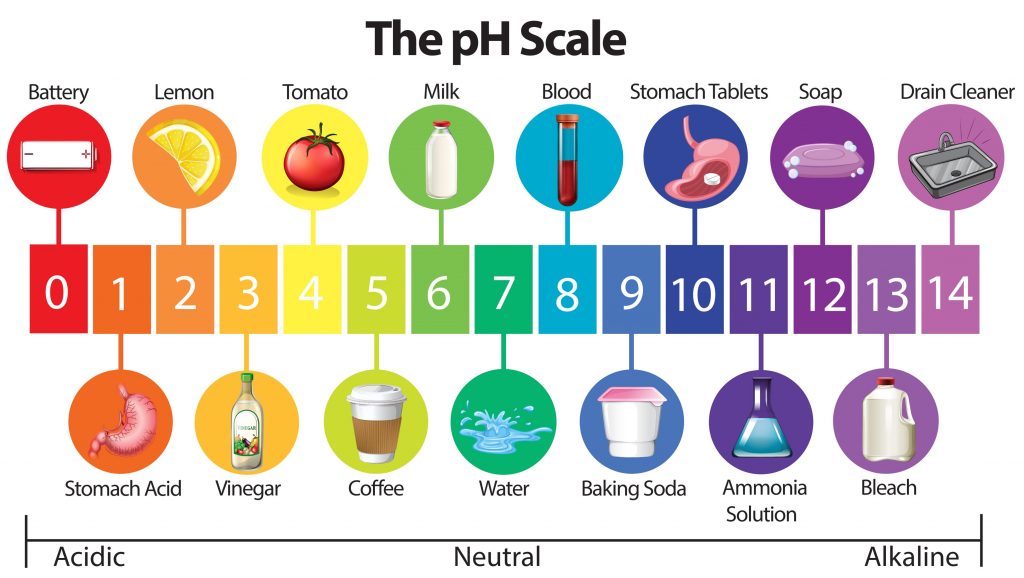
The pH scale is a 14 pointer scale. Having a pH less than 7 will classify a solution as acidic. For example, lemon juice or citric acid has a pH of 2 making it a highly acidic solution. Similarly,  having a pH over 7 will land a solution in the base category like bleach, with a pH of 12. There is however a balance or a neutral pH value, this suggests that the solution is neither acidic nor basic in its nature.

How can one identify the pH levels of a solution? 

The Litmus Test

  • There are several ways in which one can identify the pH levels of a solution, the most common and easiest being the ‘Litmus Test’. The test essentially uses a  strip of paper that is  made from lichens. This strip of paper changes its color based on the characteristics of the solution it interacts with. Light blue litmus paper turns red under acidic conditions and red litmus paper turns blue under basic or alkaline conditions. A neutral litmus test would result in a purple shade.
  • pH paper, however, comes with some restrictions. First, it is not an accurate indicator of pH and does not give us a numerical pH value. Instead, it roughly indicates the nature of the sample.

pH Meter

  • Another way is the pH meter, which is a much more articulate and accurate method of testing. A pH meter is a scientific apparatus that can not only identify if a solution is acidic or alkaline but also give us an exact measure of its pH levels.

How is a pH test relevant and important?

  • One of the common usages of these pH tests and indicators is acid-base titration. A process of quantifying the concentration of acid or base in a solution by neutralising it with the exact same proportion of base or acid.
  • In situations like these where one wants to know the exact value, digital pH indicators have proven to be the preferred choice.
  • The titration of a strong acid – strong base is a method used to determine the concentration of the acidic solution by titrating it with a basic solution of known concentration, or vice-versa. When a strong acid reacts with a strong base, they completely neutralise each other, this results in the residue of salt and water.
  • A weak acid and strong base or vice-versa make the titration curve irregular and the pH shifts at a slower rate with small additions of titrant near the equivalence point.

Different industries, different uses

pH monitoring is essential in several industries, like wastewater treatment, aquaculture, pharmaceuticals, food and beverages, paper, and the textile industries. Each industry has a specific pH level prescribed for their products to remain safe for use. 

  • Wastewater

ecologist taking samples water with test tube from city river determine level contamination pollution 1 scaled 1

While treating wastewater, several acidic substances are removed from the water. The pH levels are adjusted with the use of chemicals and are monitored at every phase of the treatment so that the treated water is safe and fit to reuse once the process is complete.

  • Aquaculture

fishes swimming sea 1 scaled 1

In the aquaculture industry, it becomes crucial for the industry to maintain the right pH levels to ensure safe and consumable seafood. Therefore, in this case too, the pH category level is monitored very closely.

  • Food and Beverage 

side view the chef makes raw marbled beef for steaks on stand 1 scaled

Just like the aquaculture industry, the food and beverage industry is also an industry that keeps a close check on the pH levels at different stages of manufacturing. Observing the pH levels of bottled water and meat products is a common and encouraged practice. 

  • Paper and Textile

Paper and Textile

Paper and textile industries produce large quantities of wastewater that can be harmful to their equipment and the environment. So, it’s their moral responsibility to keep an eye on the pH levels of this wastewater.

Keeping a close eye on the pH levels

All these industries need to very closely monitor and maintain their desired pH levels which makes it important to use an apparatus that is accurate and eliminates chances of human errors. 

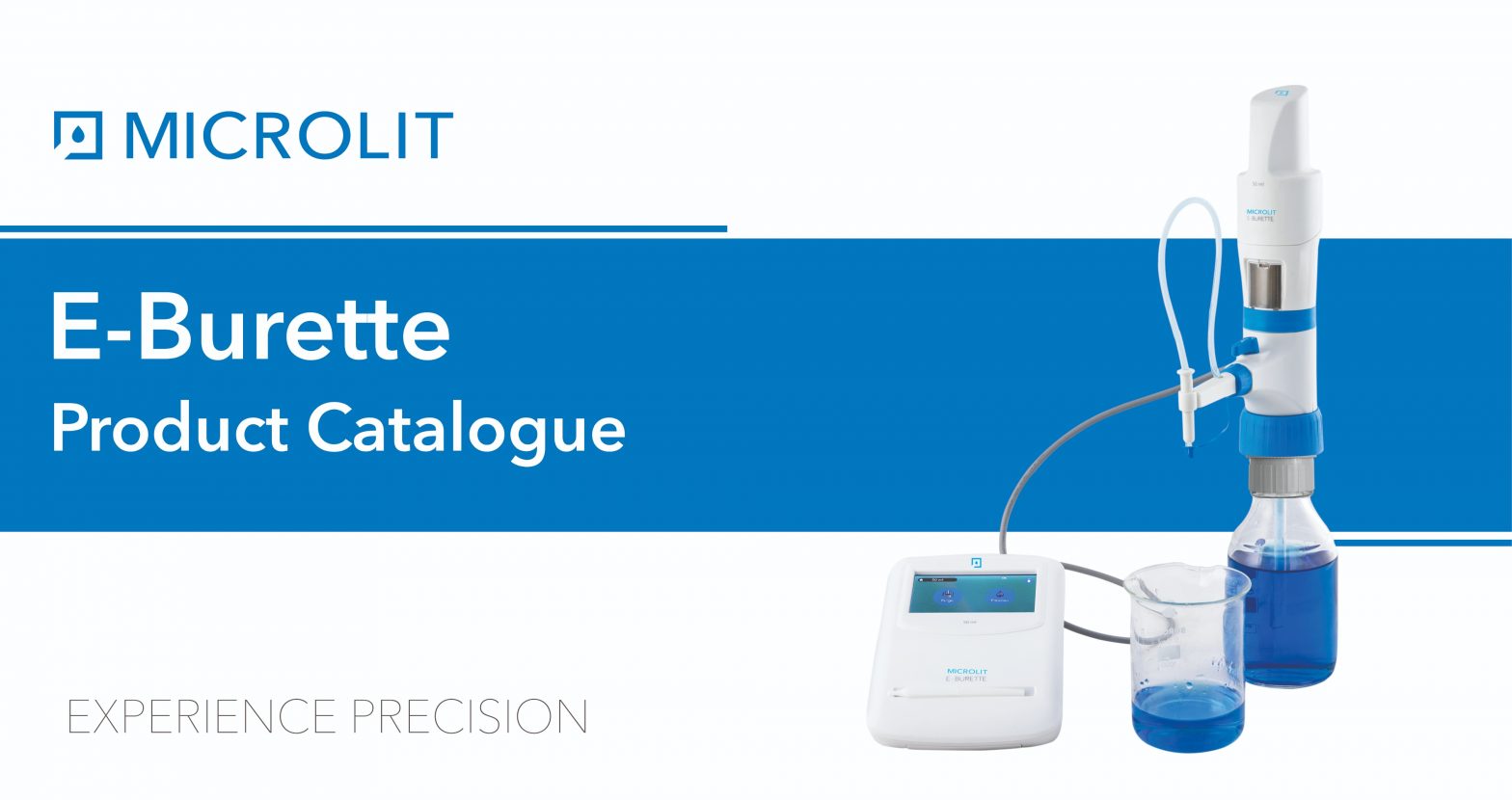
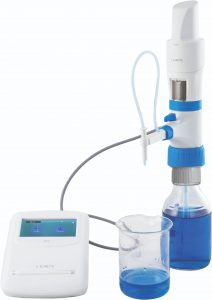
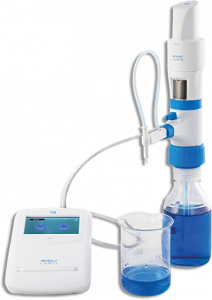
Microlit E-Burette helps  deliver precise samples and guarantees accuracy to industrial titrations. This can be credited to its state-of-the-art design and precision. It exhibits excellent chemical compatibility and helps in performing precise titrations with reliability in practical laboratory environments.

To know more about the Microlit E-Burette, you can write to us at info-usa@microlit.com.
Some Frequently Asked Questions

1. What is the role of pH in titration?

The pH in titration determines the point at which the acid and base have completely reacted, known as the equivalence point. Monitoring pH helps chemists select the right indicator and ensures accurate results. In other words, pH acts as the guiding factor in identifying the completion of titration.

Pro Tip: Using advanced digital burettes and titration systems from Microlit makes pH monitoring more precise and reliable.

2. Why is pH adjusted to 10 during titration?

In certain titrations, such as EDTA complexometric titrations, the pH is adjusted to around 10 to ensure the metal ions form stable complexes with the reagent. At this pH, the reaction becomes more selective and accurate, minimizing side reactions.

3. How do pH indicators change color during titration?

pH indicators are weak acids or bases that change color depending on the hydrogen ion concentration of the solution. During titration, as the pH shifts, the indicator transitions between colors, signaling that the equivalence point has been reached.

4. What happens to pH during titration?

During titration, the pH changes gradually and then shows a sharp shift near the equivalence point. For example, in a strong acid-strong base titration, the pH moves slowly at first, then rises rapidly as the reaction nears completion. This sharp change makes it possible to identify the endpoint.

E-Burette Product Catalogue

Achieve Remarkably Accurate and Better Results than CLASS-A Glass Burettes

1. MICROLIT E-BURETTE Offers 3 Pre-set Speeds for Dispensing

The instrument comes with 3 individually calibrated Pre-set Speeds, including dropwise dispensing.

Burette Model Mode Speed
50 ml Fast 3.8ml/sec
Medium 1.3ml/sec
Dropwise 10ul/click
25 ml Fast 2.1ml/sec
Medium 0.7ml/sec
Dropwise 10ul/click
10 ml Fast 1.2ml/sec
Medium 0.2ml/sec
Dropwise 5ul/click

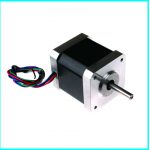
2. MICROLIT E-BURETTE Offers Motor Controlled Piston Movement

In conventional Digital Burettes, dispensing is done ‘manually’ with the help of a rotating wheel, whose speed of rotation is not fixed and varies from user to user. Any abrupt changes in the speed may result in inaccurate and imprecise results.
the Motor Controlled Piston Movement of MICROLIT E-BURETTE, at 3 Pre-set Speeds, rules out the effort invested in manual wheel operation and hence, any inconsistencies arising due to the variations in its speed.

Work with a Modern Accessory Range that Enhances User Experience

Stylus
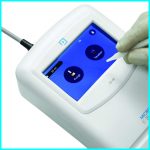
MICROLIT E-BURETTE comes with a sleek hand-held Stylus that assists in performing touch operations on the control panel with ease.
9 Amber coloured Window
The instrument’s transparent acrylic window can be swapped with an amber coloured window for use with chemicals/reagents that are sensitive to light.
Adapters
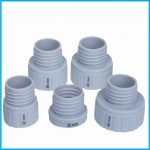
The instrument comes with five adapters that comfortably fit most laboratory reagent bottles. The available sizes are – 28 mm, 32 mm, 38 mm, 40 mm and 45 mm.
Telescoping Inlet Tube
A Telescoping Tube, that can be adjusted in length according to a variety of bottle sizes, is provided as an inside-the-box accessory.

*ISO 8655 is the globally accepted industry standard for piston-operated volumetric apparatus. The evaluation was performed by trained and certified personnel at an ISO 17025 accredited lab.


Experience the power of precision in Your Daily laboratory Routine

Work Accurately with 3 calibrated Pre-set Speeds
MICROLIT E-BURETTE can be flexibly operated at 3 calibrated pre-set Speeds, including dropwise dispensing, to achieve accurate end points.
2 Operate Smoothly with Motor Control
Motor Controlled Piston Movement facilitates correct and comfortable titrations. It eliminates the errors associated with manual wheel controlled piston movement.
3 Re-direct Reagents with Re-circulation Mode
Re-circulation Mode prevents the loss of reagents during purging by re-directing them into the mounted bottle and facilitates bubble-free dispensing.
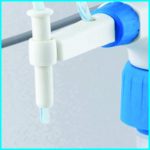
4 Dispense Easily with Adjustable Nozzle
The adjustable nozzle offers a high degree of flexibility in both the horizontal and vertical directions, facilitating easy dispensing in demanding laboratory conditions.
5 Perform Quick Titrations with TFT Touchscreen
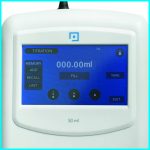
A user-friendly TFT touchscreen guides quick and accurate titrations and displays numeric data up to the second decimal. Keep the Stylus pressed against it to perform dispensing and fit it to stop art once.
6 Enhanced Functionality with a Robust Control Panel
The instrument comes with a powerful Control Panel. Use it to perform functions like automatically re-fill without changing the reading, perform a zero reset (via Tare), switch the instrument off, etc.
  • Choose from Three Unique Capacities
    MICROLIT E-BURETTE is available in three unique capacities – 10 ml, 25 ml and 50 ml.
    *Refer to the specifications and ordering information.
  • Save Results on the Go
    The instrument can store up to 20 results in its memory. It also offers the option to connect to a computer and save the readings on a software for future reference.
  • Micro USB Cable
    The instrument can be connected to a computer with the help of a micro USB cable which is included in the Burette kit.

MICROLIT E-BURETTE’s Control Panel uses rechargeable, long lasting and replaceable batteries.

Assured Quality with ISO 8655 Conformation and GLP Compliance

MICROLIT E-BURETTE conforms to ISO 8655 standards and is GLP compliant
Each model is individually calibrated and supplied with a calibration certificate placed inside the product package.
The instrument can also be easily calibrated electronically within a laboratory, without the help of an external calibration tool.

Award-winning Design and Product Excellence

MICROLIT E-BURETTE reflects the design philosophy of our organization, combining the best performance parameters with the best user experience.
It is recognised by India Design Mark as a product that exhibits Good Design. Additionally, we were honoured by CII Industrial Innovation Awards and adjudged a place in the top 25 Most innovative Companies of 2016.
We are also accredited by a member of global organizations and have earned worldwide credibility.

SPECIFICATIONS AND ORDERING INFORMATION

Capacity
(ml)
Increment
(ml)
Accuracy
(± %)
Accuracy
(±ml)
CV
(± %)
CV
(±ml)
10 0.005 0.1 0.01 0.1 0.01
25 0.01 0.07 0.0175 0.05 0.0125
50 0.01 0.05 0.025 0.05 0.025

The error limits (Accuracy and Coefficient of Variation) mentioned above are in accordance with the nominal capacity (or maximum volume) indicated on the instrument. These are obtained by using the instrument with distilled water at equilibrium, the ambient temperature of 20C while operating it smoothly and Steadily. The error limits are in accordance with DIN EN ISO 8655-3.

To check the other information of Microlit E-Burette, please visit the product page of website Burette.

Enhancing Accuracy with the New and Improved Dropwise Dispensing Feature in the Microlit E-Burette

Burettes are used as a laboratory apparatus for titration where a solution of known concentration is used to determine the concentration of an unknown solution. In the process of titration, the completion of the operation is referred to as the end-point which is the precise point where the chemical reaction is complete.

As the end-point is crucial while performing a titration experiment, it is important to use a burette which helps in obtaining a highly accurate end-point.

Microlit E-Burette

The Microlit E-Burette is a revolutionary instrument that replaces manual speed control with calibrated pre-set speeds, providing good control over the dispensing speed. The pre-set speeds help in achieving a highly accurate end-point. The enhanced version of the dropwise dispensing feature promises you more accurate results.

The New and Improved Dropwise Dispensing Feature

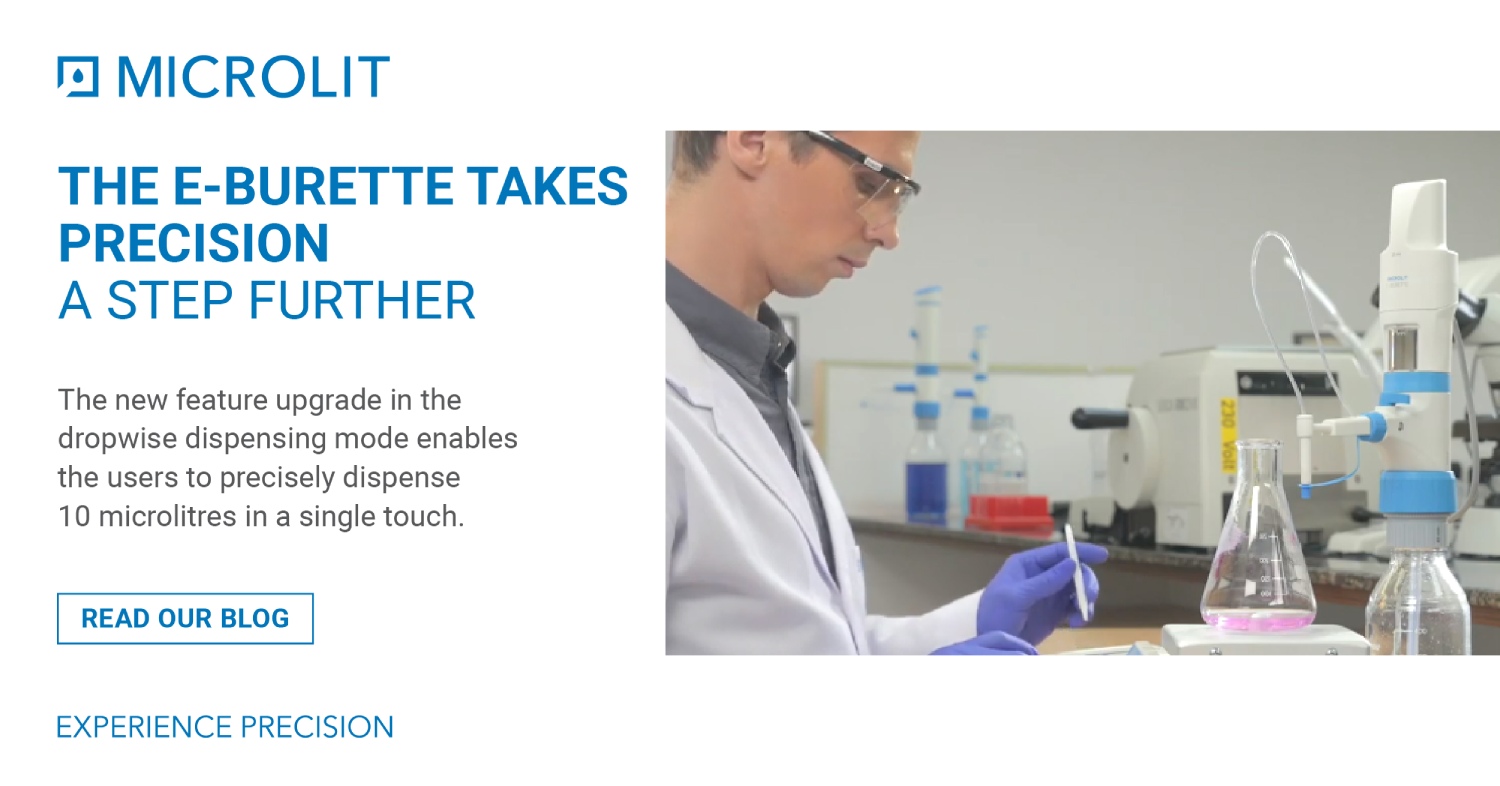
The new feature upgrade in the dropwise speed mode ensures that the volume of the reagent to be dispensed is consistently 10 microliters.

Never before has it been possible to precisely dispense 10 microliters in a single touch. Microlit with its strong R&D and technology is enabling customers to accurately realise the titration endpoint.

This consistency in performance and accuracy in dispensing makes the E-Burette a reliable titration instrument.

Importance of the Dropwise Dispensing Mode

The speed of the manual dispensing wheel in most of the conventional or digital burettes available in the market is not fixed and varies from one user to the other. These abrupt speed changes can lead to inaccurate and imprecise results.

The hand-wheel often makes it difficult to provide precise and fine control over the dispensing speed. Attaining the endpoint of a titration experiment using the hand-wheel can thus become a challenging and time taking task.

The E-Burette replaces the hand-wheel operation with touch screen based speed control. The ‘one touch, one drop’ dispensing speed mode with its precise dispensing capability provides a high control over the dispensing speed and helps in quick and accurate realization of the end point of the titration experiment.

Apart from the functional aspects, the ‘one touch, one drop’ operation also helps the user avoid Repetitive Strain Injury (RSI) which is caused by performing repetitive tasks for prolonged periods. RSI is a common injury and can be caused by the continuous rotation of the handwheel for speed adjustment during the titration experiment.

Industrial Applications of the Dropwise Dispensing Mode

E-Burette, especially the dropwise dispensing mode can be used for titration in industries like:

  • Pharmaceutical Industry

For a pharmaceutical industry to develop medications, a particular quantity of chemicals needs to be determined.

As precise measurement of the quantity of the chemicals needs to finalised, the dropwise dispensing mode is the most effective to accurately determine the end-point of all kinds of titration experiments.

  • Wine Industry

Quality and chemical precision are paramount in the wine industry.

Vintners need to ensure that the wine they make is consistent in flavour, from checking the quality of raw materials to checking the batch while fermentation.

This is where the dropwise dispensing helps to accurately determine the acidity and amount of sulphur-dioxide in wine through titration, thus ensuring every batch meets the utmost quality standards.

  • Automotive Industry

The automotive industry uses the titration process for the production of biodiesel oil.

Biodiesel oil is required to have a particular pH level to ensure its functionality.

For this purpose, the dropwise dispensing mode of the E-Burette comes in handy as manufacturers can precisely measure the pH level of biodiesel and then determine the amount of base to be used to achieve the desired pH level.

  • Food and Beverage Industry

The food and beverage industry uses the technique of titration for mainly two purposes – regulatory requirements and quality control.

It has been mandated by the respective regulatory bodies that all food labels should state the content of sodium, calcium and iron. The presence of these minerals can be accurately determined by using dropwise dispensing mode in the process of titration.

  • Cosmetics Industry

Manufacturers need to add appropriate concentration and amount of chemicals to ensure that the resulting cosmetic products do not cause any harm to the user.

This is where the dropwise dispensing mode can be used in titration as it enables manufacturers to accurately measure the amount of chemicals which is safe for application.

The advantages of E-Burette over other burettes are insurmountable. With precise, motorised speed control, the improved dropwise dispensing mode and diverse industrial applications, the E-Burette is essential for every modern laboratory.

Reach out to us at info-usa@microlit.com if you wish to know more about E-Burette or any of our products and make a purchase.