• Multiple Offers
    Multiple Offers
  • Support
    Real-Time Support
  • Free Replacement
    1-Year Free Replacement Warranty
  • (732) 321-0852

What is ISO 8655 Standard? It’s Types, Permissible Errors and Lab & Environment Conditions

Fundamentals of Calibration

The purpose of calibrating any device is to verify its functionality. The process is generally carried out via a standardized procedure and varies with every lab equipment. In case of pipettes, calibration is performed to ensure that it accurately dispenses the expected liquid volume. 

Difference between ISO 8655 and ISO 17025

ISO 8655 is an international standard designed for performing calibration and testing of piston-operated volumetric equipment, such as pipettes, dispensers, precision laboratory syringes, burettes and dilutors. It was drafted by the International Organization for Standardization’s (ISO) Technical Committee 48, in order to complement the ISO 17025 standard. ISO 8655 is a very specific and highly detailed set of standards that a pipette manufacturer must adhere to, for accurately calibrating pipettes. It defines the necessary methods, test equipment, reporting requirements and test conditions for pipette calibration. Currently, ISO 8655 is the most important ISO standard used for the calibration of piston-operated pipettes, dispensers and burettes.

ISO 17025 is a quality management system, serves as the primary standard for testing and calibration facilities. While ISO 17025 and ISO 9000 have many similarities, ISO 17025 assesses technical proficiency in lab testing and calibration services and is applicable to organizations that generate testing and calibration results.

On the contrary, ISO 17025 standard does not have any requirements related to the quality of processes. In addition, it does not point to any specific guidelines for a device, but applies to a variety of equipment, such as medical devices, weight scales, electronic devices, pressure meters, calipers and communication equipment.

Detailed Overview of ISO 8655

ISO 8655:2022 is the latest version ISO 8655 standard. Currently, the ISO 8655:2022 standard comprises of total nine parts, as compared to seven parts in the previous version.

  • Part 1: Terminology, general requirements and user recommendations
  • Part 2: Pipettes
  • Part 3: Burettes
  • Part 4: Dilutors
  • Part 5: Dispensers
  • Part 6: Gravimetric reference measurement procedure for the determination of volume
  • Part 7: Alternative measurement procedures for the determination of volume
  • Part 8: Photometric reference measurement procedure for the determination of volume
  • Part 9: Manually operated precision laboratory syringes

For pipette calibration, ISO 8655 standard defines requirements for air displacement pipettes, as well as positive displacement pipettes, including single channel and multi-channel pipettes. It covers both fixed and adjustable volume pipettes, as well as automated and manual pipettes.

The ISO 8655 standard strictly describes six elements that are required for precise, reproducible, ISO-compliant measurements:

  • Lab and Environmental Conditions
  • Methodology
  • Process Requirements
  • Measurement Specifications
  • Acceptable Measurement Uncertainties
  • Maximum Permissible errors

Lab and Environmental Conditions

In order to be compliant to ISO 8655, pipette measurements have to be performed in an extremely controlled and vibration-free lab environment. Pipette calibrations require continuous monitoring of test conditions for a valid demonstration of performance and measurement analysis.

The environmental and lab conditions that are considered as acceptable are defined below:

  • Temperature: Constant (15-30°C) {±0.5°C}
  • Relative Humidity: ˃50%
  • Altitude: Ground Level
  • Air Flow: Draft Free
  • Evaporation Rate: ~0
  • Vibration:  ~0
  • Static: ~0

Methodology

Currently, there are three parts dedicated to different testing techniques, including two reference methods, gravimetric and photometric, as well as a new part defining alternative methods. As per ISO 8655, the main methodology that should be used for the calibration of piston-operated pipettes and other related instruments is gravimetric measurement analysis.

Process Requirements

The new ISO is designed to consider the pipette tip and the instrument as one whole system. It details a step-wise process for producing reliable measurement data. These processes include suitable technique for pipette tip attachment, pre-wetting, aspiration and dispensing.

Measurement Specifications

One notable addition in the latest ISO is that the service provider must change the pipette tip at least once per measured volume. Further, the standard comprises of information on evaporation rate determination, measurement container requirements, time lapse for test completion and minimum number of measurements required.

Acceptable Measurement Uncertainties

Measurement uncertainty is described as a measured value that represents the level of ‘doubt’ or possible error in the calculation of calibration caused by from external influences. This can vary based on the quality and controls maintained during a calibration test. ISO accredited laboratories must verify, estimate and report measurement uncertainties for each calibration.

Maximum Permissible Errors

ISO 8655 clearly defines the Maximum Permissible Limits for piston-operated pipettes The standard describes the maximum permissible random error, as well as maximum permissible systematic error limits for a device at different volumes between 1-10,000uL. These error values are twice in case of multichannel pipettes. Typically, pipette manufacturers’ specifications are well within these error limits, however, for low volumes, conforming to ISO 8655 error limit can be challenging for many manufacturers.

ISO 8655 and FDA Audits

FDA audits all drug development labs regularly, which helps in ensuring proof of efficacy, as well as data integrity. Therefore, manufacturers need to provide quality assurance validation to avoid any regulatory issues. ISO 8655 compliance is indispensable for a pipette manufacturer as it is mandatory to prove the accuracy and reliability of a pipette.

FDA audits, performed for drug development quality control also require an ISO 17025 accreditation audit to ensure the integrity of a pipette calibration service provider. But, when the pipette calibration service provider adheres to ISO 8655 standards and controls, the auditor evaluates the standards as ‘more than expected’. For pipette manufacturers, conforming to ISO 8655 standards helps to showcase service integrity, which in turn, corroborates the trust and reliability of the drug development lab.

Microlit Products conform to ISO 8655 and ISO 17025

We take pride in producing cutting-edge lab instruments that conform to both ISO 8655 and ISO 17025 requirements, including bottle top dispensers, micropipettes, and burettes. Microlit products are extremely accurate and ergonomically designed, resulting in a remarkable user experience and flawless precision in the real laboratory environment.
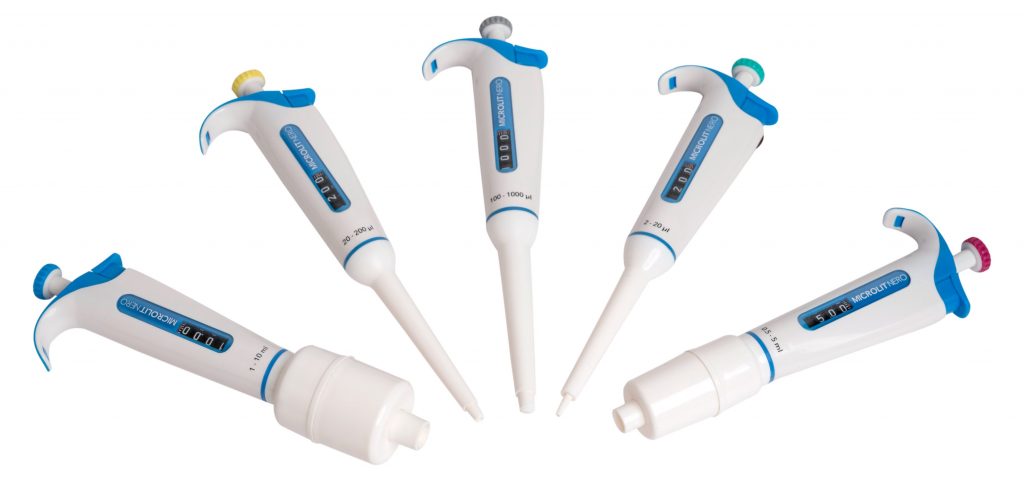
Microlit Micropipette NERO Ranges

Our newest product, Microlit NERO, now has our patented UniCal™ technology, a one-time calibration mechanism that enables quick in-lab calibration without enabling the digits to be disengaged from the plunger mechanism.

To know more about Microlit products, visit our products page or email us at info-usa@microlit.com.


What are the Top 10 Pharmaceutical companies in the world?

An increasing disease burden and a growing aging population have enabled the global pharmaceutical industry to reach USD 1.4 trillion in revenues in 2021. Multiple product launches and rising R&D expenditure has fueled the market growth beyond expectations. Despite the global slowdown due to COVID-19 pandemic, growing number of industry-wide collaborations and M&A activity has transformed the pharma domain and strengthened pharma companies’ ties with other businesses. Let’s have a look at the world’s top 10 pharmaceutical companies in 2021.

  1. Pfizer

Revenue: USD 81 billion

HQ: New York, US

Notable development: COVID-19 vaccines and treatments

Pfizer,  one of the top pharmaceutical companies, had a great financial year with its revenue growth touching almost 20% in 2021. It has reported sales of more than USD 80 billion and aims to cross the USD 100 billion mark in 2022. The sales were attributed to its successful COVID19 vaccine (Cominarty) and therapy (Paxlovid). These products accounted for almost half of Pfizer’s operational revenue.

“We put billions of dollars of capital on the line in pursuit of those goals, not knowing whether those investments would ever pay off. Now, less than two years since we made that commitment, we are proud to say that we have delivered,” said CEO Albert Bourla.

  1. Roche

Revenue: USD 68 billion

HQ: Basel, Switzerland

Notable development: Repurchased one third of its shares from Novartis

During 2020-2021, Roche developed various diagnostic solutions for COVID-19, that contributed towards its revenue growth and made it second among the world’s top pharmaceutical companies. In addition, Roche repurchased one third of its shares held by Novartis from last 20 years. In addition, Tecentriq got approved as the first cancer immunotherapy for patients with early-stage lung cancer. “Despite all the success, there is still a great need for better therapies in areas such as cancer, dementia and infections”, said CEO Severin Schwan.

  1. AbbVie

Revenue: USD 56 billion

HQ: Illinois, US

Notable development: Humira continued to be a blockbuster drug in the US, but faced stiff competition from biosimilars outside US

AbbVie’s blockbuster immunology drugs continued to lead it into top 10 in the pharma space. The company’s immunology portfolio generated around USD 25 billion globally in 2021, a growth of 14%. With Humira losing business to biosimilars, AbbVie’s newly approved drug portfolio, Skyrizi (risankizumab for atopic dermatitis) and Rinvoq (upadacitinib for psoriatic arthritis) are likely to determine its mid-term growth in the future. AbbVie expects that each of the products has the potential to generate more than USD 7.5 billion in 2025.

  1. Johnson & Johnson (Janssen)

Revenue: USD 52 billion (Pharma sales)

HQ: New Jersey, US

Notable development: Divided its consumer health and pharmaceutical product verticals into two separate companies

 In 2021, Johnson & Johnson went through a major restructuring of business by splitting into two separate companies focused on consumer products and pharmaceuticals.

It’s immunology portfolio generated around USD 16.7 billion last year, followed by oncology. Like AbbVie, J&J is losing sales of its blockbuster drug, Remicade, because of competition from biosimilars. Further, its consumer health division is going through legal difficulties due to the claims about its talc-based products being carcinogenic.

  1. Novartis

Revenue: USD 51.6 billion

HQ: Basel, Switzerland

Notable development: Initiated a ‘strategic review’ to spin-off its subsidiary Sandoz

 In 2021, Novartis got 21 product approvals across US, EU, Japan and China, which included two new molecules. The revenue of the company grew by 6% as compared to the last year. The major revenues stemmed from Cardiovascular, Renal and Metabolism segments, that witnessed an overall 43% increase.

 “We have a promising mid- and late-stage portfolio, with more than 20 assets with expected approval by 2026 that each have sales potential over USD 1 billion,” said CEO Vasant Narasimhan.

  1. Bayer

Revenue: USD 49 billion

HQ: Leverkusen, Germany

Notable development: Crop Science witnessed considerable increase in prices and volumes

Bayer has been investing profusely with a USD 2 billion acquisition deal, wherein it acquired a San Diego-based biotech firm. It also acquired various manufacturing plants based out of Latin America and Norway.

  1. Merck

Revenue: USD 48.7 billion

HQ: New Jersey, US

Notable development: Got approval for oral antiviral treatment for COVID-19 – molnupiravir

 In 2021, Merck announced that its acquiring Acceleron Pharma. Its pipeline is also advancing steadily, and its oral antiviral for COVID-19 (monlupiravir) got approved by the FDA. Monlupiravir was developed in collaboration with Ridgeback Biotherapeutics and generated USD 952 million in the last quarter of 2021.

“We enter 2022 with strong momentum and are moving with speed to bring forward innovations,” said CEO Robert Davis.

  1. Bristol Myers Squibb (BMS)

Revenue: USD 46.4 billion

HQ: New York, US

Notable development: Eliquis, a blood-thinner medication grew by 17% in revenues

BMS’ blockbuster drug, Eliquis, reached USD 10.7 billion in sales in 2021. “2021 was a pivotal year for our company as we achieved significant regulatory and clinical milestones and positioned the company to successfully renew our portfolio,” said Giovanni Caforio, CEO, in a press release.

  1. GlaxoSmithKline (GSK)

Revenue: USD 46 billion

HQ: London, UK

Notable development: Generated sales of over USD 1.9 billion in COVID-19 based products

GSK’s developed sotrovimab, one of the few COVID-19 treatments shown to have worked against the Omicron variant, in partnership with Vir Biotechnology. The product was one of GSK’s highest revenue generating assets in 2021.

 “This is going to be a landmark year for GSK, with a step-change in growth expected and multiple R&D catalysts, including milestones on up to 7 key late-stage pipeline assets. 2022 is also the year when we demerge our world-leading Consumer Healthcare business”, said CEO Emma Walmsley.

  1. Sanofi

Revenue: USD 43 billion

HQ: Paris, France

Notable development: For the first time ever, Sanofi’s Specialty Care division reaped in the maximum revenues of all its business units 

In 2021, Sanofi was able to get 8 major products approved in the US and EU, including Libtayo, Sarclisa, Dupixent and Nexviazyme. Further, its specialty care business division turned out to bring in maximum sales, almost double the sales of vaccines unit.

“Sanofi has closed 2021 with a strong performance in the fourth quarter driven by high double-digit sales growth of Dupixent, which continues to set impressive record sales quarter after quarter. This quarter marks the first time Specialty Care has led our GBUs by sales, highlighting a significant milestone in our transformation,” said CEO Paul Hudson.

if you are looking any liquid handling products listed in Microlit, please contact us at info-usa@microlit.com or visit our website Microlit.

Carpal Tunnel Syndrome: Causes, Prevention, and How Microlit Products Help Avoid It

What is Carpal Tunnel Syndrome?

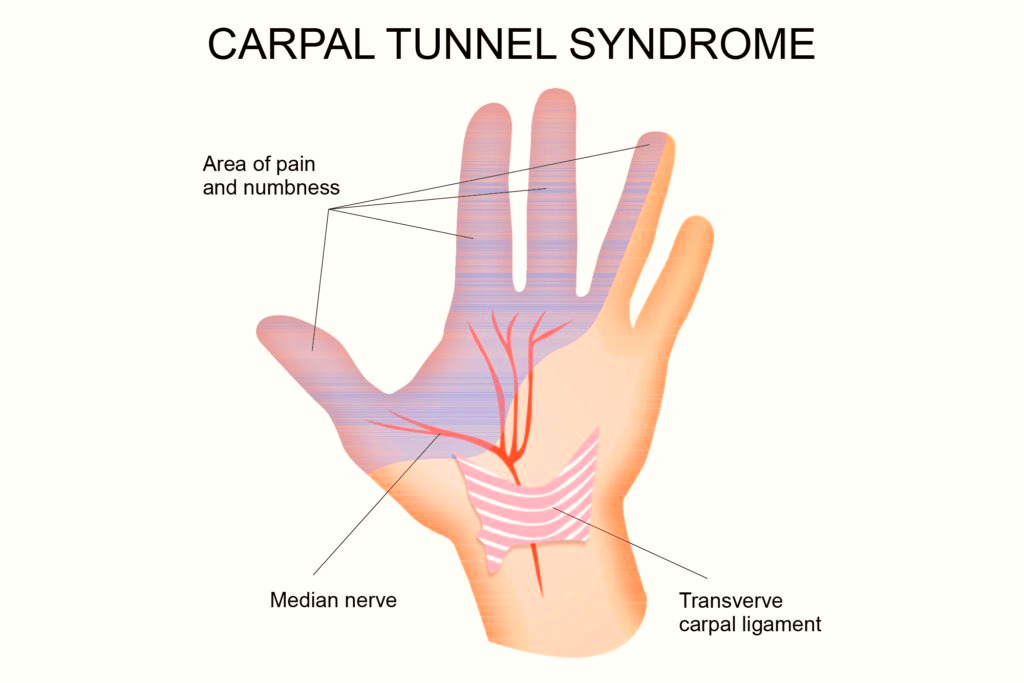
Carpal tunnel syndrome (also known as median nerve compression) is a condition that results in a sensation of numbness, tingling, or a slight weakness in an individual’s hand.

What is carpal tunnel syndrome?

The primary culprit for carpal tunnel syndrome (CTS) is excessive pressure on one’s median nerve that runs across the length of the arm. This nerve passes through a region in the wrist known as the carpal tunnel. The median nerve is responsible for controlling the movement and feeling of sensation in your thumb, as well as the movement of all the fingers except the little finger.

Symptoms of Carpal Tunnel Syndrome

Someone with CTS might experience the following symptoms:

  1. Tingling, burning or itching numbness in your palm and certain fingers.
  2. A feeling of weakness in the hand
  3.  Trouble holding things
  4.  Shock-like sensations in your fingers or palm

Early on in the condition, you might feel your fingers ‘falling asleep’ and becoming numb. Initially, you might feel better by just shaking out your hands. But later on, shaking your hands alone might not be enough to make the numbness disappear.

When you wake up in the morning, there might be a sensation of numbness or tingling in your hands all the way to your shoulder. During the daytime, the symptoms usually become worse while one is holding onto something and the wrist is bent, such as while you are cooking or driving a car.

As CTS worsens, you may feel that you have less grip than before due to your hand muscles getting shrunk. Further, you can expect more pain and extreme muscle cramping. The median nerve is unable to function properly due to undue pressure, which may cause less coordination and muscle strength, as well as slower nerve response.

Causes of Carpal Tunnel Syndrome

Most of the time, people are not aware about the reason for the onset of CTS. It can happen for a variety of reasons, such as:

  1. Repetitive hand movements, such as typing, or handling certain kinds of equipment over and over. Especially, when the object you are holding is causing your hands to be at a lower position than the wrists (such as pipetting).
  2. Other medical conditions, such as obesity, rheumatoid arthritis, hypothyroidism and diabetes.
  3. Pregnancy

In addition, women have been reported to have a higher risk of getting CTS, almost three times more than men. The reason is thought to be smaller carpal tunnels in case of women. Small carpal tunnels can also run in one’s family.

Further, if you have a job that requires you to move your hand, wrist or arm again and again, such as a lab technician, cashier, lab technician, cook or musician, you can be at a higher risk of getting CTS.

Prevention of Carpal Tunnel Syndrome

Although there aren’t any specific strategies that can help prevent CTS, you can definitely take some precautions to reduce stress on your hands and arms.

  1. For instance, if your work involves rapid hand movements, like in cooking, you can take regular, short breaks. Similarly, if you work in a lab, you should attempt to exert minimum pressure on your hands while also relaxing your grip and use ergonomic tools whenever possible. Even taking a break for a few minutes every hour can make a huge difference.
  2. You can also try to gently stretch your wrists and hands at regular intervals.
  3. Try to alternate tasks if possible. Especially if you need to use any instrument that vibrates or requires you to apply excessive force.
  4. Keep a check on the form of your hands and wrists. Don’t bend the wrist all the way down or up. Keep it in a relaxed middle position.
  5. While working on computers, you need to ensure that the computer mouse is comfortable to hold and operate. In addition, place the keyboard at elbow height or lower, so that there isn’t any strain on your wrist.
  6. Try to improve your posture as an incorrect posture can compress the nerves of the neck. This can indirectly affect the nerves around your wrists and hands.
  7. Make sure that your hands are warm. In a cold environment, one is more susceptible to developing pain and stiffness in the hands.

How do Microlit Products prevent carpal tunnel syndrome?

One of the leading causes for CTS is the continuous use of hand-held equipment, such as a micropipette, with defective ergonomics. CTS is common among scientific researchers and lab technicians who perform liquid handling on a regular basis, that results in rigorous pressure exerted on one’s hands and wrists consistently, thereby multiplying the risk of having CTS.

Microlit Micropipette NERO Ranges

Microlit’s labware is designed by expert product engineers, who prioritize ergonomics and comfortable handling above all. We have been able to achieve the lowest possible plunger force by optimizing the design of our plunger springs. In addition, our micropipettes are lightweight and are designed keeping good ergonomics in mind. To know more about the features of our micropipettes, visit our website www.microlit.us.

What are the use of Burettes in Pharmaceutical Industry?

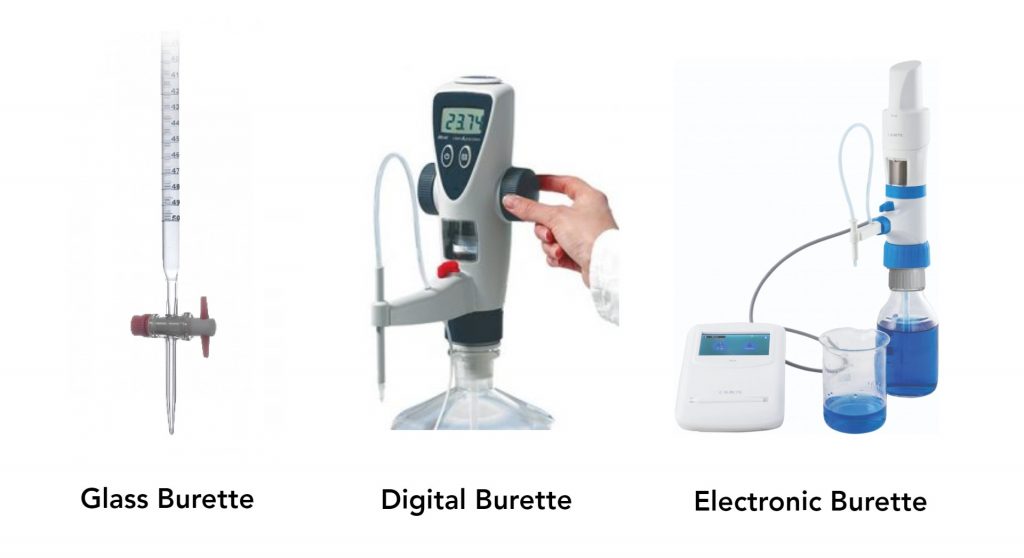
A burette is a volumetric measuring glassware in the form of a long tube having a stopcock valve at one end. The valve is used to control the flow of the liquid. It is a graduated tube having volume markings that helps in determining the volume of dispensed liquid while performing various analytical chemical tests.

Burettes are typically classified as manual and digital burettes, that differ in the type of application, ease-of-use and resolution. Usually, researchers tend to use a digital burette over a manual one as it can achieve higher accuracy because of lesser reliability on the skills of an operator.Types of Burette

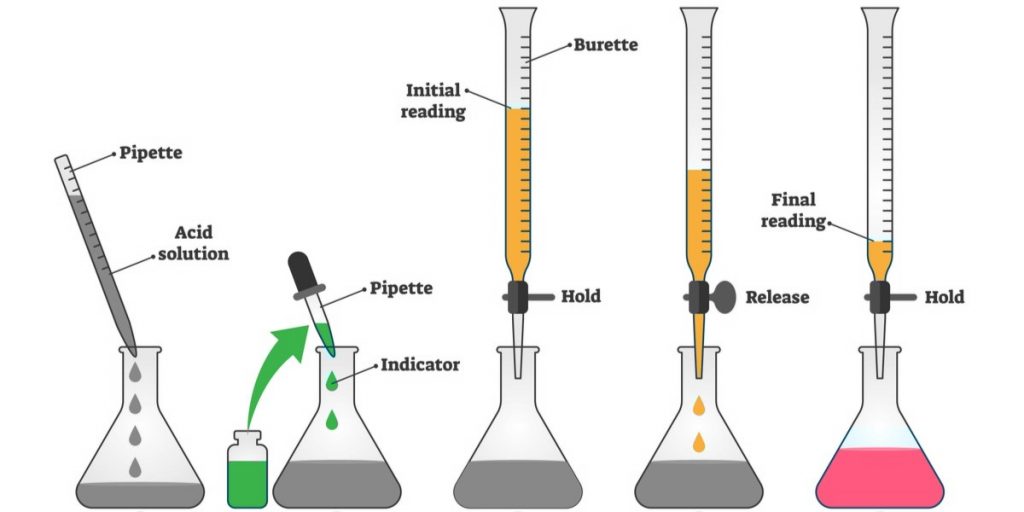
Burettes are used to perform titration, which is a common laboratory procedure to quantify chemicals and determine the unknown concentrations of a reactant. As titration is used to calculate liquid volumes, it is also referred to as volumetric analysis.

Titration Process

In the process of titration, a reagent, known as the titrant, with a predetermined concentration and volume is used to react with a solution with an unknown concentration. A calibrated burette is used to gradually add the titrant, which then helps to determine the concentration of the solution by reaching an endpoint as determined by a chemical indicator.

Application of Burettes in Pharmaceutical Industry

In the pharmaceutical manufacturing process, it’s important to analyze the composition and concentration of chemicals at every stage, such as formulation, testing and manufacturing. In order to perform a detailed characterization of pharmaceutical products, various lab tests are required.

Among the several analytical tests needed to characterize a new drug formulation, titration is considered to be one of the most essential assays. Titration is used to quantify both active pharmaceutical ingredients (APIs) and excipients including edible oils, surfactants and chelating agents. The process is also used to assay the content uniformity of tablets.

Particularly, potentiometric titration is a powerful technique employed across various facets of pharmaceutical manufacturing. The scope of automation at each step of titration enables the manufacturer to modify the assay for different dosage forms and analytes. Automated titration also provides more consistency and objectivity at every stage of the process, from sample preparation to endpoint determination.

Assay of Active Pharmaceutical Ingredients (APIs)

For characterizing a new drug formulation, test results of titration and other analytical processes are important driving factors for critical decisions. It’s important to receive timely and accurate results, in order to develop and manufacture effective formulations. Manufacturers need to ensure that every tablet, tube and vial of product in a particular batch has the optimum active substance content. Burettes are used at every stage of API formulation, and currently United States Pharmacopeia and the National Formulary (USP-NF) recommends potentiometric titration to assay about 630 APIs in both aqueous and non-aqueous media.

Assay of Excipients

Excipients are generally the largest fraction of drugs as they are often used as bulking agents or fillers for formulations having low concentrations of the API. They are also used for maintaining long-term stabilization, as well as enhancement of the API. Characterization of excipients includes potentiometric titration of raw materials using burettes and impurity testing. Currently, USP- NF recommends potentiometric titration assay for around 110 excipients, such as edible oils, lubricants, minerals, surfactants and chelating agents.

Assay and Content Uniformity of Tablets

One of the most popular dosage forms for drugs are tablets, and yet it’s extremely difficult to analyze them. Every tablet in a batch needs to have the same API content as mentioned on the packaging and, it must be within certain predefined limits. To achieve this efficiently, potentiometric titration plays a key role. The level of automation in current potentiometric titration systems offer a high level of accuracy, as well as reproducibility of outcomes. The automated titrimetric determination of tablet composition can be completed in less than ten minutes, which makes the potentiometric titration method a highly cost-effective option for such analyses.

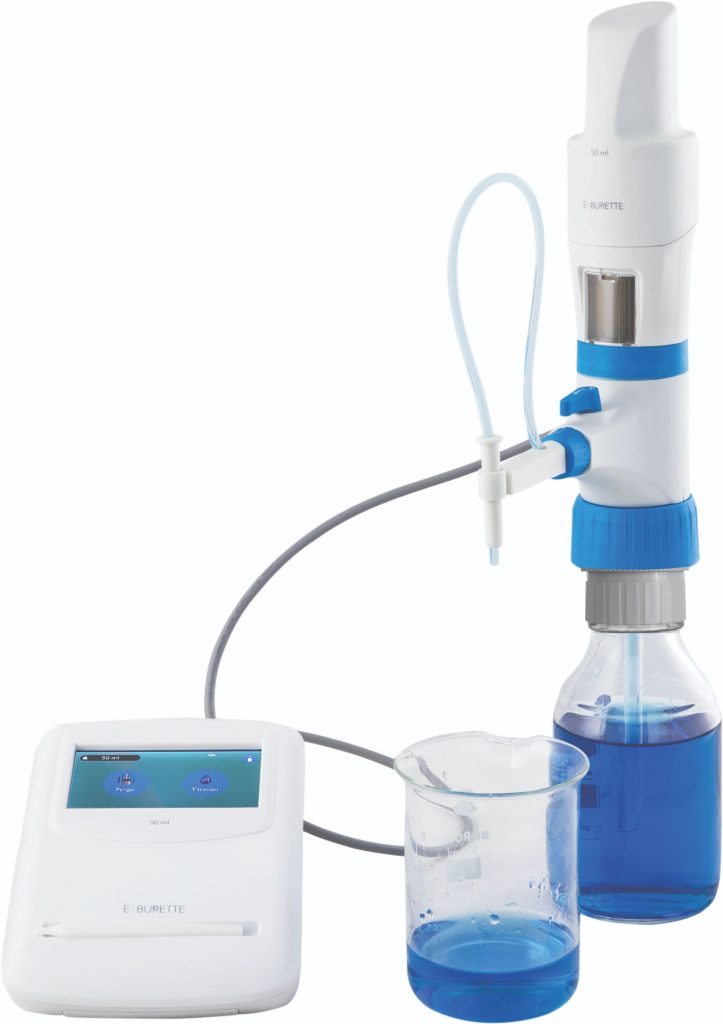
Overview of Microlit E-Burette

bottle top dispenserMicrolit E-Burette is a powerful motor-operated burette solution. It is a digital burette or electronic titrator, created by our in-house team of expert design engineers. The product features cutting-edge elements, such as a touch screen-enabled control panel, motor-controlled piston movement, and 3 preset calibrated speeds, making it a liquid handling and titration powerhouse. Our design is highly ergonomic and intuitive-to-operate and is widely used across industries, including various titration procedures such as purity analysis, content analysis, precipitation titrations and pH-stat titration in the pharmaceutical industry.

Our E-burette solution comes with a user-friendly and robust Control Panel, which can be used to perform various functions, such as automatic re-fill (without changing the reading), performing a zero reset and switching the instrument off. The instrument can be operated smoothly with a motor-controlled piston that enables accurate and easier titrations. In addition, the piston helps to eliminate errors arising from manual wheel-controlled piston movement. Further, it helps in improving the repeatability of test results, reducing wastage of time and raw materials that occur due to human error, thus increasing the throughput of an analytical lab.

For more information about Microlit E-Burette, visit: Microlit E-Burette.

How to Measure Accuracy and Precision of Micropipettes`?

In scientific lab environments, micropipettes are used to accurately and precisely facilitate the transfer of liquid volumes in the range of microliters. The micropipette accuracy of performance is crucial, as these instruments are extremely important in a myriad of applications across microbiology, medical, and environmental sciences, both in academic and commercial research settings.

In order to perform error-free pipetting, the pipette should be both precise and accurate. In some cases, the terms – micropipette accuracy and precision – are used interchangeably, but technically, there is a major difference between the two. Let’s take a look.

Accuracy and Precision of a Micropipette

Accuracy refers to the attribute of being correct, exact and error-free. It’s the proficiency of the pipette to give a close to correct value for the liquid volume indicated in the volume setting. This defines the accuracy of micropipette.

Precision refers to the reproducibility or repeatability of the calibration. When the precision of the micropipette is calibrated correctly, there is minimum variation between different readings.

Accuracy and Precision Example for Micropipette

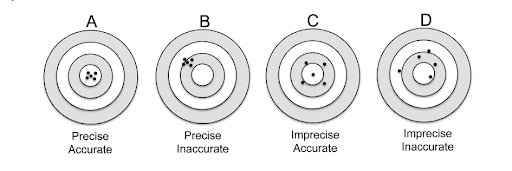
To demonstrate the difference between accurate and precise results, let’s use a target analogy. Consider a scenario where four students attempt to hit the target five times. Students A and C are accurate while A and B are precise.

Accuracy and Precision Example for Micropipette

The guiding principle for calibrating a micropipette is universal and revolves around the density of distilled water. In constant temperature and atmospheric pressure conditions, the density of distilled water does not vary and is 1 gram per milliliter (1g / ml) at 25ºC. Therefore, the volume of water dispensed can be calculated using the weight of water.

However, in practical lab conditions, temperature and pressure conditions are not constant. Such discrepancies in liquid volumes negatively impact the outcomes and precision of the equipment. Manufacturers generally calculate and use an additional constant, known as the Z factor, to account for real-world lab conditions.

How to Calibrate a Micropipette: Steps Involved in Pipette Calibration

  1. Pour distilled water into lab glassware and record its temperature.
  2. Take the micropipette and the corresponding tips based on liquid volumes that need to be dispensed.
  3. Place a weight boat on a weighing balance, which can correctly weigh in the microgram range.
  4. Then, pre-rinse the pipette tip by aspirating and dispensing distilled water three to four times. Remember to push the piston completely to remove all the liquid.
  5. After that, aspirate the liquid volume for calibration and dispense it gradually into the weight boat. Ensure that there is no bubble formation in this process.
  6. Then, record the weight value displayed on the balance and repeat the process 7-10 times.
  7. Calculate the volume of liquid dispensed by using the equation V = W x Z, where V is the calculated volume of water, W is the weight of the water and Z is the Z factor.
  8. Then, calculate the mean value obtained from different trials.
  9. Finally, you can calculate the accuracy of the micropipettes using the equation 

A = 100 x Mean Volume / Theoretical Volume, 

where A is the accuracy of the pipette.

Maximum permissible errors for micropipettes as per ISO 8655-2:

Nominal volume
Maximum permissible systematic error
Maximum permissible random error
µl
± %
± µl
± %
± µl
1
5.0
0.05
5.0
0.05
2
4.0
0.08
2.0
0.04
5
2.5
0.125
1.5
0.075
10
1.2
0.12
0.8
0.08
20
1.0
0.2
0.5
0.1
50
1.0
0.5
0.4
0.2
100
0.8
0.8
0.3
0.3
200
0.8
1.6
0.3
0.6
500
0.8
4.0
0.3
1.5
1000
0.8
8.0
0.3
3.0
2000
0.8
16
0.3
6.0
5000
0.8
40
0.3
15.0
10000
0.6
60
0.3
30.0

If the value of accuracy is in the range of permissible error (as per above table), the micropipette is considered as calibrated.

ISO 8655 / ISO 17025 norms for Accuracy / Precision

For pipette calibration, certain standards are defined to guide manufacturers on the quality of the calibration, such as ISO / IEC 17025:2017 and ISO 8655. It’s necessary to conform to both of these standards for reliable pipette calibration.

ISO/IEC 17025:2017 is the fundamental competency standard for pipette calibration laboratories. If a pipette adheres to this standard, it implies that a qualified third party has approved the quality, documentation and process of the calibration lab.

The requirements for ISO/IEC 17025:2017 include:

  1. Technician Proficiency Testing
  2. Documented Training Program
  3. Measurement Uncertainty Budget
  4. Test Equipment Certification
  5. Internal / External Audits

ISO 8655 specifies the precise requirements for calibrating the pipette including:

  1. Methodology
  2. Measurement Specifications
  3. Process Requirements
  4. Acceptable Measurement Uncertainties (It’s required that measurement uncertainties values are reported along with measurement values).
  5. Lab and Environmental Conditions
  6. Maximum Number of Permissible Errors

How Often Should a Micropipette be Calibrated?

It is recommended to check the calibration of a micropipette every 3-6 months. In case you are deep-cleaning the pipette, you should check the calibration after every reassembly.

The more frequently you adjust your pipette’s calibration, the easier it becomes to produce accurate outcomes and find issues that can impact your results. That is why calibrating micropipettes is one of the fundamental parts of good laboratory practices (GLP). In addition, it’s a good practice to keep a record of every calibration in a timesheet for future reference. This helps you become aware of the timeframe of all the experiments, in case you detect an issue with the calibration.

Accuracy / Precision of Microlit Products

We pride ourselves in creating state-of-the-art lab equipment, including our bottle top dispensers, micropipettes and burettes that conform to both ISO 8655 and ISO 17025 standards.

Microlit Micropipette NERO Ranges

Our new launch, Microlit NERO, is designed using μAir™ (Micro-air) Technology for enhanced accuracy and precision. It helps reduce the extra dead air space between the pipette tip cone and piston, which ultimately leads to less air compression and high precision. It also features our in-house UniCal™ technology, which is a unique calibration mechanism that enables rapid in-lab calibration in a one-time operation without the need to disengage the digits from the plunger mechanism. This makes the re-calibration process of micropipettes much simpler, time, and cost-effective, as well as user-friendly, enhancing the accuracy of micropipette use.

If you need micropipettes that can ensure accuracy and precision while providing utmost comfort during pipetting, the Microlit NERO will fulfill all of your lab pipetting requirements. To know more about the features and functionality of Microlit NERO micropipettes, please contact us at info-usa@microlit.com or visit our website Microlit NERO.